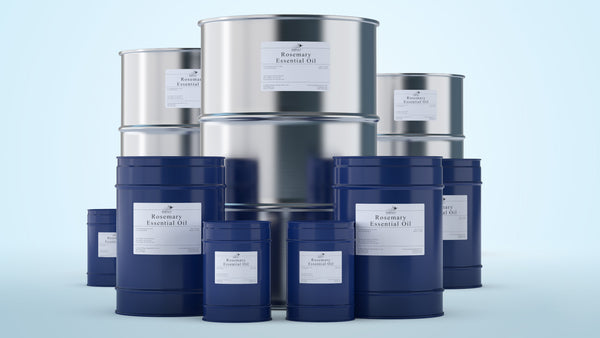
When procurement managers specify "peppermint oil bulk" for a cooling formulation, the species matters. Mentha arvensis (Japanese peppermint or field mint) is not interchangeable with Mentha × piperita (European or Mitcham peppermint) for applications where menthol concentration determines the cooling intensity of the finished product. The difference is consistent: Mentha arvensis delivers 40–50% menthol content, versus the 35-45% range typical of Mentha × piperita a gap that is relevant to cooling serum formulators, oral care manufacturers, and food-grade ingredient buyers who need a documented menthol specification, not a species declaration.
HBNO supplies both Japanese peppermint essential oil (Mentha arvensis) and its USDA Organic equivalent, GC/MS tested in our in-house laboratory at our 100,000 sq ft facility in Chico, California, with menthol and menthone percentages documented on the batch-specific CoA issued with every shipment.

Mentha Arvensis Chemistry: Why the Menthol Profile Matters for Formulation
The formulation relevance of Japanese peppermint oil (Mentha arvensis) versus standard peppermint (Mentha × piperita) rests on two constituent differences: higher absolute menthol content (40-50% vs. 35-45%) and the presence of natural menthol crystals in high-yield commercial grades which affect sensory intensity, onset speed, and formulation compatibility in cooling applications.
Menthol's cooling mechanism operates through TRPM8 the transient receptor potential channel responsible for the cold sensation which is activated by menthol at skin surface and mucous membrane temperatures without any actual reduction in tissue temperature. A comprehensive review of peppermint and menthol biochemistry published in Critical Reviews in Food Science and Nutrition confirmed menthol's multi-pathway activity, noting its antimicrobial, antioxidant, and TRPM8-mediated cooling properties across personal care, oral care, and food applications (Kazemi et al., 2025, Crit Rev Food Sci Nutr, 65:1553–78).
For formulators, the constituent profile to specify for bulk Japanese peppermint (Mentha arvensis):
-
Menthol: 40–50% the primary cooling active and the commercially defining constituent; drives both sensory intensity and regulatory documentation requirements for flavour and cosmetic applications
-
Menthone: 15–25% the secondary ketone fraction; contributes to the characteristic sharp/herbal note and modulates the menthol sensation in blended formulations
-
Menthyl acetate: 3–8% the ester fraction; contributes a milder, slightly sweet note that softens the menthol sharpness in topical and oral care formulas
-
Isomenthol and neomenthol: Combined ≤10% diastereomers of menthol that contribute secondary cooling and sensory notes
INCI name: Mentha arvensis Leaf Oil. CAS: 68917-18-0. Latin binomial on ingredient specification sheets should distinguish Mentha arvensis from Mentha × piperita (INCI: Peppermint Oil; CAS 8006-90-4) the two species are not specification-equivalent for applications where menthol content is the functional driver.
FEMA/GRAS status: Yes, both Mentha arvensis herb oil and Mentha arvensis leaf oil have GRAS designation under FEMA. Dual cosmetic-grade and food-grade utility is documented in HBNO's CoA package.
The global mint essential oils market was valued at USD 925.3 million in 2022 and is projected to reach USD 1,961.9 million by 2030, growing at a CAGR of 9.8%, driven by rising demand from personal care, food and beverage, and pharmaceutical manufacturers (Source: Grand View Research). Peppermint the highest-volume segment within mint essential oils, is growing at 7.4% CAGR through 2030, primarily driven by its expanding application base in functional personal care and oral care formulations.

Formulation Applications for Bulk Japanese Peppermint Oil
Bulk Mentha arvensis essential oil serves four primary manufacturing categories: cooling sensory personal care formulations, oral care and food-grade flavouring, scalp and hair care products, and functional cleaning and household product lines - each leveraging menthol’s characteristic sensory profile at different inclusion rates.
Cooling personal care formulations: Menthol contributes a cooling sensory effect that is valued in scalp serums, scalp tonics, and hair-care formulations. Standard inclusion rates are 0.5–2% in leave-on topicals and 1-3% in wash-off formats. Japanese peppermint (Mentha arvensis) is preferred over standard peppermint for high-intensity cooling products due to the higher menthol loading. IFRA compliance documentation at the proposed use rate applies; HBNO issues IFRA compliance sheets with every shipment.
Oral care manufacturing: Toothpaste, mouthwash, breath fresheners, and chewing gum base. Menthol is the dominant flavour active in oral care globally. FEMA/GRAS documentation and Kosher certification are baseline requirements for food-adjacent oral care applications. HBNO's Japanese peppermint oil carries both FEMA/GRAS and Kosher certification, with food-grade documentation included in the standard CoA package.
Food-grade flavouring: Confectionery, chewing gum, beverage flavouring, and dietary supplements. The GRAS designation and food-grade CoA support regulatory compliance for manufacturers producing products regulated under FDA food standards. Dual food/cosmetic documentation simplifies supplier qualification for companies operating across personal care and functional food product lines.
Scalp care and hair treatment products: Menthol contributes a cooling sensory effect that is valued in scalp serums, scalp tonics, and hair-care formulations. Standard inclusion in leave-on scalp serums runs 0.5–1.5% in a carrier oil base. Higher concentrations can cause scalp sensitisation in leave-on formats patch testing at the proposed use concentration is standard formulation practice.
In our experience working with cooling product formulators, the most common specification error is using Mentha × piperita at inclusion rates designed for Mentha arvensis, resulting in lower cooling intensity than the formula brief called for. Verifying menthol content on the GC/MS CoA before finalising inclusion rates is the straightforward prevention.

HBNO's Bulk Japanese Peppermint Oil Supply Credentials
HBNO supplies GC/MS-verified bulk Mentha arvensis (Japanese peppermint) essential oil in conventional and USDA Organic grades from our ISO, GMP, FDA, Kosher, and FAIR FOR LIFE certified facility in Chico, California with no minimum order quantity and documentation supporting food-grade, cosmetic, and organic applications.
Key supply specifications:
-
Bulk Japanese peppermint essential oil (Mentha arvensis, steam-distilled) menthol 40–50%; menthone 15–25%; FEMA/GRAS, Kosher certified; cosmetic and food grade; GC/MS tested on every batch
-
Bulk organic Japanese peppermint essential oil Mentha arvensis, USDA Organic certified; same menthol specification range; for brands requiring organic certification on the finished product label
Our PhD-led QC team issues batch-specific CoAs documenting menthol, menthone, and menthyl acetate content alongside refractive index, specific gravity, and optical rotation. For food-grade accounts requiring compliance with FCC (Food Chemicals Codex) or EU flavouring regulations, these CoA parameters are available on request.
Supply terms for cooling formulation and food-grade manufacturers:
-
No MOQ sample volumes through 25 kg containers and drum quantities
-
250,000 units/day private-label production capacity for finished personal care, oral care, and food-adjacent SKUs
-
Drop-shipping available; global shipping to North America, Europe, Asia, Oceania
-
Long-term supply agreements for volume allocation
Explore our full USDA Certified Organic Essential Oils collection for organic peppermint and companion essential oils in a single supplier qualification.
FAQ
What is the difference between Mentha arvensis and Mentha × piperita for bulk purchasing?
Mentha arvensis (Japanese peppermint, field mint) delivers 40–50% menthol versus 35–45% for Mentha × piperita (Mitcham or European peppermint). The practical implication: to achieve a given cooling intensity, formulators can use a lower inclusion rate of Mentha arvensis than Mentha × piperita, which affects cost-in-use, IFRA compliance calculations, and label concentration. Both species carry FEMA/GRAS status; the INCI name differs. Specify the species explicitly on your procurement document HBNO supplies both and documents species on the CoA.
What documentation does HBNO provide for peppermint oil bulk orders in food-grade applications?
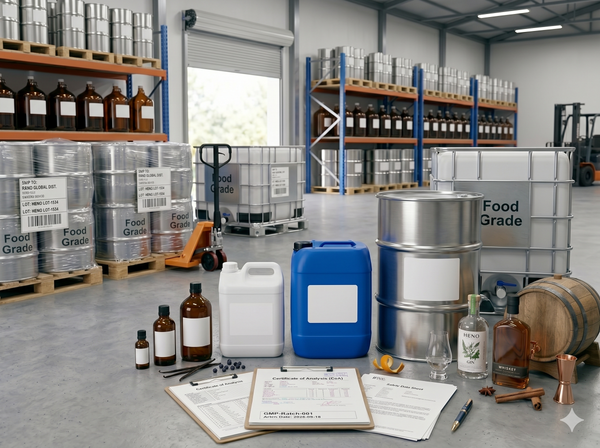
Every bulk Japanese peppermint order from HBNO includes: a batch-specific GC/MS CoA documenting menthol, menthone, menthyl acetate, and other constituents; SDS to GHS/OSHA classification; FEMA/GRAS designation reference; Kosher certificate; and IFRA compliance documentation. For accounts requiring FCC-grade compliance documentation or EU flavouring regulation support, our QC team can issue supplementary parameters refractive index, specific gravity, optical rotation on request.
What is the recommended inclusion rate for Mentha arvensis oil in cooling personal care products?
For leave-on topical products (body gels, topica balms, scalp serums), standard inclusion rates are 0.5–2% in a carrier oil or emulsion base. For wash-off products (shower gels, shampoos), 1–3% is typical. Japanese peppermint delivers higher cooling intensity per unit than standard peppermint at the same inclusion rate, so formulations developed for Mentha × piperita should be adjusted. HBNO's IFRA compliance sheet accompanies every shipment; always consult relevant regulatory bodies for leave-on product compliance in your target market.
How does HBNO ensure menthol content consistency across peppermint oil bulk shipments?
Our in-house GC/MS laboratory tests every production lot of Japanese peppermint essential oil. Menthol, menthone, and menthyl acetate are quantified and documented on the batch-specific CoA. For accounts on long-term supply contracts, we can issue a master specification document with a committed menthol percentage band so your QA team is comparing incoming lots against a contracted specification, not a historical average.
Can HBNO supply Japanese peppermint oil as part of a private-label finished personal care or oral care product?
Yes. Our private label services cover ingredient sourcing, GC/MS testing, formulation, filling, and branded packaging. Our 250,000 units per day production capacity at our Chico facility supports cooling personal care, oral care, and food-adjacent SKUs under your brand. The same FEMA/GRAS-documented, GC/MS-tested peppermint oil that your development team sources for prototyping is used in the production run.
Published by the HBNO Bulk editorial team. HBNO (IL Health & Beauty Natural Oils Co., Inc.) is a manufacturer and bulk supplier of essential oils and carrier oils based in Chico, California.