The global essential oils market is projected to exceed $15 billion in 2026, with the majority of volume flowing through B2B wholesale channels (Grand View Research). For growing brands, the decision to switch from retail to wholesale essential oils is less about hitting an arbitrary volume number and more about recognising specific operational, financial, and compliance signals that retail sourcing can no longer support. The seven signals below indicate that the retail-to-wholesale transition is overdue and that staying on retail is actively costing the brand.
Why the Retail-to-Wholesale Transition Is a Procurement Decision, Not Just a Cost Decision
Brands that switch to wholesale essential oils for cost reasons alone often miss the more significant benefits: batch-specific documentation, consistent GC/MS profiles, and supplier accountability that retail channels structurally cannot provide.
Retail oils are typically packaged for consumer use no batch-specific CoA, no GC/MS report, no SDS. For a brand selling finished products through retail buyers, Amazon, or contract manufacturing partners, those documents are increasingly non-negotiable. At HBNO, we serve brands at exactly this transition point: moving from retail-sourced inputs to a qualified wholesale supply chain that can support both compliance and scale.

The Seven Signals
Each signal below represents a measurable operational or commercial threshold one or more is usually enough to justify a wholesale supplier qualification process.
Signal 1: You're Reordering the Same Retail SKU More Than Once a Month
Monthly reorders signal that you've crossed the usage threshold where retail unit economics no longer work. At 5 kg or more per year of a single oil, wholesale tiered pricing typically reduces per-unit cost by 30-60% depending on volume. Frequent retail reorders also increase exposure to lot-to-lot variation different retail batches of the same product may originate from different suppliers or harvests with no disclosure.
Signal 2: Your Formulation Has Failed Between Batches
Retail oils are sourced opportunistically across mills and harvests. A balm or serum that passed internal QC in batch 1 may separate, discolour, or change scent in batch 3 due to undisclosed origin or lot changes. A qualified wholesale supplier provides batch-specific GC/MS documentation on every shipment the baseline that makes formulation consistency traceable across production runs.
Signal 3: A Retailer, Co-packer, or Platform Has Asked for a CoA
Major retail buyers, Amazon marketplace compliance checks, and contract manufacturers increasingly require ingredient traceability documentation CoA, GC/MS report, and SDS — before approving products for listing or production runs. Under FDA cosmetic regulations, brands are responsible for the safety of their finished products, which requires demonstrable ingredient documentation. Retail oils do not ship with batch-specific records; wholesale suppliers do.
Signal 4: Your Input Costs Are Preventing Competitive Pricing
If essential oil costs represent more than 20-25% of finished product COGS at your current volume, retail unit economics are working against margin. Wholesale pricing typically comes in at 30-60% below retail for comparable volumes, with additional tiered discounts at drum scale. Running the cost comparison at your current monthly usage is usually the most immediate argument for switching.
Signal 5: You're Sourcing From Multiple Retail Suppliers for the Same Oil
Using two or three retail sources for the same oil to cover volume is a formulation risk disguised as supply flexibility. Each supplier's lavender oil, or any other oil, may carry a different GC/MS profile, origin, and quality tier. Consolidating to a single qualified wholesale source with documented specifications eliminates this variability at the supply chain level.
Signal 6: Retail Stock Availability Is Disrupting Your Production Schedule
Retail supply is demand-driven and unpredictable stock shortages, product reformulations, and seasonal gaps can disrupt production without warning. A wholesale supplier with committed inventory, long-term contracts, and domestic US stock provides the lead-time predictability that production planning requires, particularly across high-volume seasonal periods.
Signal 7: You're Preparing to Launch a Second SKU
Expanding a product line is one of the clearest triggers for wholesale supplier qualification. A second SKU typically requires a new carrier or essential oil and sourcing that through retail means repeating the documentation gap from SKU one. A wholesale supplier relationship with no-MOQ sampling enables multi-SKU ingredient qualification within a single documentation framework from the start.

How to Qualify a Wholesale Essential Oils Supplier Once You're Ready
A qualified wholesale essential oils supplier provides batch-specific GC/MS documentation, ISO and GMP certification, and no-minimum sample access the three criteria that separate a scalable supplier from a repackager.
Request the following before placing any production order: batch-specific CoA with GC/MS results, SDS, supplier ISO and GMP certification documentation, and a clear substitution policy confirming that the origin and species of each oil will not change between batches without disclosure. For brands targeting USDA Organic certified SKUs, also require organic transaction certificates and audit trail documentation.
At HBNO, our full documentation package CoA, GC/MS, SDS, and IFRA conformance certificate ships with every order from our essential oils collection, at any volume.
How HBNO Supports Brands Making the Transition to Wholesale Essential Oils
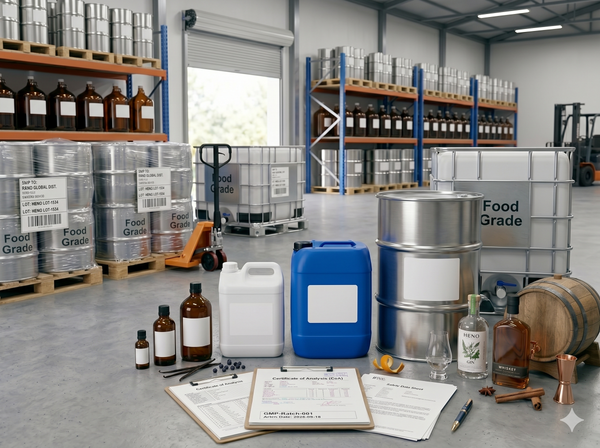
HBNO is a US-based manufacturer and bulk supplier of essential oils and carrier oils operating from a 100,000 sq ft GMP, ISO, FDA, Kosher, USDA Organic, and FAIR FOR LIFE-certified facility in Chico, California.
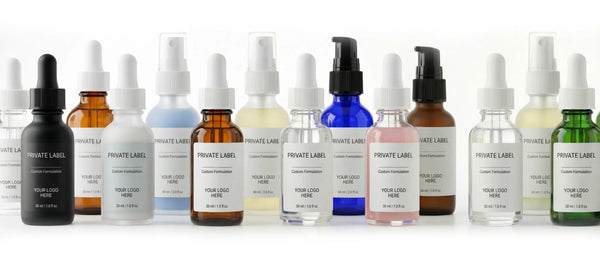
Our no-minimum order quantity policy means brands can qualify any oil with a single sample shipment full documentation included before committing to production volume. Our in-house GC/MS lab tests every batch before dispatch. For brands building multi-SKU ranges, our private label program supports 250,000-unit daily production capacity with long-term supply contracts and committed pricing.
Frequently Asked Questions
What volume threshold justifies switching from retail to wholesale essential oil sourcing?
A useful benchmark is 5 kg or more per year of a single oil. At that level, wholesale pricing typically reduces per-unit cost by 30-60% versus retail. For brands making multiple formulations, the total cross-SKU volume usually exceeds this threshold earlier than expected.
What documentation should a wholesale essential oil supplier provide on every order?
At minimum: a batch-specific CoA with GC/MS results, an SDS, and botanical name with country of origin and extraction method. Suppliers serving cosmetic brands should also provide an IFRA conformance certificate for any oil entering a finished product formula.
How do I know if my wholesale essential oil supplier is qualified for cosmetic production?
Require ISO and GMP certification, FDA registration for US-market supply, and batch-level GC/MS documentation not a generic spec sheet. A supplier who cannot produce batch-specific analytical records for each shipment is not qualified for cosmetic-grade ingredient supply.
Can I switch to wholesale essential oil sourcing without committing to a large minimum order?
Yes, suppliers operating a no-minimum order quantity model allow brands to qualify oils with small initial orders carrying full documentation before committing to production volumes. This removes the capital risk of the retail-to-wholesale switch and allows lab-scale testing before bulk commitment.
What is the difference between retail-grade and wholesale-grade essential oils?
The primary difference is documentation and supply chain traceability, not necessarily the oil itself. Wholesale-grade supply includes batch-specific GC/MS reports, CoAs, SDS, and origin traceability. Retail packaging typically includes none of these making retail oils unsuitable for regulated cosmetic or food-grade production regardless of their intrinsic quality.
Published by the HBNO Bulk editorial team. HBNO (IL Health & Beauty Natural Oils Co., Inc.) is a manufacturer and bulk supplier of essential oils and carrier oils based in Chico, California.
Recognising the transition signals early before a batch failure, a retail listing rejection, or a co-packer compliance hold is what keeps scaling brands on schedule. To request an essential oil sample pack, documentation set, and wholesale pricing, contact the HBNO team.