The terms get used interchangeably in sales conversations and they describe two genuinely different businesses. White label vs private label is not a semantic distinction, it is a decision about who owns the formula, who carries the inventory risk, and how much of the retail price you keep. Brands that pick the wrong model for their stage end up either paying premium development costs for a product they cannot yet sell in volume, or building a range that any competitor can replicate from the same supplier within a month. Both mistakes show up in the margin line eventually. Here is how the two models actually differ and where each one earns its place.
What separates the two models
White label means buying an existing formulation and putting your brand on it. Private label means a formulation developed to your specification, which you control.
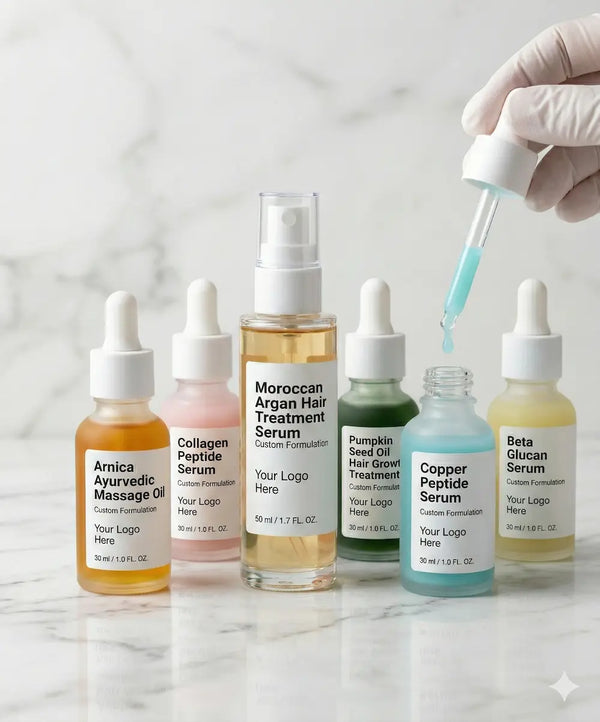
With white label, the manufacturer has already developed the product. You choose from a catalogue, apply your branding, and ship. Minimum quantities are low because the formula is already being produced for others, development cost is effectively zero, and time to market can be measured in weeks. The trade-off is that the product is not exclusive to you, and a competitor can source an identical one.
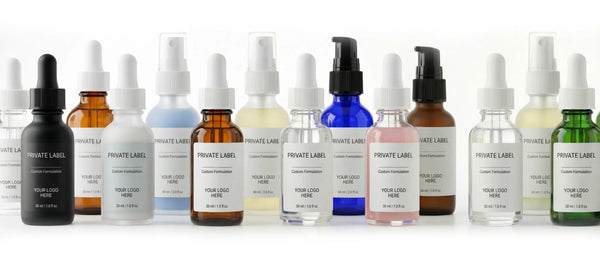
With private label, the formulation is developed to your brief. You specify the carrier base, the aromatic profile, the inclusion rates, the pack. That specification is yours, which makes the product genuinely defensible. In exchange you carry development cost, higher minimums, longer lead times, and the responsibility for the formulation working. Neither model is more sophisticated than the other. They suit different stages.

The margin arithmetic
White label typically delivers a lower gross margin per unit at a much lower risk, while private label delivers a higher margin that only materialises above a certain volume.
The reason is fixed cost absorption. A private label programme carries development work, stability testing, possibly tooling and artwork, and a minimum order that has to be sold before any of it is recovered. Divide those fixed costs across 500 units and the per-unit economics are worse than white label. Divide them across 50,000 and they are substantially better, because the formulation cost is now trivial per unit while the pricing power of an exclusive product remains.
The practical question is therefore not which model has better margin, it is where your volume sits relative to the crossover point. Work it out explicitly: total fixed cost of the private label programme, divided by the per-unit margin advantage over the white label equivalent, gives the break-even units. If you cannot confidently sell that number within a reasonable period, white label is the correct commercial answer regardless of how the exclusive version would feel. Our guide to the seven signals a brand is ready to move to wholesale covers the same threshold logic on the sourcing side.
Formulation ownership and what it is worth
The strategic value of private label is not the product, it is that the specification is an asset you own and a competitor cannot buy.
A white label product is a rented position. It works, it ships, and it can be copied. For an early-stage brand testing whether a category has demand, that is exactly the right level of commitment: you are buying market information cheaply. Where it becomes a problem is at scale, when a brand has built real equity on a product any competitor can source, and has no formulation moat to defend.
Private label also gives you control over the things that determine reorder rate. The carrier base, the aromatic load, the sensory profile, the stability position. With a white label product you accept the manufacturer's decisions on all of these, including the ones that will generate your customer complaints. Our guide to private label oil-based cosmetics and formulation briefs covers how to write a brief that produces a specification worth owning.
Regulatory responsibility does not transfer
Whichever model you choose, the brand on the label carries responsibility for the finished product, its claims and its safety documentation.
This is the part most often misunderstood in white label arrangements. Buying a finished formulation does not transfer claim liability to the manufacturer. If the pack asserts something the product cannot substantiate, the brand named on it is exposed. Under FDA frameworks for cosmetics, responsibility attaches to the entity marketing the product.
Practically, that means three things regardless of model. Obtain and keep the specification, CoA and SDS for the materials in your product. Confirm that any certification claim, particularly organic, is traceable to the lots in your batches rather than to the supplier generally. And take your own view on every claim on the pack rather than adopting the manufacturer's marketing copy unexamined. Demand for naturally derived personal care products continues to grow according to Grand View Research, and with it regulatory attention to what those products claim.

How HBNO supports both models
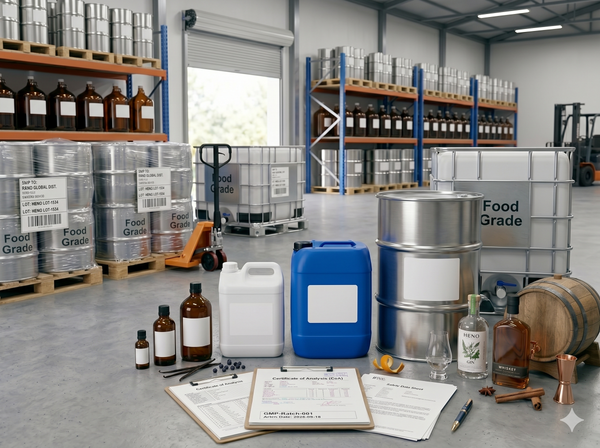
We manufacture from a 100,000 square foot facility in Chico, California, operating under ISO and GMP systems with FDA registration, with PhD staff and in-house quality control. Our private label operation runs to 250,000 units per day, with drop-shipping available, which covers the high-volume end of the decision above.
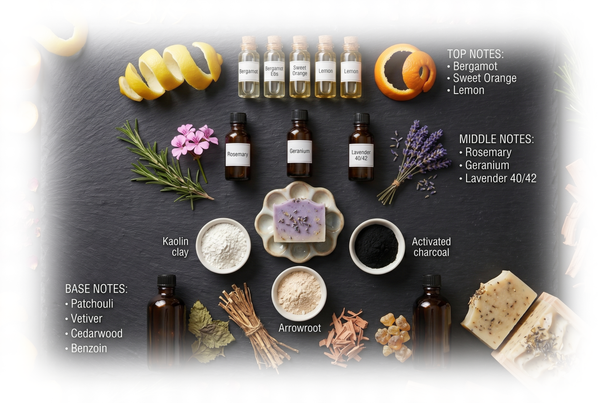
For brands at the earlier stage, the more useful fact is that there is no minimum order quantity on raw materials. That means you can develop and validate your own formulation at bench scale using the same carrier oils and essential oils, golden jojoba and lavender included, that you would eventually buy in volume, without committing to a drum or a production run. In practice that is a third path: own your specification from the start, produce at small scale, and move to volume once the numbers justify it. Long-term supply contracts and recurring wholesale programmes support that transition.
Frequently asked questions about white label and private label
What is the actual difference between white label and private label?
White label is an existing formulation sold to multiple brands under their own branding. Private label is a formulation developed to your specification, which you control and a competitor cannot buy. The difference determines exclusivity, development cost, minimum quantities and how defensible the product is.
Which model gives better margin?
Private label gives a higher per-unit margin, but only above the volume at which its fixed development and minimum-order costs are absorbed. Below that point white label is more profitable. Calculate the break-even units explicitly rather than assuming the exclusive option is the better business.
Can a brand start with white label and move to private label later?
Yes, and it is a common and sensible progression. White label buys market information cheaply, and once demand is proven the formulation investment is much easier to justify. The main cost of switching is that the sensory profile will change, which needs managing with existing customers.
Does a white label supplier take on the claim liability?
No. Responsibility for the finished product and everything printed on it sits with the brand marketing it. Buying a ready-made formulation does not transfer that exposure. Keep the specification, CoA and SDS for your records and take an independent view of every claim on the pack.
What is the minimum volume that justifies private label?
There is no universal figure, because it depends on the fixed cost of the specific programme and the margin advantage it creates. Divide the total fixed cost by the per-unit margin gain to get your break-even units, then ask honestly whether you can sell that number within a reasonable period.
Choosing between white label and private label on the numbers
The decision is not about ambition, it is about where your volume sits relative to the crossover point. White label is the correct answer when you are still buying market information and cannot yet absorb development cost. Private label is correct when volume is proven and an owned specification becomes a defensible asset. A third route, developing your own formulation on raw materials with no minimum order, sits between them and suits more brands than it gets credit for. To discuss raw material specifications or private label capability, contact our team for a quote.
Published by the HBNO editorial team. HBNO (IL Health & Beauty Natural Oils Co., Inc.) is a manufacturer and bulk supplier of essential oils and carrier oils based in Chico, California.