Ask a private-label supplement brand where its margin sits and you hear about the active. Ask its contract manufacturer and you hear about the fill. In a softgel, a tincture, an emulsion or a liquid concentrate, the carrier oil is frequently the largest single component by weight and one of the largest by cost, and it is almost always the least scrutinised line on the specification. Private label supplements built on a well-chosen carrier hold their cost per unit across a year of production. Ones built on whatever oil was cheapest that quarter absorb the variance as returns, reformulation and lost shelf life. Here is where the margin actually hides.
Where the oil sits on a supplement cost sheet
In most oil-based supplement formats the carrier is 70 to 95 percent of the fill by weight, which makes it the dominant cost driver even when the active carries the price story.
That ratio has three consequences procurement teams routinely miss. A small percentage change in carrier cost per kilo moves cost per unit more than a large change in the active does. The carrier sets the oxidative clock for the whole product, so its stability profile governs the shelf life you can print. And the carrier determines viscosity, which determines fill speed and fill accuracy on the line.
Fill accuracy deserves its own line in the business case. A volumetric filler running a thinner oil than specified will overfill, and overfill is margin loss repeated on every unit. Documenting specific gravity and viscosity before the first run costs nothing. Finding the variance in a yield report costs a batch.

The carrier decision: MCT, olive, or high-oleic
Three carrier families cover most oil-based supplement work, and they differ on cost, stability and neutrality rather than on interchangeability.
-
Fractionated coconut, sold as MCT. The neutral option. It is a refined fraction of coconut oil, which is why it is more rapidly absorbed than a long-chain triglyceride oil, and it is close to odourless and colourless with a long usable life. We supply it conventional and organic. The cost per kilo is higher than commodity seed oils and the neutrality usually justifies it.
-
Olive. Available across a wide grade range, and the grade decision is significant. Extra virgin organic carries flavour and colour that can be an asset in a premium tincture and a liability in a flavour-sensitive emulsion. Refined and pomace grades are cheaper and far more neutral.
-
High-oleic seed oils and avocado. The durability play. Monounsaturated-dominant profiles oxidise more slowly than polyunsaturated ones, which matters when a product sits in distribution.
Specialty carriers sit alongside these where a formulation needs a standardised material. Black seed oil is available as an organic grade standardised to 2 percent thymoquinone, which lets a specification reference a measured marker rather than a botanical name alone. The carrier oils range covers the practical options in multiple grades.
Oxidation is the margin leak nobody budgets for
The single most expensive carrier mistake in supplement manufacturing is buying an oil whose oxidative life is shorter than the product's distribution cycle.
A supplement moves slowly. Manufacture, QC release, warehousing, distributor, retailer, shelf. Eighteen months from fill to consumption is unremarkable. An oil chosen on price per kilo without reference to that timeline develops off odours inside the window, and the cost lands as returns and destroyed stock rather than as a purchasing variance anybody traces back.
Three controls address it. Specify peroxide value and free fatty acid limits at delivery and record the actual figures. Choose a carrier whose unsaturation profile suits the timeline rather than the budget. And add tocopherol at blending where the format permits. Our QC team runs GC/MS in house on every lot and issues a CoA and SDS with every shipment, and batch testing against a retained reference is available on request, which is what makes a stability argument resolvable rather than theoretical. Our comparison of coconut, olive and canola oil for food manufacturing covers the same trade-off on the food side.
Certification and documentation as a price premium
Organic, Kosher and food grade documentation are the cheapest margin available to a private-label supplement brand, because the premium they support at retail usually exceeds the premium they cost at purchase.
The requirement is that the paperwork trace to the specific lot. A supplier-level organic certificate does not substantiate a finished-product organic claim; a lot-level certificate does. The same applies to Kosher. At HBNO, ISO and GMP systems, FDA registration, Kosher, USDA Organic and FAIR FOR LIFE certifications are held at company level, and product level certification is confirmed per SKU rather than assumed across the catalogue.
Food grade status is the one that most often gets assumed incorrectly. It is specific to the material and, in some cases, to the grade. Confirm it per SKU before a formulation depends on it. Guidance from the FDA governs what may appear on a supplement label, and the substantiation burden for any claim sits with the brand rather than with the raw material supplier. Our guide to food-grade coconut oil specifications sets out what that documentation should contain.

Sourcing bulk supplement carriers from HBNO
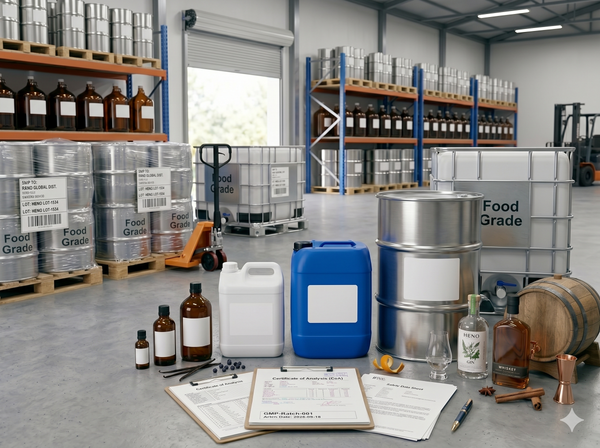
We manufacture from a 100,000 square foot facility in Chico, California, operating under ISO and GMP systems with FDA registration, with PhD staff and in-house quality control. The full product list includes MCT in conventional and organic grades, olive across extra virgin organic, refined and pomace, refined avocado, hemp seed, pumpkin seed and standardised black seed.
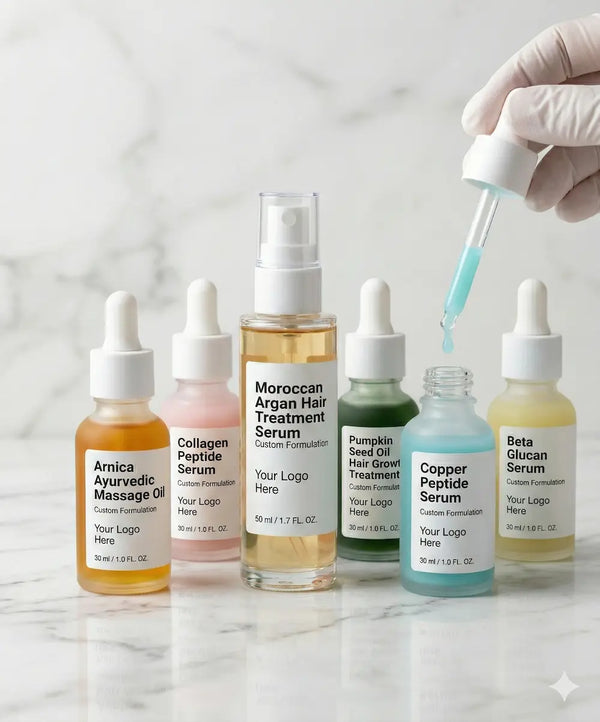
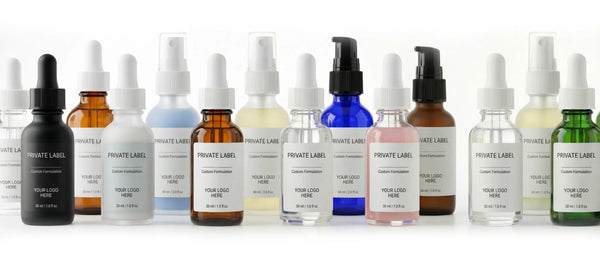
Two operational points matter to private-label programmes specifically. There is no minimum order quantity, so a formulation can be qualified at bench scale before drum commitment. And our private label operation runs to 250,000 units per day with drop-shipping available, which means a brand can move from raw material purchasing to finished units without changing supply chain.
Frequently asked questions about supplement carrier oils in bulk
Which carrier oil is most neutral for a flavour-sensitive supplement?
Fractionated coconut, sold as MCT, is the most neutral widely available option on both colour and odour. Refined olive and refined avocado are the next most neutral and cost less per kilo. Extra virgin grades carry flavour that has to be either masked or made part of the product story.
How does carrier choice affect printed shelf life?
The carrier sets the oxidative clock for the whole fill, so its unsaturation profile effectively caps what shelf life you can substantiate. A monounsaturated-dominant or fractionated carrier supports a longer claim than a polyunsaturated one under the same storage conditions. Run accelerated stability on the actual carrier lot rather than on a generic profile.
Does organic certification change how a carrier performs in a formula?
No. Organic certification governs cultivation and handling, not composition, so functional behaviour matches the conventional equivalent at the same refinement grade. Its value is commercial and it depends entirely on the certificate being traceable to the lot in the finished product.
What documentation should arrive with a bulk supplement carrier order?
The batch CoA with the analytical profile, the SDS, the food grade confirmation where applicable, and any lot-level organic or Kosher certificates. Peroxide value and free fatty acid at delivery should be on the CoA, not supplied on request, because they are the baseline for every later stability question.
Why does fill weight variance matter more than carrier price per kilo?
Because it repeats on every unit. A volumetric filler set for one viscosity will systematically overfill or underfill when the carrier changes, and a one percent overfill across a production run outweighs most of what aggressive price negotiation on the carrier can recover. Document specific gravity and viscosity in the specification.
HBNO's Food Grade Essential Oils are concentrated ingredients listed by the U.S. Food and Drug Administration ("FDA") as "Generally Recognized as Safe." These ingredients can be used in food applications according to guidelines set forth by the FDA and the Flavor and Extract Manufacturers Association. For commercial use, please consult industry guidelines, such as FEMA, for information related to the safe use of these concentrated ingredients.
Getting the carrier specification right in private label supplements
The oil is the biggest line on the fill sheet and the one most often bought on price alone. Specify the grade rather than the botanical, match the carrier's oxidative profile to your real distribution timeline, document specific gravity and viscosity before the first run, and insist that organic and Kosher certificates trace to the lot. Those four decisions are where private label supplements quietly gain or lose several points of margin. To review specifications or request samples of any bulk carrier in the range, contact our team for a quote.
Published by the HBNO editorial team. HBNO (IL Health & Beauty Natural Oils Co., Inc.) is a manufacturer and bulk supplier of essential oils and carrier oils based in Chico, California.