The global essential oils market is projected to exceed $15 billion by 2026 (Grand View Research), with B2B procurement representing the majority of volume. For brands purchasing bulk essential oils at commercial scale, cost per kilo is the defining procurement metric and it is shaped by three variables: volume tier, order structure, and supplier selection. Each can move the number significantly, and most brands that are overpaying on ingredient cost are doing so because one of the three is misaligned with their actual purchase pattern.
How Bulk Essential Oil Volume Pricing Tiers Work
Volume pricing tiers on bulk essential oils operate by reducing the per-kilo cost at defined quantity breakpoints the structure is predictable once you know where the breaks fall for each oil.
Most wholesale suppliers operate pricing across five volume bands:
|
Order Volume |
Typical Price Position |
|
100g – 500g |
Sample / pre-qualification rate |
|
1 kg – 4 kg |
Entry wholesale |
|
5 kg – 24 kg |
Mid-tier wholesale |
|
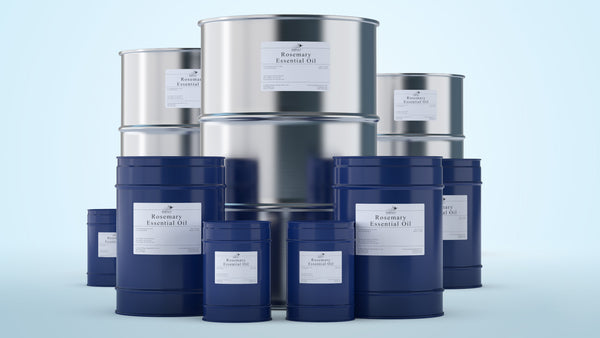
25 kg – drum (~180 kg) |
Commercial / production rate |
|
Multi-drum / pallet |
Long-term contract pricing |
The price reduction between entry wholesale and drum scale typically ranges from 30 to 50 percent depending on the oil, its harvest origin, and the supplier's cost structure. High-volume commodities, lavender, peppermint, tea tree, eucalyptus show the steepest tier drops because supply depth is greater. Specialty and rare oils, rose absolute, helichrysum, frankincense, carry narrower tier spreads because raw material cost dominates the per-kilo rate regardless of order volume.
Understanding which tier your current monthly purchase volume falls into and whether consolidating orders across SKUs would move you into the next band is the first cost optimisation step available to any buying team.

Order Structure Variables That Affect Your Cost Per Kilo
How you place bulk essential oil orders can shift your effective cost per kilo as significantly as how much you order consolidation, timing, and contract structure all compound the volume discount.
Three order structure decisions determine where in the pricing curve your purchases land.
Order consolidation: Purchasing multiple essential oil SKUs in a single order often unlocks combined volume breaks that individual SKU orders would not reach. A brand ordering five different oils at 1 kg each may qualify for mid-tier pricing on the total order value, even though each individual line sits at entry-level volume when assessed separately.
Harvest cycle timing: Ordering key commodity oils, lavender, peppermint, eucalyptus in advance of the Northern Hemisphere harvest cycle (typically Q3) allows brands to lock pricing before seasonal spot price increases driven by new-crop demand.
12-month supply contracts: Committing to a projected annual volume with a qualified supplier typically locks per-kilo pricing at a preferential tier for the contract period. At HBNO, we structure long-term supply agreements that fix rates against committed annual volumes, removing seasonal price volatility from your COGS model.
Supplier Selection: Where Your True Cost Per Kilo Is Actually Set
The per-kilo price on a supplier invoice is not your true cost per kilo batch failures, reformulation cycles, and compliance rejections caused by inconsistent or undocumented supply add cost that never appears on a line item.
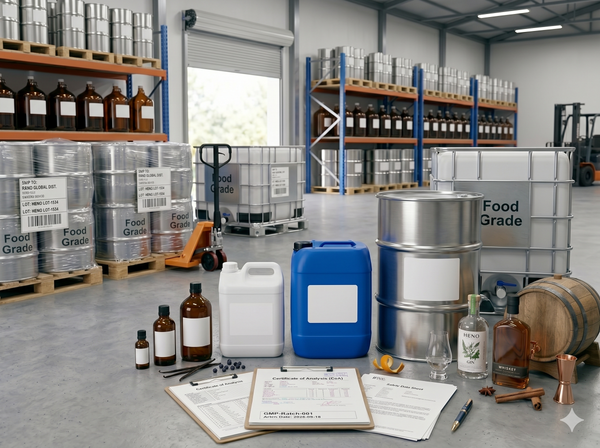
Sourcing from a GMP-certified, ISO-registered manufacturer rather than a spot-market distributor typically adds a small premium to the headline per-kilo rate. That premium is offset by three structural cost reductions: consistent GC/MS profiles that prevent formulation batch failures caused by lot-to-lot variation; batch-specific documentation that prevents retailer or co-packer compliance rejection; and domestic US inventory that removes lead-time risk from production scheduling.
For brands sourcing USDA Organic certified essential oils, certification infrastructure must exist somewhere in the supply chain buying from a supplier who already holds the certification avoids paying for third-party verification separately on top of the per-kilo rate. At HBNO, every batch from our essential oils collection ships with batch-specific GC/MS, CoA, and SDS as standard, at no surcharge for documentation.

How HBNO Structures Bulk Essential Oil Pricing for Growing Brands
HBNO is a US-based manufacturer and bulk supplier of essential oils operating from a 100,000 sq ft facility in Chico, California, with ISO, GMP, FDA, Kosher, USDA Organic, and FAIR FOR LIFE certifications.
Our no-minimum order quantity policy means brands can qualify any essential oil at sample volume full documentation included before committing to production quantities. Pricing scales transparently across kilo, pail, drum, and multi-drum tiers. For brands building predictable procurement programs, our private label program supports long-term supply contracts with committed per-kilo pricing across 12-month windows, removing spot-price volatility from ingredient cost planning.
Our in-house QC team tests every batch for GC/MS composition, refractive index, specific gravity, and organoleptic character with results included on the batch CoA, so the per-kilo rate you pay reflects consistent quality across every shipment, not just the first.
Frequently Asked Questions
What volume threshold unlocks meaningful price reductions on bulk essential oils?
The mid-tier wholesale break typically falls at 5 kg per SKU, with the most significant per-kilo reductions occurring at the 25 kg to drum transition. Consolidating multiple SKUs into a single order can pull total order volume into a lower-cost tier faster than scaling a single line alone.
How does a 12-month supply contract reduce my cost per kilo on essential oils?
A supply contract commits projected annual volume to a supplier in exchange for pricing locked at a preferential tier for the contract period. It removes seasonal spot-price exposure and gives the supplier inventory visibility to allocate specifically for your production schedule rather than fulfilling on a spot basis.
Is it cheaper to buy bulk essential oils directly from a manufacturer or through a distributor?
Buying directly from a manufacturer typically delivers lower per-kilo prices than purchasing through a distributor, as the distribution margin is removed from the cost stack. Manufacturers also provide batch-specific GC/MS documentation as standard, reducing the compliance and traceability costs that spot distributors may not support.
What hidden costs should I account for beyond the per-kilo price when sourcing bulk essential oils?
Account for batch failure risk from lot-to-lot inconsistency, compliance rejection cost if documentation is insufficient for your sales channel, reformulation cycles caused by undisclosed origin or grade changes, and lead-time disruption cost if the supplier cannot guarantee committed domestic inventory between orders.
How does HBNO structure pricing for brands scaling their bulk essential oil orders?
HBNO prices transparently across kilo, pail, drum, and multi-drum tiers with no minimum order quantity for qualification sampling. Long-term supply contracts are available for qualifying wholesale accounts, fixing per-kilo pricing across 12-month commitments with batch-specific GC/MS, CoA, and SDS included as standard on every order.
Published by the HBNO Bulk editorial team. HBNO (IL Health & Beauty Natural Oils Co., Inc.) is a manufacturer and bulk supplier of essential oils and carrier oils based in Chico, California.
Reducing cost per kilo on bulk essential oils is a procurement architecture decision volume tier, order consolidation, contract structure, and supplier selection each contribute a measurable reduction when aligned correctly. To request a wholesale pricing schedule, sample pack, and supply contract terms for your essential oil program, contact the HBNO team.