Aloe is the most widely specified water-phase botanical in personal care, and also the most loosely defined. Two suppliers can quote bulk aloe vera gel at prices ten times apart and both be describing something they legitimately call aloe. The difference sits in solids content, concentration ratio, aloin level, and whether the material is a single strength juice, a gel, or a reconstituted powder. For a formulator that distinction decides preservation strategy, viscosity, and cost per finished unit. At HBNO we supply Aloe Vera Extract and Aloe Vera Powder into exactly these formulations, and the first question we ask is always which form the brief actually needs.
Gel, juice, extract, or powder: what bulk aloe vera actually means
The four forms on the market are not grades of the same product, they are different materials with different solids content, and comparing them on price per kilo is meaningless without the concentration ratio.
-
Single strength juice or gel is the filleted inner leaf, typically well over 99 percent water. Cheap per kilo, heavy to freight, and it needs a preservative system from the moment it lands.
-
Concentrate is the same material reduced, commonly quoted as 10:1, 40:1, or 200:1. Concentration ratio is the number that makes a quotation comparable.
-
Extract is produced with a defined process and standardised against a marker, which is why it behaves more predictably batch to batch.
-
Powder is spray or freeze dried concentrate. It ships and stores far more efficiently, carries no water phase preservation burden of its own, and is reconstituted in your plant.
Whole leaf versus inner leaf is the other axis. Whole leaf material includes the outer rind and latex layer and therefore carries more aloin, so most cosmetic buyers specify inner leaf, decolorized material, or an aloin limit. Ask for the INCI listing as well as the trade name, because Aloe Barbadensis Leaf Juice and Aloe Barbadensis Leaf Extract are not the same declaration.

Seven skincare products built on bulk aloe vera gel
Aloe earns bulk volume because one qualified specification feeds most of a brand's water-phase range without reformulation.
-
Aftersun and body gels, where aloe is the dominant water-phase ingredient and consumption per unit is highest.
-
Facial toners and essences, often substituting for part of the water phase at 10 percent or more.
-
Sheet mask and ampoule serums, where the ingredient deck is the product and aloe sits near the top of the list.
-
Leave-in conditioners and hair mists, which take reconstituted powder well because the viscosity target is low.
-
Shave gels and post-shave products, where the water phase carries the whole format.
-
Hand and body lotions, using aloe as part of the aqueous portion of the emulsion.
-
Cleansing wipe solutions, where cost per litre governs and powder reconstitution usually wins.
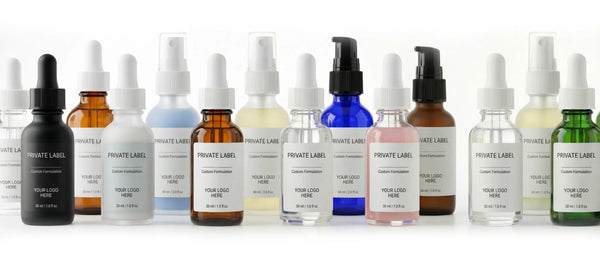
The pattern is the same one that drives private label oil-based cosmetics programmes: a single raw material qualification released across several SKUs.
The specifications that separate real aloe from thickened water
Solids content and aloin level are the two numbers that expose whether you are buying aloe or buying water with a thickener, and both belong on the purchase specification.
Four parameters do the work:
-
Total solids and polysaccharide content. Solids tell you how much aloe is present. Polysaccharide content, sometimes reported against acemannan, is the marker serious buyers standardise against.
-
Aloin. Whole leaf material carries more of it. Cosmetic buyers commonly specify a ceiling, and the FDA position on aloe latex constituents is worth reading before any ingestible application is considered.
-
Preservation and microbiology. A dilute aqueous material is a growth medium. The preservative system remains the formulator's own responsibility, and your safety assessor should validate it against the specific aloe form.
-
Viscosity and any added thickener. Some gels reach their texture from carbomer or xanthan rather than from aloe solids. Ask what is in the drum besides aloe.
Our QC team can confirm appearance, odour, and specification parameters against your document before shipment, and batch testing is available on request. Set a retained reference sample from the approved lot and check colour and odour on each delivery, the same incoming discipline that applies to carrier oil selection for cosmetic formulation.

Sourcing bulk aloe vera from HBNO
We list Aloe Vera Extract and Aloe Vera Powder rather than a single strength gel, which suits brands optimising freight and preservation rather than buying water.
HBNO manufactures and distributes from a 100,000 square foot facility in Chico, California, and holds ISO, GMP, FDA registration , Kosher, USDA Organic, and FAIR FOR LIFE certifications at company level. Certification is confirmed per product, so ask our team to verify current documentation for the exact aloe item and lot rather than relying on the range.
There is no minimum order quantity, so a formulator can reconstitute powder at several ratios at bench scale before committing to volume. Private label capacity runs to 250,000 units per day, drop shipping is available, and we ship across North America, Europe, Asia, and Oceania. Brands typically pair aloe with the rest of a water-phase and oil-phase deck from our formulation ingredients range and wider product list, and often qualify an essential oil alongside it, which is why bulk tea tree oil specification comes up in the same brief. Long term supply agreements suit aloe well because consumption is high and substitution triggers stability work.
Frequently asked questions about bulk aloe vera sourcing
Which aloe form is most economical for large volume production?
Powder is normally cheapest on a delivered, reconstituted basis because you are not paying freight on water and there is no preservation burden in transit or storage. Single strength gel is cheapest per kilo and most expensive per unit of active solids. Concentrate sits between the two. Run the comparison on cost per finished litre, not cost per kilo of raw material.
What does a 200:1 aloe vera concentrate ratio actually mean?
It states how much single strength juice was reduced to produce one part of the concentrate, so 200 kg of juice yields 1 kg of material. The ratio alone does not guarantee quality, because the reduction process and the starting material both vary. Always pair the ratio with a total solids figure and a polysaccharide specification.
Why do cosmetic buyers set an aloin limit on bulk aloe?
Aloin concentrates in the outer leaf and latex layer rather than the inner gel, so its level indicates how the leaf was processed. Inner leaf and decolorized materials carry substantially less. Setting a ceiling on your specification gives you a testable basis for confirming the processing route you paid for.
Can aloe vera powder be reconstituted to match a single strength gel?
Yes, and this is how most large scale formulators work. Reconstituting a 200:1 powder at the correct ratio produces a material with comparable solids to single strength juice. Validate the reconstituted viscosity and microbiological profile in your own plant, because water quality and mixing conditions both affect the result.
Should aloe be added to the water phase before or after the emulsion is formed?
Most formulators add it to the cooled water phase or post-emulsification, because prolonged heat exposure degrades the polysaccharide fraction you are paying for. The exact point depends on your process temperature and preservative system. Confirm it during stability trials rather than assuming a standard sequence.
Getting the bulk aloe vera specification right before you scale
Bulk aloe vera gel is only a meaningful purchase description once the form, concentration ratio, solids content, and aloin ceiling are on paper. Settle those four and the material becomes comparable between suppliers and predictable across deliveries. Leave them open and every reorder is a small reformulation risk. Our team can quote Aloe Vera Extract and Aloe Vera Powder against your specification, confirm lot documentation, and supply samples so the reconstitution and stability work happens before the production order.