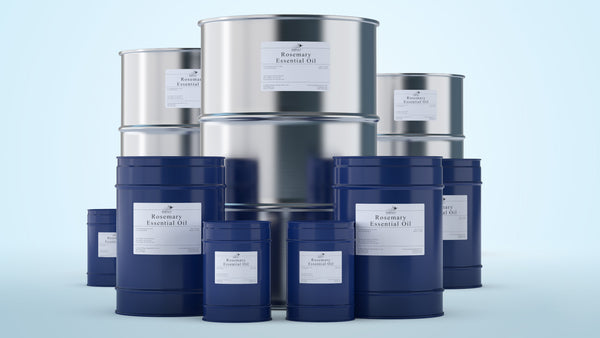
Household product manufacturers formulating natural insect deterrents and multi-purpose cleaning concentrates face a constituent-specific sourcing decision that commodity purchasing rarely resolves: eucalyptol (1,8-cineole) content. Eucalyptol is the primary active in both the antimicrobial and insect-deterrent applications that drive natural household product claims, and its concentration in the bulk essential oil determines the inclusion rate needed to achieve efficacy which in turn determines cost-in-use, regulatory positioning, and label claim defensibility. Sourcing eucalyptus oil wholesale from a supplier who documents 1,8-cineole content on the CoA is not a premium upgrade; it is baseline procurement practice for any brand making household product claims.
At HBNO, we supply bulk Eucalyptus globulus essential oil in both conventional and USDA Organic grades, GC/MS tested in our in-house laboratory at our 100,000 sq ft facility in Chico, California, with full constituent-level documentation on every order.

Why 1,8-Cineole Content Is the Specification That Matters for Household Applications
The antimicrobial and insect-deterrent activity of bulk eucalyptus oil in household cleaning and pest deterrent formulations is driven by 1,8-cineole (eucalyptol) and the concentration of this constituent in the bulk oil determines how much oil your formula needs to achieve a functional active loading, directly affecting your finished-product cost structure.
1,8-cineole operates through two distinct mechanisms relevant to household product manufacturers:
Antimicrobial mechanism (cleaning/surface applications): 1,8-cineole disrupts microbial cell membrane integrity and inhibits biofilm formation. Research published in the Journal of Antimicrobial Chemotherapy demonstrated that eucalyptus oil and 1,8-cineole exhibited significant antimicrobial activity against clinically relevant pathogens including Staphylococcus aureus, MRSA, E. coli, Candida albicans, and biofilm cultures of MRSA and Pseudomonas aeruginosa and that "crude EO was significantly more efficacious against microorganisms grown in suspension compared with 1,8-cineole" alone, indicating synergistic activity from the full oil profile (Hendry et al., 2009, J Antimicrob Chemother, 64:1219–25). This supports the use of high-cineole whole eucalyptus oil (not isolated eucalyptol) in household surface cleaner formulations making antimicrobial claims.
Insect deterrent mechanism (pest control applications): Eucalyptol and associated monoterpenes (α-pinene, limonene) interfere with insects' olfactory receptor function, disrupting their ability to locate hosts and food sources. The deterrent mechanism is concentration-dependent: effective disruption requires consistent eucalyptol loading in the finished product, which depends on documented 1,8-cineole content in the bulk oil.
For Eucalyptus globulus the species with the highest commercial 1,8-cineole content (70–90%) the CoA specification that matters is not species and origin; it is the eucalyptol percentage. A batch at 72% cineole and a batch at 88% cineole are both E. globulus from South Africa, but the formulator's inclusion rate calculation for a 2% active eucalyptol loading is meaningfully different between them.
The global natural household cleaners market was valued at USD 6.97 billion in 2024 and is projected to reach USD 13.28 billion by 2030, growing at a CAGR of 11.3%, driven by consumer demand for effective alternatives to synthetic biocides in household applications (Source: Grand View Research). Botanical actives essential oils with documented antimicrobial constituents are the primary growth driver in this expansion.
Formulation Applications for Eucalyptus Oil Wholesale in Household Manufacturing
Bulk Eucalyptus globulus essential oil serves four primary household product manufacturing categories: surface cleaning and disinfectant concentrates, natural insect deterrent sprays, diffuser and air-freshening concentrates, and laundry freshening and fabric care products each with distinct inclusion rates, regulatory considerations, and constituent requirements.
Surface cleaning concentrate: 1–5% eucalyptus oil in a surfactant/water system. For household cleaners making antimicrobial activity claims in the US, EPA FIFRA registration applies if "disinfectant" or "kills germs" language is used. EPA Section 25(b) minimum-risk pesticide exemption covers essential oil active ingredients (including eucalyptus oil) for certain pest-control applications without full registration. Manufacturers must confirm their specific claim language against registration requirements in each target market. HBNO's documentation package supports the ingredient identification data required for FIFRA submission.
Natural insect deterrent spray: 2–5% eucalyptus oil in a water/emulsifier/alcohol system. Household insect deterrent sprays (application to surfaces, baseboards, entry points) differ from personal topical repellent in both inclusion rate and regulatory pathway. Surface-applied household deterrents using 25(b) minimum-risk active ingredients have a lighter regulatory burden than EPA Section 3 products. The 1,8-cineole documentation on the HBNO CoA supports ingredient identification in the 25(b) product filing.
Diffuser and room freshening concentrate: 3–8% eucalyptus oil in a carrier base or water-dilutable diffuser concentrate. The strong camphoraceous profile of E. globulus at these rates creates the respiratory-support sensory experience that room fragrance and wellness diffuser brands use for positioning. No EPA registration required for fragrance/wellness positioning.
Laundry freshening and fabric care: 0.2–1% eucalyptus oil in a liquid detergent or fabric conditioner system. The antimicrobial note and fresh aroma contribute to "fresh and clean" claims; at wash-cycle dilution, cineole contact time on fabrics is brief, so the antimicrobial activity at this inclusion rate is primarily sensory/positioning, not a registered efficacy claim.
Across our private-label production lines, household cleaning manufacturers who consolidate eucalyptus, tea tree, and lemongrass sourcing under one supplier relationship avoid the multi-CoA management overhead of three separate supplier qualifications. We supply all three at GC/MS-verified constituent concentrations from the same facility.

HBNO's Eucalyptus Oil Wholesale Supply Credentials
HBNO supplies GC/MS-verified Eucalyptus globulus essential oil in conventional and USDA Organic grades from our ISO, GMP, FDA, Kosher, and USDA Organic certified facility in Chico, California with 1,8-cineole documented on every CoA, no minimum order quantity, and global shipping to household product manufacturers.
Key supply specifications:
-
Eucalyptus globulus essential oil (E. globulus, CAS 8000-48-4, South Africa, steam-distilled) 1,8-cineole 70–90%; GC/MS tested; Kosher, IFRA compliant; cosmetic and household grade
-
Organic eucalyptus globulus essential oil USDA Organic certified; GC/MS tested; for brands requiring organic certification documentation in natural cleaning and household product lines
Supply terms for household product manufacturers:
-
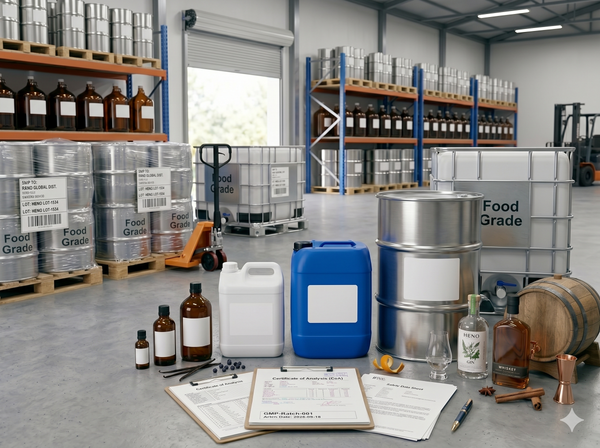
No MOQ sample volume through 25 kg containers and production drum quantities
-
250,000 units/day private-label production capacity for finished cleaning, fragrance, and household SKUs
-
Drop-shipping available; global shipping to North America, Europe, Asia, Oceania
-
Long-term supply agreements for volume allocation and pricing stability
Explore our natural essential oils collection for eucalyptus oil alongside tea tree, lemongrass, and peppermint for multi-ingredient household product sourcing.
FAQ
What 1,8-cineole content should household cleaning manufacturers specify for bulk eucalyptus oil?
A 1,8-cineole content of 70–90% is the commercial specification for Eucalyptus globulus essential oil in household cleaning and antimicrobial applications. For products making antimicrobial claims on hard surfaces, the ISO 770 pharmaceutical-grade standard sets a minimum of 80% cineole. For household cleaning concentrates where you're working backward from a target eucalyptol loading in the finished product (e.g. 2% w/w eucalyptol), the batch CoA cineole percentage is the number your formulation chemist needs to calculate inclusion rate. HBNO documents 1,8-cineole on every batch CoA.
What is the EPA Section 25(b) exemption and how does it apply to eucalyptus oil in household insect deterrent products?
EPA Section 25(b) of FIFRA exempts certain minimum-risk pesticide products from full EPA registration requirements. Eligible products must use only FIFRA-listed minimum-risk active ingredients (eucalyptus oil is listed) and meet labeling requirements. Products making stronger claims (e.g. kills insects, EPA-registered efficacy) require full Section 3 registration. HBNO provides ingredient documentation supporting 25(b) product filings, including botanical species declaration, CAS number, and origin documentation. Always consult your regulatory advisor for compliance requirements in your specific market.
Is HBNO's eucalyptus oil suitable for EPA minimum-risk pesticide submissions?
HBNO's Eucalyptus globulus essential oil (botanical species Eucalyptus globulus, CAS 8000-48-4, steam-distilled from leaves) is consistent with FIFRA Section 25(b) minimum-risk active ingredient requirements. Our CoA documents species, CAS, origin, and constituent profile the data elements required for 25(b) ingredient identification. Conventional grade is appropriate for most EPA-registered or 25(b) product applications; USDA Organic certification provides an additional documentation layer for organic input claims. Confirm your specific submission requirements with your regulatory counsel.
How does HBNO ensure constituent consistency across eucalyptus oil wholesale orders?
GC/MS analysis is run on every production lot of Eucalyptus globulus essential oil in our in-house laboratory. The 1,8-cineole percentage, along with other key constituents, is documented on the batch-specific CoA. For accounts on long-term supply contracts, we can issue a master specification document committing to a 1,8-cineole percentage band for all future deliveries so your formulation chemist can maintain a stable inclusion rate across production runs.
Can HBNO supply eucalyptus oil as part of a private-label natural cleaning or household insect deterrent product?
Yes. Our private label services cover ingredient sourcing, GC/MS testing, formulation, labeling, and fulfillment for natural cleaning and household product lines. Surface sprays, multi-purpose concentrates, and diffuser blends are all within scope. With 250,000 units per day of production capacity, we support commercial-scale household product manufacturing under your brand from prototype through retail-ready SKU.
Published by the HBNO Bulk editorial team. HBNO (IL Health & Beauty Natural Oils Co., Inc.) is a manufacturer and bulk supplier of essential oils and carrier oils based in Chico, California.