The professional spa services market continues to expand, with massage oil representing one of the highest-volume consumable categories across spa facility operations (Grand View Research). For spa procurement managers and personal care brand formulators sourcing bulk massage oil at commercial scale, carrier selection is the central formulation decision: it determines slip characteristics, absorption rate, shelf stability, and the essential oil load the blend can safely carry. Getting the carrier base and blend parameters right before committing to volume reduces reformulation cycles and supplier qualification time at production scale.
Carrier Oils for Bulk Massage Oil Production: Performance Comparison
Carrier oil selection is a formulation specification decision viscosity, absorption rate, fatty acid profile, and oxidative stability each affect professional spa performance, reapplication frequency, and finished product shelf life.
The following carriers are most commonly specified in production-scale massage oil formulations:
|
Carrier Oil |
Viscosity |
Absorption |
Shelf Life |
Best Application |
|
Sweet almond (Prunus dulcis) |
Medium |
Moderate |
12–18 months |
Full-body, Swedish massage |
|
Grapeseed (Vitis vinifera) |
Light |
Fast |
6–12 months |
Swedish, sports, hot climate |
|
Jojoba (Simmondsia chinensis) |
Medium-light |
Moderate |
24+ months |
Premium spa, sensitive skin |
|
Fractionated coconut |
Very light |
Fast |
24+ months |
High-volume spa, hot stone |
|
High-oleic sunflower |
Light-medium |
Moderate |
18–24 months |
Cost-efficient commercial base |
Grapeseed and fractionated coconut are the most cost-efficient choices for high-volume spa operations requiring smooth glide without frequent reapplication. Jojoba, technically a liquid wax is the premium tier choice where a non-greasy after-feel and exceptional oxidative stability are the primary requirements. High-oleic sunflower provides an economical carrier base for large-volume commercial formulations without the shorter shelf life of standard linoleic sunflower grades.

Formulating a Bulk Massage Oil Blend: Ratios, Essential Oil Load, and Stability
A production-scale massage oil blend follows a three-component structure: a carrier base at 94–97%, an essential oil fragrance fraction at 2–3%, and a tocopherol antioxidant addition at 0.5–1% of total formula weight.
The essential oil fraction for any leave-on body application must comply with IFRA guidelines for leave-on body product categories, which set maximum use-level limits per essential oil based on dermal exposure route and application frequency. For spice-note and phenolic oils, cinnamon, clove, black pepper, oregano IFRA leave-on limits are significantly lower than for floral or citrus notes. Formulations must be designed around these limits from the outset, not adjusted after a blend is already prototyped.
Peroxide value testing on the carrier oil base at intake confirms oxidative status before blending. A high peroxide value at the ingredient level accelerates rancidity in the finished product regardless of tocopherol addition. At HBNO, we test every carrier oil batch for peroxide value, refractive index, and specific gravity before dispatch, with all results included on the batch CoA alongside the GC/MS report.
What Commercial Spas and Wellness Brands Require From a Bulk Massage Oil Supplier
The documentation requirements for a bulk massage oil supplier are set by where the finished product is applied professional and commercial spa settings require supplier credentialing that retail-channel buyers do not.
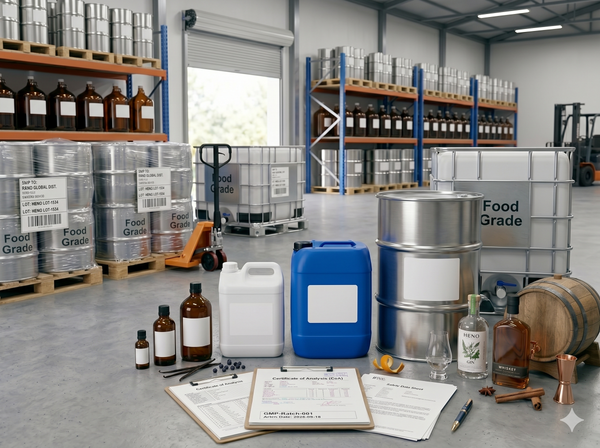
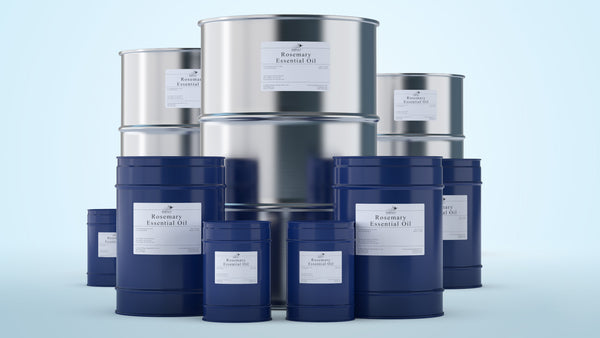
Five criteria define a qualified bulk massage oil ingredient supplier for commercial procurement: a batch-specific CoA for every carrier oil and essential oil component, GC/MS reports confirming compositional integrity on all essential oil inputs, an SDS with dermal exposure classification, an IFRA conformance certificate covering leave-on body product categories, and GMP certification confirming manufacturing controls meet cosmetic-grade standards. Packaging availability at gallon, pail (5 gallon), and drum (55 gallon) scale is a practical operational requirement for spa facilities managing high service volume.
At HBNO, we supply all carrier oils and essential oils used in massage oil formulations with full batch documentation, CoA, GC/MS, SDS, and IFRA conformance certificate on every order at any volume.

How HBNO Supplies Bulk Massage Oil Ingredients for Spas and Wellness Brands
HBNO is a US-based manufacturer and bulk supplier of carrier oils and essential oils operating from a 100,000 sq ft facility in Chico, California, with ISO, GMP, FDA-registered facility status , Kosher, USDA Organic, and FAIR FOR LIFE certifications.
Our in-house QC team runs peroxide value, refractive index, specific gravity, and GC/MS testing on every carrier oil and essential oil batch before dispatch. We carry no minimum order quantity enabling spa procurement teams and wellness brand formulators to qualify any carrier or essential oil component with a single documentation-included sample order before committing to gallon, pail, or drum volumes.
Our private label program supports 250,000-unit daily production capacity for brands formulating commercial massage oil ranges, with full batch traceability and long-term supply contracts available for qualifying wholesale accounts.
Frequently Asked Questions
What is the best carrier oil for commercial spa massage oil?
Fractionated coconut oil and grapeseed oil are the most practical choices for high-volume spa operations lightweight, fast-absorbing, and shelf-stable. Jojoba is preferred for premium spa positioning where a non-greasy finish and superior oxidative stability are the primary formulation requirements.
What essential oil load rate is safe for a leave-on massage oil formulation?
The standard range is 2-3% essential oil by total formula weight. Individual oils carry IFRA maximum use levels for leave-on body product categories that must be confirmed per component spice and phenolic oils have significantly lower leave-on limits than floral or citrus notes and must be checked before formulation sign-off.
How should I store bulk massage oil ingredients to maintain shelf stability?
Store in sealed containers away from direct light and heat. Add tocopherol at 0.5-1% of total formula weight as an antioxidant to delay oxidative degradation. For high-linoleic carriers such as grapeseed, confirm a low peroxide value at intake and consider refrigerated storage for long-hold inventory.
What documentation should a bulk massage oil ingredient supplier provide?
Request a batch-specific CoA, GC/MS report for all essential oil components, SDS, and IFRA conformance certificate covering leave-on body product categories. Also require ISO and GMP certification documentation confirming the supplier's manufacturing controls meet cosmetic-grade ingredient supply standards.
Can HBNO supply carrier oils and essential oils for a custom private-label massage oil range?
Yes. HBNO supplies all carrier oil and essential oil components for custom massage oil formulations with batch-specific CoA, GC/MS, and IFRA conformance documentation on every order. No minimum order quantity applies for component qualification, and our private label program supports production-scale blended supply with full batch traceability.
Published by the HBNO Bulk editorial team. HBNO (IL Health & Beauty Natural Oils Co., Inc.) is a manufacturer and bulk supplier of essential oils and carrier oils based in Chico, California.
Carrier selection and supplier documentation are the two variables that determine whether a bulk massage oil formulation delivers consistent consistent performance at commercial scale. To request carrier oil and essential oil samples, batch documentation packs, and wholesale pricing for your massage oil program, contact the HBNO team.