Natural insect repellent formulation is one of the fastest-growing segments in the personal care and household products space. Brands and contract manufacturers sourcing the active botanical ingredients in these formulas face a consistent procurement challenge: verifiable citral content. A lemongrass essential oil batch spec that reads "Cymbopogon flexuosus, steam-distilled" without documented Geranial and Neral percentages gives your formulation chemists nothing to work with. At HBNO, every lot of lemongrass essential oil ships with a GC/MS-verified CoA that documents the full constituent profile, not a generic species declaration.
The Chemistry Behind Lemongrass Oil's Repellent Efficacy
The insect-repellent activity of Cymbopogon flexuosus (East Indian lemongrass) essential oil is attributable primarily to citral - comprising Geranial (the α-isomer) and Neral (the β-isomer) which accounts for the bulk of the oil's repellent and formulation-relevant activity.
Standardized constituent ranges for commercial-grade lemongrass essential oil:
-
Geranial (citral α): 36-43% - the dominant active fraction; directly responsible for insect-deterrent activity
-
Neral (citral β): 28-34% - synergistic with Geranial; combined citral ≥64% is the accepted minimum for active repellent applications
-
Geraniol: 2-5% - contributes secondary repellent properties and a pleasant, blendable floral-citrus note
-
Limonene: trace to 3% - common in steam-distilled East Indian varieties
Research published in Phytomedicine confirmed that lemongrass oil formulations at 15% w/w in a cream base delivered ≥50% mosquito repellency lasting 2–3 hours, with efficacy attributed to citral as the principal active constituent (Trongtokit et al., 2002, Phytomedicine 9:259–62). For manufacturers building EPA-compliant or IFRA-formulated repellent products, this constituent-level data underpins both label claims and regulatory submission.
The natural insect repellent segment is growing at 8.05% CAGR, within a global insect repellent market valued at USD 11.4 billion in 2026 and projected to reach USD 15.71 billion by 2031, according to Mordor Intelligence's Insect Repellent Market Report. Consumer preference for botanical actives over synthetic DEET is the primary driver of that natural segment premium.
Formulation Applications for Lemongrass Essential Oil in Commercial Manufacturing
Bulk lemongrass essential oil serves three primary manufacturing categories: topical insect repellent products, personal care formulations where odor-control activity is required, and home fragrance and cleaning products where degreasing profile matters.
Insect repellent product formats:
-
Topical creams and lotions: 10-20% inclusion rate with an appropriate carrier (coconut, jojoba, or almond) for extended skin contact time
-
Spray repellents: 5-15% in an alcohol/water/emulsifier system
-
Candles and diffuser blends: 3-8% in carrier wax or diffuser base for indoor insect deterrence
Personal care applications:
-
Body washes and cleansers - Lemongrass essential oil can add a fresh, citrus-forward aroma to rinse-off body care formulations.
-
Scalp care formulations - citral and geraniol fractions are used in scalp-clarifying product lines
-
Oral care supplements - FEMA/GRAS designation (FEMA No. 2624) supports use in flavored oral care products where food-grade documentation is required
In our facility in Chico, we maintain both conventional and USDA Organic lemongrass oil stock. Our USDA Organic grade is certified with documented Geranial and Neral percentages by GC, suitable for brands operating under organic certification programs including COSMOS.
HBNO's Lemongrass Essential Oil Supply Credentials
HBNO supplies GC/MS-verified bulk lemongrass essential oil in both conventional and USDA Organic grades from East Indian Cymbopogon flexuosus, with CoA, SDS, and IFRA compliance documentation on every order, and no minimum order quantity.
At HBNO, we source lemongrass essential oil directly from cultivated farms in the fertile plains of India the primary origin for Cymbopogon flexuosus at commercial quality. Steam distillation from freshly harvested leaf material is the extraction method for both grades. Key specifications:
-
Species: Cymbopogon flexuosus (East Indian lemongrass) higher citral content than Cymbopogon citratus (West Indian variety); the preferred species for repellent applications
-
Extraction: Steam distillation from fresh leaf
-
Citral range (Geranial + Neral): ≥64% confirmed by GC/MS
-
FEMA/GRAS: Yes, FEMA No. 2624; dual food-grade and cosmetic-grade certified
-
Certifications: Kosher, USDA Organic (organic grade), ISO, GMP, FDA
Both bulk lemongrass essential oil (conventional, food-grade and cosmetic-grade) and organic lemongrass essential oil (USDA Organic certified) are available for direct order or via bulk quotation.
Our QC team, PhD-led, in-house, runs GC/MS on every production lot. We don't rely on supplier declarations or periodic audit sampling. Every batch receives its own constituent-level certificate before it ships.
Supply capacity for natural repellent and personal care manufacturers:
-
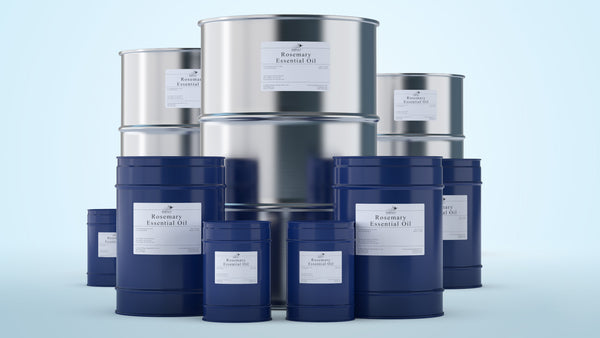
No MOQ - trial batches through 180 kg drums
-
250,000 units/day private-label production capacity for finished repellent and personal care SKUs
-
Drop-shipping available; global shipping to North America, Europe, Asia, Oceania
-
Long-term supply agreements available for volume allocation
Explore our full natural essential oils collection for complementary actives used in natural repellent formulas, including citronella and eucalyptus varieties.
FAQ
What citral content should formulators specify when sourcing bulk lemongrass essential oil for repellent applications?
A combined citral (Geranial + Neral) content of ≥64% is the accepted commercial minimum for active repellent applications. At HBNO, our conventional lemongrass oil delivers Geranial at 36-43% and Neral at 28-34%, for a combined citral of approximately 64-77% depending on harvest season and origin batch. All values are documented on the GC/MS CoA issued with every shipment.
Is HBNO lemongrass essential oil food-grade certified?
Yes. Both our conventional and organic grades carry FEMA/GRAS designation (FEMA No. 2624) and are Kosher certified. Food-grade documentation is included in the standard CoA and SDS package. Brands formulating oral care, food flavoring, or ingestible supplements can use the documentation for their regulatory compliance files.
What is the difference between Cymbopogon flexuosus and Cymbopogon citratus for repellent manufacturers?
Cymbopogon flexuosus (East Indian lemongrass) produces oil with higher citral content (typically 64–80%) than Cymbopogon citratus (West Indian variety, typically 55–75%). For manufacturers where maximum citral concentration is the formulation goal, insect repellent products, East Indian is the preferred species. HBNO supplies Cymbopogon flexuosus exclusively for both its conventional and organic grades.
How should bulk lemongrass essential oil be handled for large-scale repellent manufacturing?
Store in sealed, stainless steel or HDPE containers away from light, heat, and oxidising agents. Shelf life is approximately 2 years from the date of distillation under proper storage conditions. HBNO provides storage and handling guidance on every CoA. For REACH-registered markets, the SDS we issue documents all handling requirements under GHS/OSHA classification.
Can HBNO supply lemongrass essential oil under private label for finished repellent products?
Yes. Our private label services cover ingredient sourcing, GC/MS testing, formula development, filling, labeling, and fulfillment. With 250,000 units per day of private-label production capacity, we can support repellent and personal care brands from development sample through full commercial production run without re-qualifying a separate manufacturing partner.
Published by the HBNO Bulk editorial team. HBNO (IL Health & Beauty Natural Oils Co., Inc.) is a manufacturer and bulk supplier of essential oils and carrier oils based in Chico, California.