Citronella volume has grown steadily as outdoor living products have expanded from a seasonal category into a year-round one, and the demand now comes from six reasonably distinct manufacturing formats rather than the one most people picture. For buyers, the interesting part is that these formats have genuinely different specification priorities: what matters for a poured outdoor candle is not what matters for a fabric-safe spray. Bulk citronella oil is also the material in this catalogue where the regulatory line is drawn most sharply, and where the difference between a compliant product and a registration problem sits entirely in what the finished pack says.
What you are buying: the citronellal specification
Citronella oil is characterised commercially by citronellal, geraniol and citronellol, and the balance between them defines both odour and grade.
Our GC/MS records show citronellal at 31 to 39 percent with a typical value of 37, geraniol at 17 to 25 percent typically 22, citronellol at 8 to 15.5 percent typically 11, and geranyl acetate at 1 to 5.5 percent. Specific gravity runs 0.870 to 0.893 and refractive index 1.460 to 1.475.
Two commercial types circulate, and they differ in that balance, so the type belongs on the purchase order alongside the constituent ranges. Our safety records note skin sensitisation for the material and direct formulators to the current IFRA documentation for permitted concentrations, which vary by product category. Flash point is 85 degrees Celsius, placing the material in flammable liquid Hazard Category 4, and that classification carries through to any blend it enters. It is also incompatible with strong oxidising and reducing agents, which matters for storage layout.

The six formats driving the volume
Each of these six product categories buys citronella for a different reason, and each prioritises a different part of the specification.
-
Outdoor candles and torch fuels. The largest single volume use. Specification priority is flash point and thermal behaviour, since the material sits in a heated melt pool or a fuel reservoir.
-
Patio and deck sprays. Aqueous or alcohol-based sprayable formats. Priority is solubility behaviour and, for alcohol systems, transport classification.
-
Outdoor diffusers and passive dispensers. Priority is viscosity and evaporation rate rather than throw at temperature.
-
Wearable accessories and impregnated articles. Bands, clips and similar items where the material is absorbed into a substrate. Priority is release rate over time.
-
Lawn, garden and hard-surface products. Priority is cost per kilo and batch odour consistency.
-
Pet and animal care formats. Priority is the applicable safety documentation and the species-specific formulation constraints, which are the buyer's to establish.
The pattern worth noting for procurement is that formats one and five are cost-driven and formats two, three and four are performance-driven. A single specification will not serve both well.
The regulatory line, stated plainly
Any product making a claim related to insects requires EPA registration under FIFRA, and that obligation sits with the manufacturer of the finished product rather than with the raw material supplier.
This is the point on which brands most often get into difficulty, so it is worth being unambiguous. We supply citronella oil as an aromatic raw material and we document its chemistry, its safety profile and its handling requirements. We do not attribute repellency, insecticidal action or any pest-related performance to it, at any dilution, and we do not support such claims for any material we sell.
If a finished product makes a claim of that kind, the manufacturer needs to establish its own registration pathway, including assessing whether the FIFRA 25(b) minimum risk exemption applies to its specific formulation and labelling. That assessment is a regulatory matter for the brand and its own advisers. Compliant descriptions of the material itself are straightforward: citronella is used in household and outdoor product formulations, and it has a long history of use in that context. Aromatic load also remains governed by the applicable IFRA standards category limits, and EU or UK sale requires CLP classification consistent with the product's REACH status.
Specification and handling for volume orders
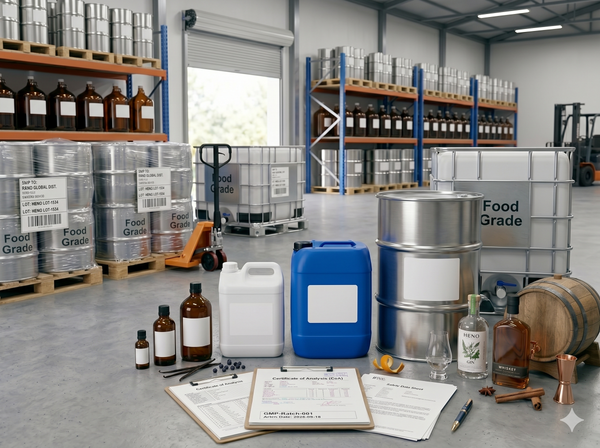
Four documents should accompany a bulk citronella order: the batch CoA with the GC/MS profile, the SDS with the flash point, the IFRA certificate, and the allergen declaration.
Geraniol and citronellol are both declared fragrance allergens, so declaration thresholds apply separately from IFRA limits and trigger lower. A finished product can be fully IFRA compliant and still require declarations on pack.
On handling, the Category 4 flammability classification determines packaging, labelling and freight for the raw material and for blends containing it. Store cool, sealed and away from ignition sources and incompatible chemicals. Our QC team runs GC/MS in house on every lot before release, and a CoA and SDS ship with every order, with batch testing against a retained reference available on request. Our guide to formulating with bulk essential oils for outdoor product lines covers concentration and oil selection for these categories, and our peppermint oil sourcing guide for household product manufacturers applies the same regulatory framing to an adjacent material.

Sourcing bulk citronella oil from HBNO
We manufacture from a 100,000 square foot facility in Chico, California, operating under ISO and GMP systems with FDA registration, with PhD staff and in-house quality control. Citronella is available as conventional and organic essential oil and as a natural fragrance, which covers both the cost-driven and performance-driven formats described above.
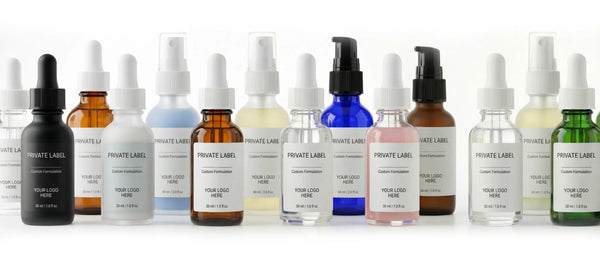
Three points matter for a seasonal category. There is no minimum order quantity, so a manufacturer can qualify the material across two or three formats before committing to volume. Long-term supply contracts and recurring wholesale programmes suit a business with a pronounced seasonal peak, since they secure both price and availability ahead of the season. And our private label operation fills to 250,000 units per day with drop-shipping available. The essential oils range and wider product list carry the adjacent materials these formulations use.
Frequently asked questions about bulk citronella oil
What citronellal content should a citronella specification call for?
Our records show citronellal at 31 to 39 percent, geraniol at 17 to 25 percent and citronellol at 8 to 15.5 percent. Write these as ranges rather than single figures, because origin and harvest move them, and name the commercial type as well since the two types differ in that balance.
Does citronella oil need EPA registration?
The raw material does not, but a finished product making any insect-related claim does, and that obligation belongs to the manufacturer of the finished product. Whether the FIFRA 25(b) minimum risk exemption applies depends on the specific formulation and labelling, and it is an assessment for the brand and its own regulatory advisers.
Why does flash point matter for outdoor candles and torch fuels?
Because it determines the transport classification and labelling for both the raw material and the finished blend, and it is directly relevant to safe handling in a pour room. Our records put citronella at 85 degrees Celsius, in flammable liquid Hazard Category 4. Confirm the classification of the blend, not only the raw material.
Which allergen declarations does citronella trigger?
Geraniol and citronellol are declared fragrance allergens and both are present at meaningful levels, so declarations are commonly required. The thresholds are separate from and lower than IFRA usage limits, so a compliant formulation can still need them. Generate the list from the GC/MS profile of the actual lot.
How should a seasonal buyer manage citronella supply?
With a recurring programme rather than spot purchasing, because a pronounced seasonal peak means everyone is buying at the same time. Securing price and availability ahead of the season removes the risk of paying peak rates or being unable to source at all. Properly stored, the material tolerates a reasonable holding period.
Specifying bulk citronella oil for outdoor manufacturing
The six formats above want different things from the same drum, which means the first decision is which of them your specification is written for. Fix the citronellal, geraniol and citronellol ranges and the commercial type, confirm flash point before you commit freight, generate allergen declarations from real lot data, and keep every claim on the material and the product category rather than on pest performance. The registration pathway, if you need one, is yours to establish. To review specifications or request samples of bulk citronella oil, contact our team for a quote.
Published by the HBNO editorial team. HBNO (IL Health & Beauty Natural Oils Co., Inc.) is a manufacturer and bulk supplier of essential oils and carrier oils based in Chico, California.