Aloe is one of the few skincare raw materials that appears in a formulation because consumers expect to see it, and stays in because it genuinely does formulation work in the water phase. That combination makes bulk aloe vera gel a high-volume purchase for any brand with more than a couple of hydrating SKUs. It also makes it one of the most expensive materials to ship badly, because a gel or juice is mostly water and water is heavy. The most useful way to organise an aloe purchasing decision is by how much water phase each product actually needs, and then by whether you should be buying that water at all or reconstituting it on site.
Gel, juice, extract or powder: what you are actually buying
Aloe is sold in four commercial forms that differ enormously in solids content, and the form determines both your freight cost and your formulation method.
Gel and juice are dilute aqueous materials, typically well above 99 percent water, sold ready to incorporate. They are convenient and they are heavy. A concentrated extract carries a much higher solids content and is intended for dilution. Spray-dried powder is the most concentrated form of all, commonly sold at defined concentration ratios, and it is reconstituted with water on site.
At HBNO we supply aloe vera as an extract and as a powder rather than as a ready-diluted gel, which suits manufacturers who would rather not pay to ship water across the country. Because documentation for these forms varies by material and lot, confirm the available certification and analytical documentation for the specific lot at the time of order. The product list shows current forms.

Seven products, ranked by how much aloe they need
Organising an aloe purchase by water-phase percentage tells you far more about annual consumption than a product list does.
-
Aloe gel and after-sun gel. The highest load by a wide margin, frequently 80 percent or more of the formula. One SKU of this kind can dominate annual aloe consumption on its own.
-
Facial toners and mists. High water phase, commonly 30 to 70 percent, and often combined with witch hazel or a floral water.
-
Sheet mask and pad essences. High water phase with the added constraint that the liquid has to wet a substrate evenly.
-
Hydrating serums. Moderate load, typically 10 to 40 percent, where aloe contributes to the water phase alongside humectants.
-
Lightweight lotions and gel creams. Moderate load in the water phase of an emulsion, generally 10 to 30 percent.
-
Cleansers and micellar formats. Lower load, both for cost reasons and because surfactants dominate the performance.
-
Hair and scalp mists. Lower load again, with the format constraints of a sprayable product.
The pattern is worth internalising: the first three items generate most of the demand. If your range includes an after-sun gel, your aloe forecast is essentially that product plus everything else.
The reconstitution arithmetic, and why powder usually wins
For a manufacturer with reliable water treatment, buying aloe as powder or extract and reconstituting on site is almost always cheaper per finished unit than buying pre-diluted gel.
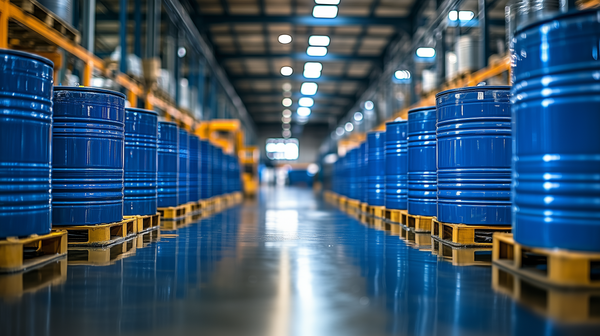
The reason is freight. A pre-diluted gel is more than 99 percent water by weight, so a truckload of gel is overwhelmingly a truckload of water that you already have on site. Powder concentrates the material that actually matters, and the ratio on the specification tells you how much water to add back.
Two conditions have to hold. Your water has to be suitable, which for a cosmetic manufacturer means deionised or purified water with its own specification and testing. And your process has to include proper dispersion, since a powder added carelessly will form lumps that never fully hydrate. Where those conditions hold, the saving is substantial and repeats on every batch. Where they do not, pre-diluted material is the right answer despite the freight. Our analysis of witch hazel purchasing at barrel volume covers the same water-weight economics for an adjacent material.
What to specify, and the preservation reality
An aloe specification should state the form, the concentration ratio or solids content, pH, appearance, and microbiological limits, and the preservation strategy for the finished product remains yours.
Concentration ratio is the figure that varies most between suppliers presenting nominally similar material, and it is the one that determines your use level. pH matters because aloe at high inclusion will move the pH of a finished product, and a formula balanced against one lot can drift with the next.
Microbiological limits deserve real attention. Aloe in aqueous form supports microbial growth, which makes it fundamentally different from a carrier oil in handling terms. Reconstituted powder is a fresh aqueous system from the moment water is added, and the clock starts then. Whether and how the finished product is preserved is a formulator determination, and cosmetic ingredient handling conventions from the Personal Care Products Council are a reasonable reference point. Demand for naturally derived personal care ingredients continues to grow according to Grand View Research, and aloe is one of the clearest examples.

Sourcing bulk aloe vera and water-phase materials from HBNO
We manufacture from a 100,000 square foot facility in Chico, California, operating under ISO and GMP systems with FDA registration, with PhD staff and in-house quality control. Alongside aloe vera extract and powder we supply the materials that usually share a water phase with it, including organic floral waters and hydrosols, plus the essential oils used to fragrance those formats, lavender among them.
Two operational points help. There is no minimum order quantity, so a formulator can validate a reconstitution procedure at bench scale before committing to volume. And our private label operation fills to 250,000 units per day with drop-shipping available, which is often the better route for a high-water-phase product than building the handling and microbiological control in house. Our guide to carrier oils for cosmetic formulation covers the oil phase of the same emulsions.
Frequently asked questions about bulk aloe vera sourcing
Is aloe powder equivalent to aloe gel once reconstituted?
Functionally it can be very close, provided the concentration ratio is respected and dispersion is adequate. What differs is the process requirement: you need suitable purified water, proper mixing, and awareness that the reconstituted material is a fresh aqueous system. The commercial difference is freight, and it is significant.
How much aloe does an after-sun gel typically contain?
Frequently 80 percent or more of the formula, which makes it the single largest consumer of aloe in most ranges. If you produce one, it will usually dominate your annual forecast, and it is the SKU where the choice between powder and pre-diluted material has the biggest financial effect.
What is the most important figure on an aloe specification?
The concentration ratio or solids content, because it varies most between suppliers and determines your use level. A specification that names the material without stating concentration is not usable for formulation. Add pH, appearance and microbiological limits alongside it.
Does aloe change the pH of a finished formula?
At high inclusion rates it generally does, since it can make up the majority of a water phase. A product balanced against one lot may need adjustment with the next. Put pH in the specification and verify it on intake rather than assuming consistency between deliveries.
How should reconstituted aloe be handled in production?
As a fresh aqueous material, with the microbiological clock starting at the moment water is added. That means using it within a validated hold time, keeping the equipment and environment appropriate to a water-based process, and confirming your preservation approach with your own microbiological testing.
Getting the bulk aloe vera specification right before you scale
Aloe purchasing is a freight and water-phase problem disguised as an ingredient decision. Work out which of your SKUs actually drive consumption, decide whether reconstituting from powder or extract suits your process, then specify the concentration ratio, pH and microbiological limits in writing rather than accepting a product name. Where reconstitution is viable, the saving repeats on every batch. To review current forms, specifications and lot documentation, contact our team for a quote.
Published by the HBNO editorial team. HBNO (IL Health & Beauty Natural Oils Co., Inc.) is a manufacturer and bulk supplier of essential oils and carrier oils based in Chico, California.