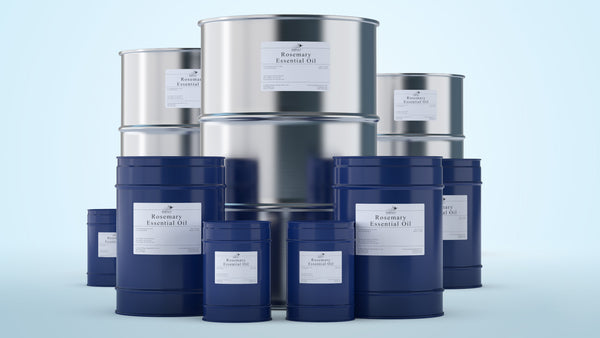
Turn over almost any hair care bestseller and the same handful of essential oils appear, usually several positions down the ingredient list. They are there because the category has converged on a small set of aromatic materials that survive a surfactant system, hold up at production pH, and read as credible to a consumer who reads labels. What varies between brands is not which oils they use but how well they specified them per format. Bulk essential oils for hair care behave differently in a sulphate shampoo than in a leave-in serum, and a brand that buys one specification for a whole range will have a problem in at least one product.
Why format changes everything about the specification
The same essential oil needs a different specification in a rinse-off shampoo, a conditioner, and a leave-on scalp serum, because surfactants, pH and exposure category all differ.
A shampoo is a high-surfactant, often alkaline-to-neutral system where aromatic materials are partly solubilised by the surfactants themselves. That helps with dispersion and hurts with scent retention, because much of the aromatic load rinses away with the foam. Conditioners are cationic systems at lower pH, where some materials discolour or destabilise the emulsion. Leave-on serums and scalp oils are anhydrous or low-water systems with the longest skin contact and the tightest regulatory limits.
The practical consequence is three usage rates rather than one. Rinse-off products commonly run 0.3 to 1 percent aromatic load, conditioners similar, and leave-on serums 1 to 3 percent. The IFRA standards assign these to different exposure categories with different permitted concentrations per material, so a load that is compliant in a shampoo can breach a limit in a leave-in at the same percentage.

The five oils the category keeps coming back to
Five aromatic materials account for most of the essential oil content in commercial hair care, chosen for stability in surfactant systems and for consumer recognition.
-
Rosemary. The most requested by a wide margin. Our GC/MS records show 1,8-cineole at 45 to 55 percent, alpha-pinene at 9 to 14 percent, and camphor at 5 to 15 percent. That camphor range is a threefold spread and it is audible, so the chemotype belongs on the purchase order.
-
Peppermint. Used for its cooling sensory character. Our records show menthol at 36 to 49 percent, menthone at 18 to 27 percent, and menthofuran at 1 to 8 percent. Menthol drives the sensory effect and the sensory effect drives consumer perception, so specify the range.
-
Tea tree. High recognition and the most claim-constrained material in hair care. Its popular associations are antimicrobial, and those claims require registration and are not ones we support for any material.
-
Lavender. The universal softener in a hair care fragrance brief, available from standardised 40/42 through single-origin and organic grades.
-
Eucalyptus. Cineole-dominant and clean, and available in radiata and globulus forms that are not interchangeable.
Cedarwood and lemongrass appear frequently as supporting materials. Our comparison of eucalyptus radiata and globulus grades covers that choice.
Surfactant compatibility and the problems it creates
Most hair care formulation failures involving essential oils are compatibility problems rather than quality problems, and they show up as clouding, colour drift or scent loss.
Clouding happens when an aromatic material is not adequately solubilised in a clear shampoo base. It is a formulation issue solved with a solubiliser or by accepting an opaque formula, not a defect in the oil. Colour drift is more common than brands expect: citrus and some phenolic materials darken over time, and in a clear bottle that darkening looks like spoilage even when the product is fine.
Scent loss through the rinse is the most economically painful. A brand that raises the aromatic load to compensate discovers the IFRA ceiling before it discovers a satisfying result. The better answers are anchoring the profile with less volatile materials, and accepting that shampoo scent perception happens largely in the shower rather than afterwards. At HBNO every lot is GC/MS tested in house and ships with a CoA and SDS, which is what allows a formulator to attribute a colour or scent change to a specific constituent rather than guessing.
Allergen declarations and claim discipline
Hair care generates more allergen declarations than most categories because the oils the category favours are allergen-dense, and the declaration list has to come from real lot data.
Linalool, limonene, geraniol and citral all carry declaration thresholds, and the five oils above supply several of them. A leave-in product at 2 percent aromatic load will typically require multiple declarations, and the list should be generated from the GC/MS profile of the specific materials rather than from a generic reference table. It needs regenerating whenever a grade or supplier changes.
On claims, hair care is the highest-risk personal care category for overreach. Growth, thickness, density and anti-dandruff claims are structure and function or drug claims under FDA rules, and we do not substantiate or support them for any raw material we supply. What is available to a brand is the material story: botanical source, chemotype, constituent ranges, extraction method, grade and certification. Our guide to carrier oils for private label hair oil brands covers the base side of the same formulations.

Sourcing bulk essential oils for hair care from HBNO
We manufacture from a 100,000 square foot facility in Chico, California, operating under ISO and GMP systems with FDA registration, with PhD staff and in-house quality control. The essential oils range carries every material above in conventional and organic grades, with rosemary additionally available as a camphor type and eucalyptus in radiata and globulus forms.
Three points help a hair care range. There is no minimum order quantity, so a formulator can test the same oil across three formats before fixing specifications. Batch testing against a retained reference is available on request, which is how a range keeps one fragrance identity across shampoo, conditioner and serum. And our private label operation fills to 250,000 units per day with drop-shipping available. The wider product list includes hydrosols and floral waters used in the water phase.
Frequently asked questions about bulk essential oils for hair care
What usage rate should essential oils run at in shampoo?
Commonly 0.3 to 1 percent for a rinse-off shampoo, against 1 to 3 percent for a leave-on serum. The ceiling is set by the IFRA position for each specific material in the applicable exposure category, not by the total load. Calculate per component and document the rate per format.
Why does our shampoo lose its scent after rinsing?
Because much of the aromatic load leaves with the foam, which is inherent to a surfactant system rather than a fault in the oil. Raising the load usually hits the IFRA ceiling before it produces a satisfying result. Anchoring the profile with less volatile materials is the more effective approach.
Which essential oils cause clouding in a clear shampoo base?
Any material not adequately solubilised by the surfactant system, most often heavier or more lipophilic components. It is a formulation problem addressed with a solubiliser or by moving to an opaque formula. Test the actual base rather than assuming behaviour from another formula.
Does the rosemary chemotype matter in a rinse-off product?
Less than in a leave-on, but it still matters. Camphor can range from 5 to 15 percent, and at the top of that range the profile is noticeably sharper even in a shampoo. Specify the chemotype and the acceptable camphor range so reorders remain reproducible.
Can a hair care product claim to reduce dandruff?
No, not as a cosmetic. Anti-dandruff positioning places a product in a drug category with its own registration and substantiation requirements, and it is not a claim we support for any raw material. Keep marketing on the material and the formulation, and take claim decisions with your own regulatory advisers.
Specifying bulk essential oils for hair care across a range
The oils hiding in every hair care bestseller are not secret, and they are not the reason those products win. What separates a range that holds together from one that develops a problem in its third SKU is specifying per format: a documented usage rate for rinse-off and leave-on separately, chemotypes named on the purchase order, allergen declarations generated from lot data, and claims kept on the material rather than its effects. To review specifications or request samples across formats, contact our team for a quote.
Published by the HBNO editorial team. HBNO (IL Health & Beauty Natural Oils Co., Inc.) is a manufacturer and bulk supplier of essential oils and carrier oils based in Chico, California.