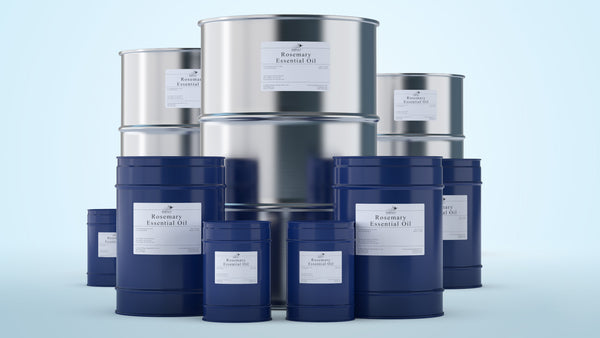
Procurement teams sourcing essential oils in bulk increasingly ask a supplier one question before anything else: is your facility ISO 9001 certified. It is a fair question, and it is also frequently misunderstood on both sides of the conversation. An ISO 9001 essential oil manufacturer has not certified any single oil, botanical, or SKU. It has certified the system that governs how every batch of every oil gets produced, tested, documented, and released. At HBNO, that distinction shapes how we talk about our own certifications, and it should shape how a buyer reads anyone else's.
What ISO 9001 Actually Certifies
ISO 9001 certifies a documented quality management system, not a product, a formula, or a claim about performance.
The standard, maintained by the International Organization for Standardization, sets requirements for how an organization plans, controls, monitors, and improves its own processes. A manufacturer earns certification by demonstrating, to an accredited third-party auditor, that it has defined procedures for things like document control, raw material intake, corrective action, internal audits, and management review, and that those procedures are actually followed rather than filed away. The audit does not test whether a lavender oil smells right. It tests whether the same decision gets made the same way regardless of which shift, which technician, or which week it happens to be.
That is a meaningful distinction for a bulk buyer. A Certificate of Analysis tells you what is in this specific drum. ISO 9001 tells you something about the process that produced the drum and the hundred drums before it: that non-conforming material gets flagged and dispositioned rather than shipped, that instruments get calibrated on a schedule, and that a complaint from six months ago produced a traceable corrective action rather than a shrug.

Why It Is a Company-Level Certification, Not a Product-Level One
A single essential oil SKU is never, on its own, "ISO 9001 certified," because the certificate belongs to the manufacturing site and its management system, not to any one product line running through it.
This is where B2B copy gets sloppy, and where a careful buyer should push back on a supplier's claims. Ask a manufacturer to confirm ISO 9001 status for one specific oil and, if they are being accurate, they will point you to the facility's certificate rather than to a certification stamped on that product's own paperwork. A Certificate of Analysis, GC/MS chromatogram, and Safety Data Sheet are product-level documents. USDA Organic and Kosher status are also assessed and certified per product or per ingredient line, because they depend on the material's own sourcing and handling chain. ISO 9001 sits at a different layer entirely: it describes the plant, not the plant's output.
Buyers who understand this stop asking "is this oil ISO 9001 certified" and start asking "is the facility that made this oil ISO 9001 certified, and does the certificate's scope actually cover this production line." That second question is the one worth answering before a purchase order goes out, and it is the subject of a supplier vetting checklist built specifically around it.
What Changes on the Production Floor Under ISO 9001
Holding ISO 9001 changes daily operating behaviour in ways a buyer can verify indirectly through the paperwork a supplier is willing to produce on request.
In practice, that means raw material lots get logged against a specification before they enter production, not after a problem surfaces. It means the refractometer and other instruments used to confirm specific gravity and refractive index sit on a documented calibration schedule instead of an informal one. It means a non-conformance, whether it is an out-of-range GC/MS result or a mislabeled drum, triggers a written corrective action rather than a quiet fix. And it means batch traceability runs in both directions: from finished goods back to the raw lot, and from a raw lot forward to every finished batch it touched.
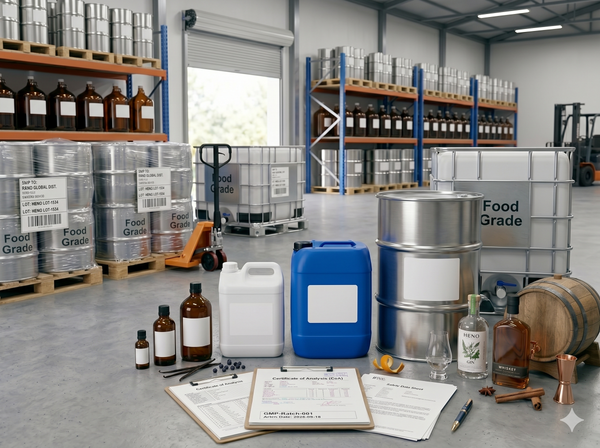
None of that is visible on a bottle. It becomes visible in the documents a supplier hands over without hesitation: a Certificate of Analysis referencing a specific batch number, a Safety Data Sheet current to the latest revision, and a straight answer when asked how a past corrective action was closed out. Third-party quality-system certification is not unique to essential oils; bodies such as NSF International run comparable management-system audits across food, water, and consumer-product manufacturing, which is a useful reference point for buyers new to reading a QMS certificate. Our essential oil manufacturer certification covers how to weigh ISO 9001 against the rest of a supplier's certification stack when making that call.

HBNO's Quality System, in Practice
At HBNO, ISO certification sits alongside GMP, FDA registration, Kosher, USDA Organic, and FAIR FOR LIFE status as part of a documented quality position covering our 100,000 sq ft production facility in Chico, California. Every product we ship undergoes GC-MS testing in house, and a Certificate of Analysis and Safety Data Sheet accompany every shipment, not a sample shipment or a first order. Our organic lavender essential oil and peppermint essential oil are both produced under that same facility-wide system, with batch-specific GC/MS data confirming constituent ranges rather than a generic spec sheet reused across lots. We carry no minimum order quantity, run 250,000 units per day of private label capacity, and ship globally across North America, Europe, Asia, and Oceania, with PhD staff and in-house quality control reviewing the system that supports all of it. Buyers evaluating our full range can start from the essential oils collection and request batch documentation for any material before committing to volume.
Frequently Asked Questions
What does ISO 9001 certification mean for an essential oil manufacturer?
It means the manufacturer's quality management system, covering document control, raw material intake, corrective action, and internal audit, has been assessed by an accredited third party against the ISO 9001 standard. It confirms the process is documented and followed consistently. It does not, by itself, confirm the chemistry, purity, or grade of any specific oil; that evidence comes from the Certificate of Analysis and GC/MS data for the batch in question.
How does ISO 9001 differ from GMP certification in essential oil production?
ISO 9001 is a general quality management standard applicable across any industry, focused on process consistency, document control, and continuous improvement. GMP, or Good Manufacturing Practice, is more specific to production hygiene, facility conditions, and handling practices appropriate to personal care, food, or pharmaceutical inputs. Many manufacturers, including HBNO, hold both, because they cover overlapping but distinct ground.
Why is ISO 9001 a company-level certification rather than a product-level one?
The audit assesses the management system that governs an entire facility's operations: how procedures are documented, how staff are trained, how non-conformances are handled, and how records are kept. That system applies uniformly across every product line running through the site, so the certificate is issued to the organization and facility, not to an individual essential oil.
Can a single essential oil SKU be labeled as ISO 9001 certified?
No. A specific SKU can be described as manufactured at an ISO 9001-certified facility, which is accurate and useful information, but the phrase "ISO 9001 certified essential oil" describing one product on its own is imprecise. The correct claim ties the certification to the facility and confirms the certificate's scope covers the relevant production line.
Should procurement teams treat ISO 9001 as a substitute for a Certificate of Analysis?
No. The two serve different purposes and neither replaces the other. ISO 9001 evidences that a documented process exists and is followed; the Certificate of Analysis evidences what is actually in a specific batch, based on GC/MS testing and physical constants. A rigorous procurement process reviews both before approving a new supplier or a new lot.
Published by the HBNO editorial team. HBNO (IL Health & Beauty Natural Oils Co., Inc.) is a manufacturer and bulk supplier of essential oils and carrier oils based in Chico, California.
For batch documentation, certificate scope, or a quote on any material referenced here, contact our team. Working with an ISO 9001 essential oil manufacturer means the documentation you request today reflects the same system that will still be producing your reorder next year.