A kosher certification basics question comes up constantly with buyers new to sourcing: a supplier's spec sheet lists a kosher symbol next to an essential oil, and the buyer has no framework for what that symbol actually requires or who stands behind it. This is not a niche concern reserved for food formulators. Private label brand owners, contract manufacturers, and procurement teams building a specification sheet from scratch all run into a kosher certified line item sooner or later, and treating it as a box to tick rather than a standard to understand is where mistakes start. At HBNO, we field first time buyer questions about kosher certification often enough that a plain language starting point is worth having on hand before the deeper audit and documentation detail.
What Kosher Certification Is, in Plain Terms
Kosher certification is a third party confirmation, issued by an independent supervising agency rather than a government body, that a specific ingredient and the facility producing it meet Jewish dietary law requirements covering raw materials, processing aids, and shared equipment. Unlike the FDA, which regulates safety and labeling, a kosher certifying agency such as EarthKosher, OU, or OK Kosher reviews an entirely separate set of standards rooted in religious dietary law, and its printed symbol on a label or certificate, called a hechsher, is the shorthand result of that review.
Certification is granted to a specific ingredient at a specific facility, not to a company as a whole, and it carries a renewal date rather than lasting indefinitely. A buyer new to the standard should expect to see the agency's name, the ingredient it covers, and that date on any certificate a supplier provides.

Why an Essential Oil Needs Kosher Certification at All
Most essential oils are plant derived and would seem automatically acceptable under Jewish dietary law, but certification exists because of what happens around the plant material, not the plant material itself. An oil this simple can still fail review over a shared distillation line that previously ran a non-kosher batch, an extraction solvent that has not been approved, or an upstream supplier that has not itself been reviewed. This is why certification tracks the full chain, not just the finished product.
Most essential oils fall into a category called Pareve, meaning neutral, neither meat nor dairy. That classification helps, but it does not replace the equipment and supply chain review, which is the part of the process that actually determines whether a specific batch qualifies.
Key Terms Every Ingredient Buyer Should Know
A short glossary clears up most of the confusion a first time buyer runs into when reading kosher documentation.
-
Hechsher: the printed symbol or mark on a label or certificate indicating kosher certification and identifying the certifying agency
-
Pareve: a classification meaning neutral, neither meat nor dairy, which applies to most essential oils
-
Mashgiach: a supervisor appointed by the certifying agency to oversee production and confirm ongoing compliance
-
Supervising agency: the organization, such as EarthKosher, OU, or OK Kosher, that reviews and issues certification
-
Kosher for Passover: an additional, stricter annual certification layer beyond standard kosher status, required for products used in Passover labeled goods
How Kosher Certification Differs From Organic, Halal, and Other Standards
Kosher certification answers a specific religious dietary question and does not confirm organic status, non-GMO sourcing, or halal compliance, even when the same supply chain review touches more than one standard. USDA organic certification evaluates agricultural production methods and handling, an entirely separate program from kosher review, which is why the two so often sit side by side on the same specification sheet without one implying the other. Our guide to what USDA organic certification does and does not cover walks through that standard on its own terms.
Halal certification asks a related but distinct question under a different religious framework, reviewed by different certifying bodies with their own equipment and ingredient standards. A buyer sourcing for a market that expects both kosher and halal status should request separate documentation for each rather than assuming one covers the other.

Kosher Certification Across HBNO's Catalog
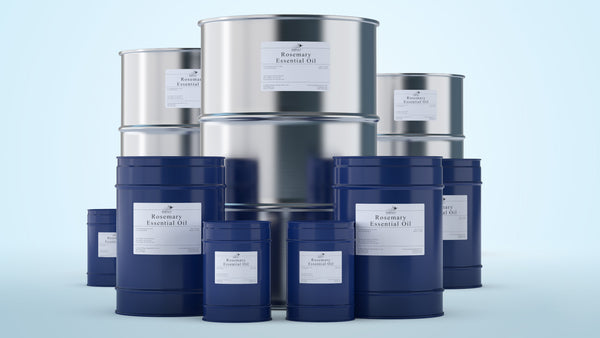
HBNO holds kosher certification through EarthKosher across its catalog, confirmed at the product level rather than assumed as a blanket company claim. Our rosemary essential oil and lemongrass essential oil, both used widely across personal care and industrial formulation, carry kosher certification confirmed on their individual product records. Certification here sits alongside our ISO, GMP, FDA, USDA Organic, and FAIR FOR LIFE certifications, administered from our 100,000 square foot facility in Chico, California, which you can read more about on our about us page.
Every batch is GC/MS tested in house, and a Certificate of Analysis and Safety Data Sheet ship with every order regardless of size. There is no minimum order quantity, and our 250,000 unit per day private label capacity means a first time buyer and an established manufacturer draw from the same certified catalog.
Frequently Asked Questions About Kosher Certification Basics
What is kosher certification, in simple terms?
It is a third party confirmation from an independent religious certifying agency, not a government body, that a specific ingredient and the facility producing it meet Jewish dietary law requirements covering sourcing, processing aids, and equipment. The certificate names the agency, the ingredient, and a renewal date.
Why would an essential oil need kosher certification if it is naturally free of meat or dairy?
Because certification reviews the equipment, processing aids, and supply chain around the oil, not only the plant material itself. A shared distillation line, an unapproved solvent, or an unreviewed upstream supplier can all affect whether a batch qualifies, even when the oil itself is Pareve.
Is kosher certification the same as halal certification?
No. The two are reviewed by different certifying bodies under different religious frameworks, and one does not automatically confirm the other. A buyer needing both should request separate current documentation for each standard.
How can a buyer confirm a kosher certificate is still valid?
Check the certifying agency's name, the specific ingredient it names, and the renewal or expiration date printed on the certificate itself. A general claim that a supplier "is kosher" without a document naming these details is not sufficient confirmation.
Should a first time ingredient buyer request kosher certification even for a non-food formulation?
Yes, if the finished product will be marketed or sold into a market that expects kosher status, since certification applies to personal care and industrial formulations as well as food. Requesting the current certificate up front avoids a supply chain gap discovered later in production.
Starting With the Basics Before You Read a Certificate
Kosher certification basics come down to a short list: it is a third party religious standard, not a government requirement, it reviews the full supply chain rather than just the finished ingredient, and it is granted to specific products rather than entire companies. Once those basics are clear, our guide to the certification process a bulk manufacturer actually goes through covers the audit side in depth, and our guide to what kosher food certification means for essential oil ingredient buyers picks up the food grade angle specifically.
Published by the HBNO editorial team. HBNO (IL Health & Beauty Natural Oils Co., Inc.) is a manufacturer and bulk supplier of essential oils and carrier oils based in Chico, California.