For procurement teams sourcing bulk shea butter at production scale, the grade question is not cosmetic, it determines formulation performance, shelf life, and retail positioning. Shea butter (Vitellaria paradoxa) is one of the most widely used natural emollients across personal care and cosmetic manufacturing, with the global shea butter market projected to grow steadily through 2030 (Source: Grand View Research). Refinement level, fatty acid profile, unsaponifiable fraction content, and certification status each affect how the butter performs in an emulsion, how long it stays stable on shelf, and which on-label claims it can support.
The Shea Butter Grading System: What the Classifications Mean
Shea butter grades are defined by refinement level and processing method, Grade A covers unrefined material and Grade B covers refined, with each serving fundamentally different formulation purposes.
Grade A designates virgin or unrefined shea butter: minimally processed, retaining its natural ivory-to-pale-yellow color, characteristic nutty aroma, and full unsaponifiable fraction of 6-17% (Source: Codex Alimentarius CXS 325R-2017). The unsaponifiable fraction composed of triterpenes, tocopherols, and phytosterols is the component that differentiates shea butter from generic emollient waxes at the formulation level.
Grade B designates refined shea butter: processed through steam deodorization and bleaching to produce a white, odorless material suited to large-scale emulsion manufacturing. The refining process preserves the fatty acid profile but reduces unsaponifiable content significantly from 6-17% down to approximately 1-3%.
Grade C and lower-classified material involves solvent extraction or secondary processing with substantially reduced functional integrity, and is not appropriate for cosmetic-grade production.

Refined vs Unrefined Bulk Shea Butter: Formulation Implications
Choosing between refined and unrefined bulk shea butter is a formulation decision first the grade must match the product claim, processing temperature, and consumer expectation before it becomes a procurement decision.
|
Parameter |
Unrefined (Grade A) |
Refined (Grade B) |
|
Color |
Ivory to pale yellow |
White |
|
Odor |
Characteristic nutty |
Neutral, odorless |
|
Unsaponifiable fraction |
6-17% |
1-3% |
|
Fatty acid profile |
Fully preserved |
Fully preserved |
|
Shelf life |
12-24 months |
24+ months |
|
Primary application |
Natural, organic, active-rich SKUs |
Mass-market emulsions, white-label bases |
Unrefined shea is the preferred grade for brands positioning on natural or organic claims, or for formulations where the unsaponifiable fraction contributes to the ingredient profile . Refined shea suits high-volume emulsion manufacturing body lotions, hair conditioners, cosmetic cream bases, where scent neutrality, color consistency, and extended shelf life are the primary drivers. At HBNO, our carrier oils and butters range covers both grades with batch-specific documentation on every order.
Key Quality Specifications for Bulk Shea Butter Procurement
A qualified bulk shea butter supplier provides batch-specific analytical data covering FFA, peroxide value, moisture content, and fatty acid profile, not just a grade designation on an invoice.
Four parameters define cosmetic-grade shea butter specification:
-
Free Fatty Acids (FFA): ≤ 2% higher values indicate degradation or improper processing
-
Peroxide Value: ≤ 10 meq/kg measures oxidative status at the time of purchase
-
Moisture and Volatile Matter: ≤ 0.5% excess moisture accelerates rancidity and emulsion instability
-
Fatty acid profile (GC/MS): oleic acid 34-62%, stearic acid 20-55%, palmitic acid 2-10%, linoleic acid 1-11%
GC/MS fatty acid analysis confirms compositional authenticity and detects adulteration, tallow, palm stearin, and illipe butter substitution are documented issues in the bulk shea market. Our QC team at HBNO issues batch-specific GC/MS reports, FFA results, peroxide values, and moisture data with every shipment, alongside a full CoA and SDS.
Origin, Certification, and How They Affect Grade and Price
West African origin, Ghana, Burkina Faso, and Mali dominates global supply, and certification tier determines which distribution channels the finished product can access.
The shea belt across West Africa produces the majority of commercial volume; Ghana and Burkina Faso lead export tonnage for both raw and processed grades. USDA Organic certification requires annual third-party audit, prohibited substance compliance, and lot-level traceability from wild harvest through processing a prerequisite for brands making organic label claims in the US market. Fair Trade and FAIR FOR LIFE certifications address sourcing equity for the women-led cooperatives that hand-process most commercial unrefined shea.
For brands distributing into the EU, REACH compliance documentation from the shea butter supplier is an industrial requirement covering dermal and inhalation exposure at the manufacturing level. We supply USDA Organic, FAIR FOR LIFE-eligible, and conventional bulk shea butter, all with ISO, GMP, and Kosher certification.

Why Formulators Source Bulk Shea Butter Through HBNO
HBNO supplies refined and unrefined bulk shea butter from a 100,000 sq ft GMP and ISO-certified facility in Chico, California, with full analytical documentation on every batch.
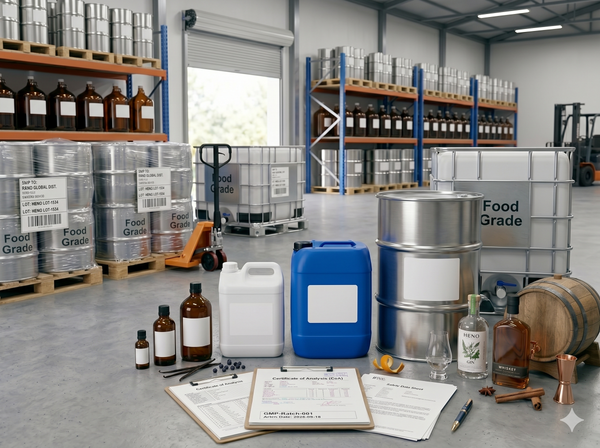
Our in-house QC team tests every shea butter batch for FFA, peroxide value, moisture content, and GC/MS fatty acid profile before dispatch. Every shipment includes a batch-specific CoA, SDS, and GC/MS report as standard. We carry no minimum order quantity, enabling formulators to qualify both refined and unrefined grades side by side before committing to production volumes.
For private-label brands requiring certified organic positioning, we supply USDA Organic-certified shea butter with organic transaction certificates and full lot traceability. Explore our private label manufacturing program for formulation support and production-scale supply terms.
Frequently Asked Questions
What is the difference between Grade A and Grade B bulk shea butter for cosmetic manufacturing?
Grade A is unrefined ivory to yellow, with a nutty aroma and an unsaponifiable fraction of 6-17% containing triterpenes, tocopherols, and phytosterols. Grade B is refined, white, odorless, with the unsaponifiable fraction reduced to approximately 1-3%. Grade A suits natural and organic positioning; Grade B suits mass-market emulsion manufacturing where scent neutrality and color consistency are priorities.
Should I use refined or unrefined shea butter for leave-on skincare formulations?
Both grades are used in leave-on formulations. Unrefined shea supports active-rich, natural-label SKUs where the unsaponifiable fraction is a formulation asset. Refined shea is preferred where scent neutrality, consistency across high-temperature emulsion processing, and extended shelf life are the primary manufacturing requirements.
What quality specifications should bulk shea butter meet for cosmetic grade use?
Cosmetic-grade shea butter should meet: FFA ≤ 2%, peroxide value ≤ 10 meq/kg, moisture ≤ 0.5%, and a GC/MS-verified fatty acid profile within accepted species ranges. Always request batch-specific analytical data rather than a general product specification sheet.
How do I verify the unsaponifiable fraction content of bulk shea butter?
Request a GC/MS fatty acid profile alongside a separate unsaponifiable fraction determination from your supplier, using ISO or AOCS standard methods. For Grade A shea, unsaponifiable content should fall between 6-17%. Suppliers unable to provide this data independently should not be qualified for cosmetic-grade production.
Can HBNO supply USDA Organic and FAIR FOR LIFE-certified bulk shea butter?
Yes. HBNO supplies USDA Organic and FAIR FOR LIFE-eligible bulk shea butter with organic transaction certificates, batch-specific CoA, GC/MS reports, and SDS available for wholesale bulk and private label production programs with no minimum order quantity.
Published by the HBNO Bulk editorial team. HBNO (IL Health & Beauty Natural Oils Co., Inc.) is a manufacturer and bulk supplier of essential oils and carrier oils based in Chico, California.
Specifying the wrong bulk shea butter grade is one of the most common formulation and procurement errors in personal care manufacturing and one of the most avoidable. For sample packs, grade comparisons, and a wholesale documentation pack, contact the HBNO team to begin qualification.