Vitamin E is the most widely specified minor ingredient in oil-based personal care, appearing at fractions of a percent in products that otherwise have nothing in common. It goes into facial serums, hair oils, lip balms, body butters, candles and cleaning products, usually at 0.1 to 0.5 percent, and most brands could not explain precisely why beyond a general sense that it belongs. That vagueness is expensive, because bulk vitamin E oil is sold in at least a dozen commercially distinct forms at meaningfully different prices, and choosing between them requires knowing which job it is actually doing in your formula. Here are the five reasons it earns its place, and what each implies for the specification.
1. It slows oxidation of the oil phase
The primary function of vitamin E in a formulation is to slow oxidative degradation of the carrier oils, which is a stability function rather than a benefit to the user.
Unsaturated fatty acids oxidise, producing peroxides and then the aldehydes responsible for the rancid note in an old oil. Tocopherols interrupt that chain. In practice, dosing at 0.1 to 0.5 percent at the blending stage extends the period over which a formula remains sensorially acceptable, weighted toward the upper end when the base carries a large polyunsaturated fraction such as rosehip or grapeseed.
The important framing for a specification is that this is an effect on the oil, not on skin. It is measurable through peroxide value over time under accelerated conditions, and that measurement is what should justify the dose. Adding vitamin E because it is conventional, without running the stability comparison, means you do not know whether 0.1 or 0.5 percent is correct for your base.

2. It is the cheapest insurance against a returns problem
A tacky or off-smelling oil generates returns and negative reviews, and a fraction of a percent of tocopherol costs materially less than the complaints it prevents.
The economics are straightforward. Vitamin E at 0.2 percent of a formula is a small number in the cost per unit. A batch of premium body oil that goes tacky in distribution is a write-off plus reputational damage. For products with long distribution cycles, that trade is heavily in favour of dosing properly.
3. Form and potency are specification decisions, not equivalents
Tocopherol, tocopheryl acetate, tocopheryl succinate and mixed tocopherols are different materials with different stability and different behaviour in a formula.
We supply the range across several forms. Free tocopherol acts directly in the oil phase. Tocopheryl acetate is more stable in storage but needs to be cleaved to be active, which changes where it is useful. Succinate forms and powders suit different processing routes.
Potency is stated two ways, as a percentage and in IU, and the two are not interchangeable shorthand. Our range includes D-alpha tocopherol at 900 and 1000 IU, tocopheryl acetate grades at 1200 and 1300 IU with assays around 88 and 96 percent, mixed tocopherol grades from 60 to 90 percent across beta, gamma and delta fractions, and natural vitamin E at 70 percent 1000 IU and 95 percent 1300 IU. Specify the form and both figures, because a purchase order naming only vitamin E will produce something, and it may not be the something your process needs. The full product list shows the current grades.
4. Natural and synthetic are different products with different labels
Natural d-alpha and synthetic dl-alpha tocopherol are chemically distinct, priced differently, and carry different implications for a natural positioning claim.
The d- prefix indicates the naturally occurring stereoisomer; dl- indicates a synthetic mixture. Both function. They differ in cost, and they differ in what a brand can credibly say about the formulation. A product marketed on naturally derived ingredients that specifies dl-alpha tocopheryl acetate has a consistency problem waiting to be found.
We supply both, including a dl-alpha tocopheryl acetate at 98 percent 1000 IU and synthetic powder grades, alongside the natural forms. Choose deliberately. Where a natural claim matters, note that we also carry an organic vitamin E oil at approximately 68 percent 1000 IU derived from soybean, and organic status should be confirmed per SKU rather than assumed. Our comparison of tocopherol dosing in premium body oil blends covers the practical application.
5. It carries an allergen and sourcing consideration
Much commercial vitamin E is derived from soybean, which introduces a sourcing and allergen consideration that a formulator should know about rather than discover.
Soy-derived tocopherol is standard and widely used, and the highly processed nature of the material affects how allergen questions are handled in different jurisdictions. What matters commercially is that the source is documented, so a brand can answer a retailer questionnaire or a customer query accurately. Sunflower-derived alternatives exist where soy is a constraint.
At HBNO every lot is GC/MS tested in house where applicable and ships with a CoA and SDS, and batch testing against a retained reference is available on request. Cosmetic ingredient documentation follows Personal Care Products Council conventions, and any claim about what vitamin E does for skin or health remains the brand's to substantiate under FDA rules rather than the supplier's. Our guide to carrier oil failure modes covers the oxidation problem tocopherol is dosed against.

Sourcing bulk vitamin E from HBNO
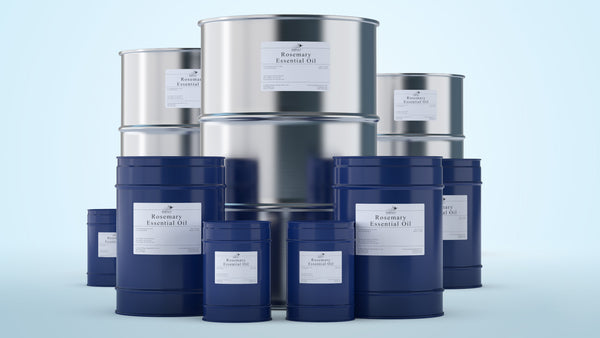
We manufacture from a 100,000 square foot facility in Chico, California, operating under ISO and GMP systems with FDA registration, with PhD staff and in-house quality control. The vitamin E range spans natural and synthetic forms, oil and powder presentations, multiple assay levels and an organic grade, which means a formulator can match the form to the process rather than adapting the process to whatever is stocked.
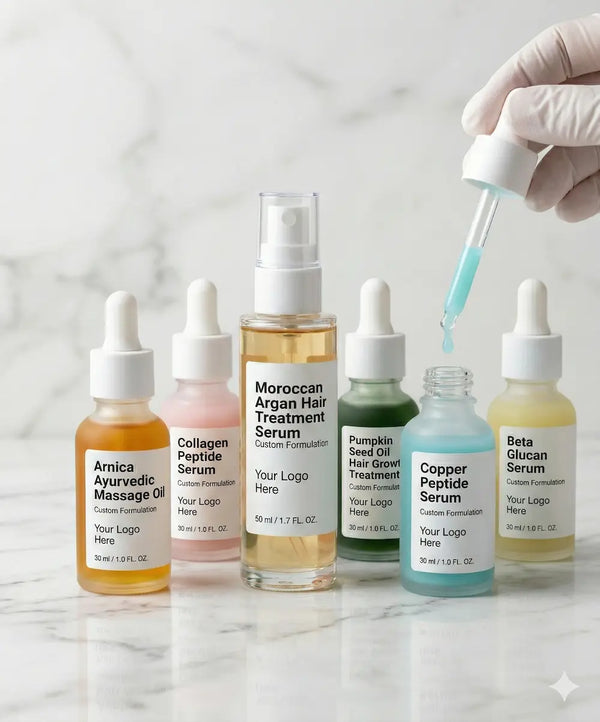
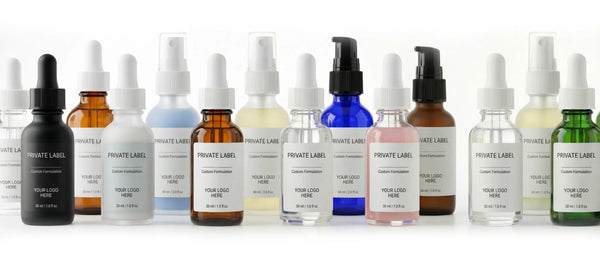
Two operational points help. There is no minimum order quantity, so two or three forms can be trialled in an accelerated stability comparison before one is committed to volume. And our private label operation fills to 250,000 units per day with drop-shipping available. The carrier oils range covers the bases tocopherol is usually dosed into.
Frequently asked questions about bulk vitamin E oil
What dose of vitamin E should a formulation use?
Commonly 0.1 to 0.5 percent, weighted to the upper end when the base carries a large polyunsaturated fraction. The correct figure for your formula should come from an accelerated stability comparison measuring peroxide value over time, not from convention. Add it at the blending stage rather than as a later correction.
What is the difference between tocopherol and tocopheryl acetate?
Tocopherol is the free form and acts directly in the oil phase. Tocopheryl acetate is more stable in storage but requires cleaving to become active, which changes where it is appropriate. They are not interchangeable on a purchase order, so specify the form as well as the assay.
How do percentage and IU relate on a vitamin E specification?
They describe different things: the percentage is an assay of the material and IU expresses potency. Both should appear on the specification, because two products with the same percentage can carry different IU figures depending on form and stereoisomer. Naming only one leaves the order ambiguous.
Is natural vitamin E better than synthetic?
Both function as antioxidants in a formulation. The differences are cost and label consistency: natural d-alpha commands a premium, while synthetic dl-alpha is more economical. A product positioned on naturally derived ingredients should specify the natural form to avoid an internal contradiction on its own ingredient list.
Does vitamin E preserve a finished product?
No. It slows oxidative degradation of the oil phase, which is a stability function affecting how the oils age. It is not a preservative system and does not address microbiological stability. Whether your formula requires a preservative system remains a determination for your formulator and your own testing.
Specifying bulk vitamin E oil for the job it is actually doing
Vitamin E appears in almost everything because the oxidation problem it addresses appears in almost everything. What separates a considered specification from a habitual one is knowing which form your process needs, stating both the assay and the IU, choosing natural or synthetic deliberately against your positioning, documenting the botanical source for allergen questions, and setting the dose from a stability comparison rather than from convention. To review forms and grades or request samples of bulk vitamin E oil, contact our team for a quote.
Published by the HBNO editorial team. HBNO (IL Health & Beauty Natural Oils Co., Inc.) is a manufacturer and bulk supplier of essential oils and carrier oils based in Chico, California.