Clove is one of the cheapest ways to put a high-impact aromatic into a formulation, and one of the easiest to buy badly. Two drums labelled bulk clove oil can differ by plant part, eugenol content, and specific gravity while carrying the same trade name and a similar price. For a formulator that difference changes odour profile, IFRA compliance position, and how the oil behaves in soap or a household product base. There is one number that settles most of it. At HBNO we supply clove bud and clove leaf oils in conventional and organic grades, plus a clove bud oleoresin, and the eugenol figure is where every technical conversation starts.
The one spec that matters: eugenol content and plant part
Eugenol percentage, read alongside the plant part it came from, is the single specification that tells you whether a clove oil lot is what the label says it is.
Our GC/MS data separates the two materials clearly. Clove Bud Essential Oil types at 80 percent eugenol with a specification range of 75 to 85 percent, 9 percent eugenyl acetate (8 to 15 percent), 7 percent beta-caryophyllene, and around 0.75 percent alpha-humulene. Clove Leaf Essential Oil types higher on eugenol at 85 percent with a range of 80 to 88 percent, but it carries almost no eugenyl acetate and considerably more beta-caryophyllene at 11 percent.
That eugenyl acetate figure is the tell. Bud oil contains it; leaf oil essentially does not. A lot sold as bud oil with negligible eugenyl acetate is leaf oil, whatever the paperwork says, and leaf oil trades at a lower price. The odour difference follows the chemistry: bud is rounder and sweeter, leaf is harsher and more phenolic.
Physical constants confirm it independently. Clove oils are among the few essential oils denser than water. Our bud oil runs a specific gravity of 1.045 to 1.065 with refractive index 1.530 to 1.545; leaf oil sits slightly lower at 1.030 to 1.060 and 1.510 to 1.550. A specific gravity below 1.0 means the drum has been cut with something.

Bud, leaf, or oleoresin: matching the grade to the application
Bud oil earns its premium in fine fragrance and personal care, leaf oil is the economic choice for soap and household bases, and oleoresin belongs in flavour work.
|
Grade |
Typical eugenol |
Where it fits |
|---|---|---|
|
Clove Bud Essential Oil |
75 to 85 percent |
Perfumery, personal care, cosmetics, scented candles |
|
Clove Leaf Essential Oil |
80 to 88 percent |
Soap, household cleaners, laundry and dish bases, deodorising formats |
|
Organic Clove Bud |
75 to 85 percent |
Certified personal care and home care lines |
|
Clove Bud Oleoresin 30 percent |
Standardised |
Food and flavour applications, bakery |
The counterintuitive part is that higher eugenol does not mean better. Leaf oil carries more eugenol than bud oil yet sells for less, because eugenyl acetate and the minor sesquiterpenes are what produce the rounded bud profile perfumers want. Buying on eugenol percentage alone will steer you to the cheaper material every time.
In soap, clove behaves like other phenolic oils: it accelerates trace and darkens the bar over cure, so usage rates and blending order need testing at pilot scale before a production batch, the same discipline set out in essential oil usage rates for soap formulation.
Safety documentation and the IFRA position on eugenol
Eugenol is a declarable fragrance allergen and an IFRA-restricted material, so the usage rate in a leave-on product is a compliance decision rather than a formulation preference.
Our safety data for Clove Bud Essential Oil records skin sensitisation, no food allergens present, a flash point of 100 degrees Celsius, and that it is not classified as flammable under GHS. It is not suitable for ingestion and is supplied for external formulation use. Incompatible materials include oxidising mineral acids and strong reducing and oxidising agents, which matters for storage segregation in a warehouse.
The dilution position depends on the finished product category, and the IFRA Standards set the limits by product type rather than giving a single number. European buyers should also confirm the REACH registration status for the volumes they import. Our QC team issues an SDS in English with every shipment and can supply allergen declaration data for your safety assessor.

Sourcing bulk clove oil from HBNO
We manufacture and supply clove bud, clove leaf, organic grades of both, natural clove fragrances, and clove bud oleoresin from a 100,000 square foot facility in Chico, California.
Clove Bud Essential Oil is Kosher certified through EarthKosher, cosmetic grade, and GC/MS tested in house with batch testing available on request. It is not certified organic; where a certified material is needed, our Organic Clove Bud Essential Oil is the correct line item. HBNO also holds ISO, GMP, FDA registration , Kosher, USDA Organic, and FAIR FOR LIFE certifications at company level, with PhD staff and in-house quality control.
There is no minimum order quantity, so a formulator can compare bud and leaf side by side at bench scale before committing. Private label capacity runs to 250,000 units per day, drop shipping is available, and we ship across North America, Europe, Asia, and Oceania. Clove sits in our essential oils range alongside the other high-phenolic materials buyers qualify at the same time, including the carvacrol specifications that govern oregano oil and the menthol content variables in peppermint. Long term supply agreements are common because clove pricing tracks harvest in a small number of origins.
Frequently asked questions about bulk clove oil sourcing
How can clove leaf oil sold as clove bud oil be detected?
Check eugenyl acetate on the GC/MS panel. Bud oil contains it at roughly 8 to 15 percent, while leaf oil carries essentially none. Beta-caryophyllene running near 11 percent rather than 7 percent points the same way, and a specific gravity toward the lower end of the range supports it. No single figure is conclusive; the pattern across three is.
Why does clove leaf oil have more eugenol but cost less?
Eugenol is the bulk constituent in both materials, but the minor components create the commercial difference. Bud oil's eugenyl acetate and sesquiterpene profile produce the rounded, sweeter odour that fine fragrance and personal care buyers pay for. Leaf oil is also cheaper to produce because leaf biomass is far more abundant than harvested buds.
What specific gravity should a genuine clove oil lot show?
Clove oils are denser than water, which is unusual among essential oils. Our clove bud specification runs 1.045 to 1.065 and clove leaf 1.030 to 1.060. Any lot testing below 1.0 has almost certainly been diluted with a lighter material, and specific gravity is a fast, inexpensive incoming check that catches it before the drum enters production.
Is clove bud oleoresin interchangeable with clove essential oil?
No. Oleoresin is a concentrated extract containing both volatile and non-volatile fractions, standardised to a stated strength, and our Clove Bud Oleoresin 30 percent is listed for food and flavour applications rather than personal care. Essential oil and oleoresin differ in solubility, colour contribution, and dosing, so they cannot be substituted on a one-to-one basis.
Should clove oil be stored separately from other raw materials?
Yes. Our safety data lists oxidising mineral acids and strong reducing and oxidising agents as incompatible, which is a warehouse segregation requirement rather than a formulation note. Clove also has a strong odour that can migrate to neighbouring materials in a shared store, so a dedicated area protects both safety compliance and the sensory integrity of everything around it.
Getting the bulk clove oil specification right
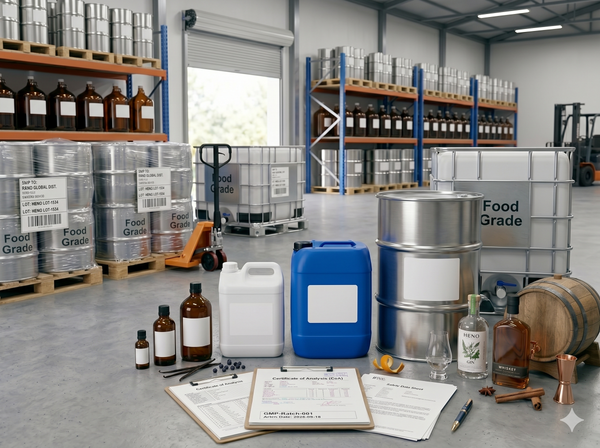
Bulk clove oil is inexpensive enough that buyers rarely scrutinise it, which is precisely why substitution is common. Put eugenol range, eugenyl acetate range, beta-caryophyllene, and specific gravity on the purchase specification, name the plant part explicitly, and check the incoming CoA against all four. Do that and the difference between a good drum and a bad one stops being a matter of trust. Our team can quote bud, leaf, organic, and oleoresin grades, supply samples for odour comparison, and provide the allergen and safety documentation your assessor needs.
Request a bulk clove oil quotation from HBNO.
Published by the HBNO editorial team. HBNO (IL Health & Beauty Natural Oils Co., Inc.) is a manufacturer and bulk supplier of essential oils and carrier oils based in Chico, California.