Rosehip is the carrier oil most likely to sell a facial oil on its name and most likely to fail a stability test. Roughly six parts in ten of the fatty acid profile is polyunsaturated, which is exactly what formulators want in a premium facial line and exactly what makes the oil difficult to hold. Buying bulk rosehip oil without a storage plan and an antioxidant strategy is how a brand ends up recalling a batch that smelled fine at fill and rancid at month four. At HBNO we supply organic and conventional Rosehip Seed Carrier Oil, and the technical conversation is almost always about stability rather than price.
Why bulk rosehip oil is the least stable carrier on your shelf
Rosehip seed oil carries the highest polyunsaturated fraction of any commonly used cosmetic carrier, which drives both its formulation appeal and its short practical shelf life.
Our GC/MS profile on Organic Rosehip Seed Carrier Oil types at 41 percent linoleic acid with a specification range of 37 to 50 percent, 20 percent alpha-linolenic acid ranging 17 to 32 percent, 24 percent oleic, and 4 percent stearic. Specific gravity runs 0.91 to 0.94 and refractive index 1.46 to 1.49. That combined linoleic and alpha-linolenic load is the number to plan around: polyunsaturated bonds oxidise far faster than the monounsaturated bonds that dominate argan or olive, a relationship well documented in the lipid oxidation literature.
Four controls follow from that, and all four belong in the purchase and handling specification:
-
Peroxide value and free fatty acid on the incoming lot, not on a generic data sheet. A lot arriving mid-range has already spent part of its usable life.
-
Cool, dark storage with minimal headspace. Decant rather than repeatedly opening a drum.
-
An antioxidant addition in the finished formula, at a level your formulator sets rather than the supplier.
-
A tighter reorder cadence. Rosehip suits frequent smaller deliveries rather than annual stock building, which is the opposite of the approach that works for high oleic versus linoleic safflower grades.

Seven skincare bestsellers built on bulk rosehip oil
Rosehip earns its cost in low-inclusion, high-value formats where the ingredient deck carries the positioning and the pack size keeps the fill cost small.
-
Facial and night oils, usually as a named component of a blend rather than at 100 percent.
-
Oil-phase facial serums, where rosehip sits alongside squalane or jojoba for the sensory balance.
-
Mature-skin product lines, where the material appears near the top of a short ingredient deck.
-
Eye area products, where small fill volumes make a premium carrier affordable.
-
Lip balms and Lip care Products, blended into a wax and butter base at a low percentage.
-
Hair and scalp oils, typically at 2 to 10 percent of a lighter carrier base.
-
Premium moisturiser emulsions, contributing to the oil phase without dominating it.
The common thread is inclusion level. Most brands run rosehip between 2 and 10 percent of the oil phase, which keeps both cost and oxidation exposure manageable while the ingredient still leads the marketing story.
Seed or fruit, virgin or refined: getting the specification right
Rosehip seed oil and rosehip fruit oil are different materials from the same plant, and a quotation that does not say which one is not comparable to anything.
Seed oil is pressed or extracted from the seed and carries the polyunsaturated profile above. Fruit or pulp oil comes from the flesh and skin, is deeper in colour, and has a different composition. Confirm which one is being offered, along with the species, since Rosa canina, Rosa rubiginosa, and Rosa moschata all appear in commercial supply and each carries its own INCI entry.
Processing route is the second axis. Cold-pressed virgin material retains more colour and odour and typically shows a higher initial peroxide value. Refined material is paler and more neutral with a longer practical hold. Supercritical CO2 extracted grades sit at the premium end. None of these is universally correct; the right choice depends on whether the finished product tolerates a deep amber colour and a distinctive odour.
Because rosehip is expensive, dilution with a cheaper polyunsaturated oil such as sunflower or safflower is the main quality risk. A full GC/MS fatty acid panel read against the specification catches it: an alpha-linolenic figure below the 17 percent floor is the clearest signal. All of our carrier oils are GC/MS tested in house, with batch testing available on request, and the same incoming discipline covered in carrier oil selection for cosmetic formulation applies here.

Sourcing bulk rosehip oil from HBNO
We supply Rosehip Seed Carrier Oil in both organic and conventional grades from a 100,000 square foot facility in Chico, California, with certification confirmed at product level rather than assumed across the range.
Our Organic Rosehip Seed Carrier Oil is USDA Organic certified through OneCert, Kosher certified through EarthKosher, cosmetic grade, GC/MS tested in house, and supplied with CoA and SDS. HBNO also holds ISO, GMP, FDA registration, Kosher, USDA Organic, and FAIR FOR LIFE certifications at company level, with PhD staff and in-house quality control.
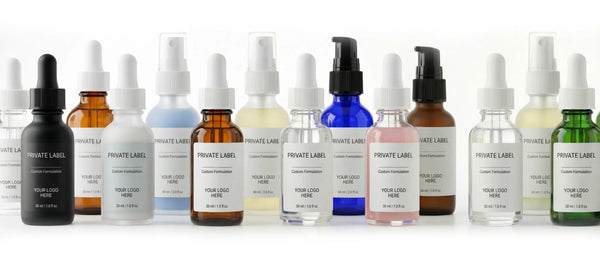
There is no minimum order quantity, which matters on a short-life oil: a brand can order to actual production need rather than committing to a drum that will oxidise before it is used. Private label capacity runs to 250,000 units per day, drop shipping is available, and we ship across North America, Europe, Asia, and Oceania. Rosehip is usually qualified alongside the rest of an oil phase from our carrier oils range and wider product list, and it appears in formats well beyond facial care, including the oils used in bath bomb manufacturing. Brands scaling a range often move onto our private label programme at the same point.
Frequently asked questions about bulk rosehip oil sourcing
What shelf life should be expected from bulk rosehip seed oil?
Practical shelf life is shorter than for monounsaturated carriers because of the polyunsaturated content, and the figure depends heavily on storage temperature, headspace, and whether an antioxidant has been added. Treat any supplier figure as conditional on handling. The reliable approach is to track peroxide value on receipt and again before each production run rather than relying on a date.
Is refined or cold-pressed rosehip oil better for a facial oil?
Neither is universally better. Cold-pressed virgin material carries more colour and a distinctive odour that some brands want on the ingredient story, while refined material is paler, more neutral, and easier to hold. Choose on the colour and odour tolerance of the finished product, then validate stability on that specific grade.
How can a diluted rosehip oil lot be identified?
Run a full GC/MS fatty acid panel against the specification rather than relying on colour or odour. Alpha-linolenic acid below the 17 percent floor is the strongest indicator, since the cheap oils used for dilution are low in it. Specific gravity and refractive index outside the expected ranges provide quick secondary confirmation on receipt.
What inclusion percentage do most brands use for rosehip in a blend?
Commonly 2 to 10 percent of the oil phase, occasionally higher in a small pack facial oil. Running it at 100 percent is unusual outside premium single-ingredient positioning, because it concentrates both the cost and the oxidation risk in one material. Bench test at several inclusion levels before fixing the formula.
Should rosehip oil be ordered in drums or smaller packs?
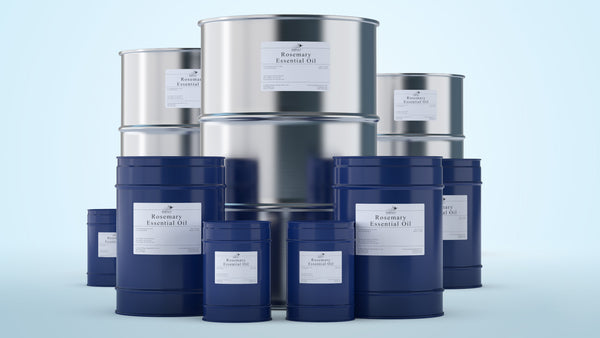
Order to production need. Because oxidation advances once a container is opened, a drum that takes eight months to consume performs worse than three smaller deliveries over the same period. With no minimum order quantity there is no cost penalty to matching pack size to batch schedule.
Building a bulk rosehip oil supply that survives to the fill line
Bulk rosehip oil rewards precision on two fronts: a specification that names seed or fruit, species, and processing route, and a handling plan that treats the oil as the perishable material it is. Fix the alpha-linolenic floor on your purchase document, take peroxide value on every incoming lot, and size orders to production rather than to price breaks. Our team can quote organic and conventional grades, confirm certification documentation against your specification, and supply samples so the stability work happens before the production order.
Request a bulk rosehip oil quotation from HBNO.
Published by the HBNO editorial team. HBNO (IL Health & Beauty Natural Oils Co., Inc.) is a manufacturer and bulk supplier of essential oils and carrier oils based in Chico, California.