Jojoba occupies an unusual position in cosmetic procurement. It costs several times what a commodity seed oil costs, it appears in categories from facial serums to pet shampoo, and buyers keep reordering it anyway. The reason is chemical rather than sentimental. Bulk jojoba oil is not a fat at all, and that single fact explains its stability, its shelf life advantage, and why formulators who have designed around it rarely substitute back. It also explains why the specification needs closer reading than a conventional carrier. Here is what the material actually is, what the numbers on the CoA mean, and where a jojoba order goes wrong.
Why jojoba is not really an oil
Jojoba is a liquid wax ester rather than a triglyceride, which is why it does not oxidise on the pathway that shortens the life of every conventional carrier oil.
Conventional vegetable oils are triglycerides: three fatty acid chains bound to a glycerol backbone. Those chains carry double bonds, and each double bond is a site where oxygen can attack. Jojoba is built differently, as long-chain esters of fatty acids and fatty alcohols, and the practical consequence is a material that tolerates warm storage and repeated opening far better than an equivalent seed oil.
Our GC/MS records for golden jojoba show gondoic acid at 44 to 67 percent with a typical value of 45, 11-eicosenol at 4 to 14 percent with a typical value of 13.5, erucic acid at 8 to 13 percent, and oleic acid at 3 to 8 percent. Specific gravity runs 0.850 to 0.880 and refractive index 1.460 to 1.470. Counsel-approved language describes jojoba as having similarities to the skin's natural oils, which is why formulators reach for it, and it is welcomed by the skin in leave-on formats.

Reading the specification: what the wide ranges mean
The gondoic acid range on a jojoba specification spans 23 percentage points, and that width is normal for the material rather than a sign of a loose supplier.
Jojoba composition moves with cultivar, growing region and season. A range that wide means two things for a buyer. First, do not write a narrow single-figure specification you cannot source against. Second, if lot-to-lot consistency matters to your product, hold a retained reference sample and check each delivery against it rather than against the range.
Refractive index and specific gravity are the fastest adulteration screens on any premium carrier, and jojoba is adulterated often enough that they belong on every incoming check. A lot cut with a cheaper triglyceride oil will usually move at least one of the two outside the expected window. At HBNO every lot is GC/MS tested in house before release, and batch testing against a retained reference is available on request. Our comparison of jojoba and castor oil in personal care formulation covers where each belongs.
Golden, refined, and organic: choosing the grade
Jojoba comes in golden and refined forms, and each is available conventional or organic, which makes four distinct materials rather than one with options.
Golden jojoba retains its natural colour and a faint characteristic odour. It suits products sold on provenance, where a warm gold tint in a clear bottle is part of the presentation. Refined jojoba is close to colourless and effectively odourless, which is what a white lotion base or a fragranced product needs, and it sits alongside the rest of our full product list in both conventional and organic form.
Organic certification is where buyers most often make an incorrect assumption. Our organic golden jojoba is USDA Organic certified through OneCert and Kosher certified through EarthKosher, and it is cosmetic grade. It is not food grade. Certifications at HBNO are held at company level for the business and confirmed per SKU for the product, so an organic claim on a finished good needs the lot-level certificate rather than a supplier-level one. The carrier oils range lists the grades available.
Where jojoba earns its cost, and where it does not
Jojoba justifies its price where stability, sensory finish or label credibility genuinely matter, and wastes money where it is held at a token percentage purely for the ingredient list.
It earns its cost as the dominant carrier in a premium facial oil or serum, where the satin finish and long usable life are the product. It earns it in leave-on hair oils, where a conventional carrier would oxidise in a warm bathroom. And it earns it in any product with a long distribution cycle, because the oxidative advantage is real money in avoided write-offs.
Where it does not earn its cost is at 1 or 2 percent in an otherwise commodity base, added so the ingredient list can name it. That inclusion buys label copy and nothing functional. The honest version is either to use it at 20 percent or more and build the product around it, or to leave it out and spend the money on the base. Demand for naturally derived cosmetic ingredients continues to expand according to Grand View Research, which makes the token-inclusion temptation stronger, not weaker. Our guide to carrier oil selection for cosmetic formulation works through the ratio decisions.

Sourcing bulk jojoba oil from HBNO
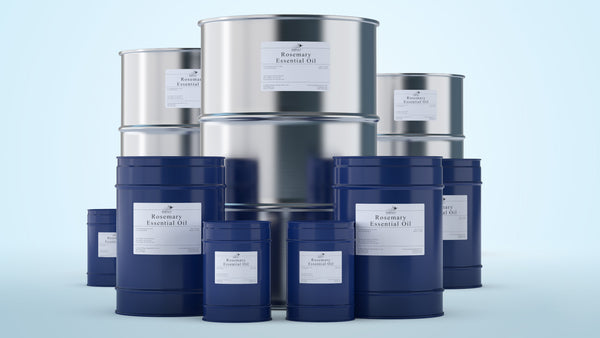
We manufacture from a 100,000 square foot facility in Chico, California, operating under ISO and GMP systems with FDA registration, with PhD staff and in-house quality control. Jojoba is stocked as golden, golden organic, refined, and refined organic, and a CoA and SDS ship with every order.
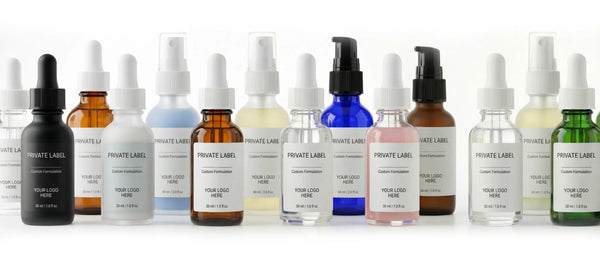
Three operational points matter on a premium carrier. There is no minimum order quantity, so a formulation team can qualify a grade at sample scale before drum commitment. Batch testing against a retained reference is available on request, which is the practical defence against both adulteration and lot drift. And our private label operation fills to 250,000 units per day if buying finished units suits the programme better than buying raw material. Ingredient safety documentation follows Personal Care Products Council conventions.
Frequently asked questions about bulk jojoba oil
Why does jojoba last longer than other carrier oils?
Because it is a wax ester rather than a triglyceride, so it does not carry the same density of oxidation-prone sites as a conventional seed oil. In practice that means better tolerance of warm storage, repeated container opening, and long distribution cycles. It is the most durable widely available liquid carrier for that reason.
Is golden or refined jojoba better for formulation?
Neither is better; they suit different products. Golden keeps its colour and faint odour and suits provenance-led products in clear packaging. Refined is near colourless and odourless and suits white bases and fragranced products. Fix the grade in the specification, because the two are not interchangeable mid-programme.
How do I detect adulterated jojoba?
Start with refractive index and specific gravity, which appear on any competent CoA and will usually shift if the lot has been cut with a triglyceride oil. A full GC profile is definitive. Holding a retained reference sample from a lot you trust makes every subsequent comparison straightforward.
Is HBNO's organic jojoba also food grade?
No. Our organic golden jojoba is USDA Organic certified through OneCert, Kosher certified through EarthKosher, and cosmetic grade, but it is not food grade. Food grade status is specific to the material and sometimes to the grade, and it should be confirmed per SKU rather than inferred from other certifications.
What is the minimum useful inclusion rate for jojoba?
If the purpose is functional, 20 percent or more of the base, where the stability and finish characteristics genuinely change the product. Below roughly 5 percent the contribution is largely to the ingredient list. Decide which of the two you are buying before setting the rate.
Specifying bulk jojoba oil before you commit to volume
Jojoba rewards buyers who read its specification as a wax rather than as an oil. Write the gondoic range wide enough to source against, hold a retained reference for consistency, screen refractive index and specific gravity on every intake, and pick the grade deliberately rather than accepting whatever arrives. Then use it at a rate that does something. To review current specifications, confirm certification per SKU, or request samples of bulk jojoba oil, contact our team for a quote.
Published by the HBNO editorial team. HBNO (IL Health & Beauty Natural Oils Co., Inc.) is a manufacturer and bulk supplier of essential oils and carrier oils based in Chico, California.