Procurement teams sourcing essential oils for food, personal care, or fragrance formulation increasingly ask a supplier one question before price: is this facility kosher certified, and how was that certification actually earned. The kosher certification process for bulk essential oil manufacturers is not a label a company buys once and keeps forever. It is an ongoing relationship with a certifying agency that reviews raw material sources, extraction and distillation equipment, and the paper trail connecting every lot back to an approved ingredient list. For a buyer building a specification sheet, understanding what that process requires, rather than just seeing a symbol on a certificate, separates a genuine audit trail from a claim nobody can verify. At HBNO, we go through that process ourselves, on our own production floor.
How the Kosher Certification Process Begins: Ingredient and Supplier Review
Kosher certification for an essential oil manufacturer starts with a full accounting of every raw material and processing aid that touches the product, not with the finished oil itself. A certifying agency such as EarthKosher, OU, or OK Kosher requires the applicant to submit a complete ingredient list, including any solvents or carrier bases used anywhere in extraction, together with documentation on where each one is sourced. Botanical raw materials are checked against an approved-source list, and any ingredient the agency has not already reviewed has to clear a separate approval step first.
Supplier review does not stop at the manufacturer's own dock. If a distiller sources crude oil from a third-party grower, that upstream supplier's status matters too, because certification travels with the ingredient rather than the finished product alone. Changing a supplier or processing aid mid-certification typically requires the new source to be approved before it can enter a certified run, which is why a kosher certificate is tied to specific approved suppliers and formulas rather than to a company in the abstract. At HBNO, every essential oil we carry under kosher certification is checked against an approved ingredient and supplier list maintained with EarthKosher, and that list is what our lavender essential oil and peppermint essential oil are verified against before either ships under the kosher designation.

Facility Inspection, Equipment Kosherization, and Bulk Transport
Once ingredients are approved, the certifying agency inspects the physical facility, and shared equipment has to be either dedicated to certified production or properly kosherized between runs. Inspectors examine stills, tanks, filling lines, and packaging equipment for residue from prior, non-certified batches. A shared line is cleaned, and where required, kosherized under agency guidance before a certified batch passes through it. A manufacturer running a dedicated line for kosher production generally has a simpler ongoing audit than one switching a shared line back and forth.
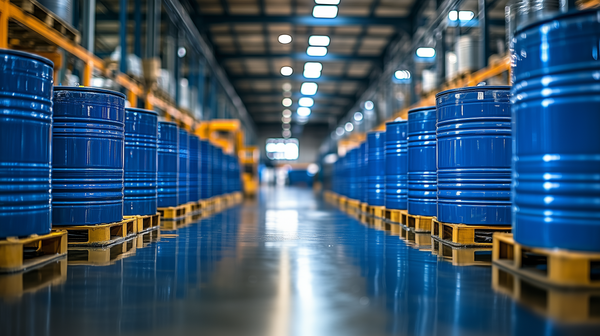
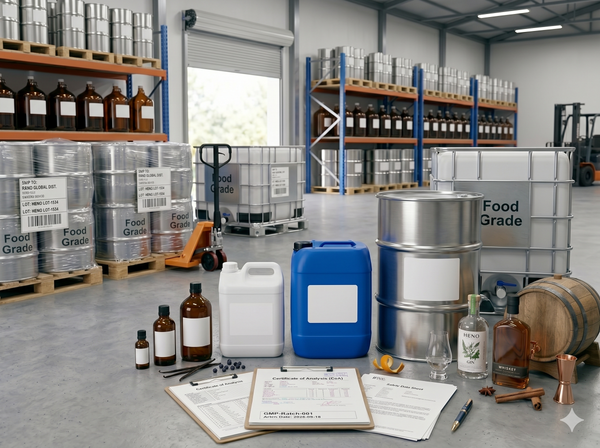
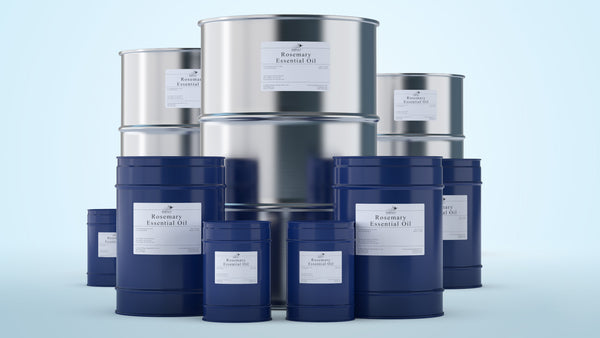
Bulk shipment adds a layer that finished-goods certifications rarely touch. A tanker or bulk container moving essential oil between a distillery and a packaging facility is expected to carry its own kosher status, with transport documentation confirming the material's origin and chain of custody. This matters to a wholesale buyer for a concrete reason: a drum-packed oil that changed hands through an uncertified intermediate carrier can lose its certified status even when the original distillation was fully compliant. Our facility in Chico, California, keeps certified production on equipment tracked specifically for that purpose, and batch-specific documentation follows every drum to a buyer's receiving door. Third-party audit models are not unique to kosher supervision. NSF International applies a comparable unannounced-inspection standard for food-safety certification, a useful reference point for evaluating any supplier's audit rigor.
What Happens After Certification: Documentation and Ongoing Audits
Kosher certification is maintained through continuous documentation rather than confirmed once and forgotten, and a certifying agency reserves the right to inspect a certified facility again at any time, including without advance notice. A kosher claim on a specific lot has to trace to four things: an in-force certificate, an approved ingredient by lot number, equipment in an approved, kosherized state at the time of the run, and correct label or documentation language on that lot. Losing any one of those breaks the chain, which is why manufacturers keep batch records and supplier certificates on file well beyond the product's shelf life.
For a procurement team, this is the detail worth asking a supplier about directly: can they produce, on request, the specific certificate covering the lot being purchased, not a general claim that the company "is kosher." A current certificate names the certifying agency, the categories it covers, and a renewal date. USDA organic certification runs on a parallel lot-and-supplier logic, which is why the two certifications so often sit side by side on the same specification sheet. We maintain our kosher certification through EarthKosher on this same ongoing basis, and our QC team can provide the current certificate alongside the CoA and SDS that already accompany every shipment. Our guide to scaling an aromatherapy brand without losing quality control covers the same documentation discipline from a formulator's side of the specification sheet.

Kosher Certification at HBNO's Chico, California Facility
HBNO holds kosher certification through EarthKosher across our catalog, alongside ISO, GMP, FDA, USDA Organic, and FAIR FOR LIFE certifications, administered from our 100,000 square foot facility in Chico, California. Certification is confirmed at the product level rather than assumed across the catalog. When a manufacturer asks whether a specific SKU carries kosher status, we check our certification records for that item rather than answer from a general company claim, the standard a serious buyer should hold any supplier to.
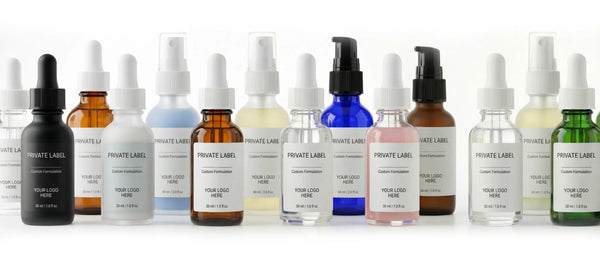
Every batch we produce, kosher certified or otherwise, is GC/MS tested in house, and a CoA and SDS ship with every order regardless of size. There is no minimum order quantity, and our 250,000-unit-per-day private label capacity means a certified product line is not held back by a supplier's own capacity limits. We ship globally and support long-term supply contracts for manufacturers who need certification and volume to stay consistent. Our broader essential oils collection and private label program both run under the same standard described here.
Frequently Asked Questions About the Kosher Certification Process
How long does the kosher certification process take for a bulk essential oil manufacturer?
Timelines vary by certifying agency and by how many ingredients and suppliers require individual review, but a first-time application commonly runs from a few weeks to a few months. A facility with a small, already-approved ingredient list moves faster than one introducing new botanical sources. Renewal cycles, once established, are typically much shorter than the initial application.
What does a kosher certification auditor actually inspect at an essential oil facility?
An auditor reviews the ingredient and supplier list, the equipment used in extraction, distillation, and filling, and the facility's cleaning and changeover procedures between certified and non-certified runs. Batch records, receiving logs, and current labels are checked against what was actually approved.
Can a certified facility lose its kosher status between scheduled audits?
Yes. Certification agencies reserve the right to conduct unannounced visits, and a facility that changes a supplier, ingredient, or piece of shared equipment without prior approval can break its certified status even between formal audit cycles. Ongoing documentation, not just the original certificate, is what keeps a facility compliant.
Which kosher certification agency is right for an essential oil manufacturer?
The right agency depends on a manufacturer's customer base and the recognition its buyers expect. Larger agencies such as OU and OK Kosher certify a large share of the kosher market and carry broad recognition, while agencies such as EarthKosher are built to work with smaller and growing manufacturers through a more accessible process. Confirm which symbol target buyers actually look for before choosing an agency.
Should bulk transport equipment be kosher certified separately from the production facility?
Yes, in most cases. A tanker, tote, or bulk container moving essential oil between a distillation site and a packaging facility is generally expected to carry its own kosher status and supporting transport documentation, independent of the facility certification at either end. A buyer relying on a kosher claim for a bulk shipment should confirm the transport chain was covered too.
Reading the Certification Before You Commit to a Supplier
The kosher certification process for bulk essential oil manufacturers rewards the discipline a procurement specification already demands: traceable suppliers, controlled equipment, and documentation that holds up on short notice. A supplier who can produce a current, lot-specific certificate on request has usually already built the systems a buyer wants to see. See our guide to what kosher food certification means for essential oil ingredient buyers for the food-grade angle, and our kosher certification primer for ingredient buyers for a plain-language starting point.
Published by the HBNO editorial team. HBNO (IL Health & Beauty Natural Oils Co., Inc.) is a manufacturer and bulk supplier of essential oils and carrier oils based in Chico, California.