Every essential oil supplier scorecard weighs price, minimum order quantity, and lead time. Fewer weigh quality management system certification with the same rigor, and that gap is where inconsistent batches and unpleasant surprises tend to originate. ISO 9001 certification for an essential oil supplier is not a marketing checkbox alongside a logo wall; it is evidence that a manufacturer has a documented, audited process for catching problems before they reach your dock. Understanding why it matters when choosing an essential oil manufacturer means understanding what it adds to a decision that organic status, Kosher certification, and a low quoted price cannot tell you on their own. At HBNO, we build our own supplier conversations around that distinction, because we expect buyers to ask us the same question they should ask anyone else.
Why ISO 9001 Belongs in Your Supplier Scorecard
A supplier scorecard built only on price and certificate logos misses the one variable that predicts whether next quarter's batch will match this quarter's: whether the manufacturer runs a documented, audited quality system at all.
Price and MOQ describe a transaction. Organic and Kosher status describe the material's sourcing and handling chain. ISO 9001 describes something different again: whether the organization behind the transaction catches its own mistakes before they ship. A manufacturer without a documented corrective-action process is not necessarily producing bad material today, but it has no structural mechanism for noticing when it starts to, and no audit trail for a buyer to review after the fact. That is the risk ISO 9001 status is meant to reduce, and it is why a scorecard that ignores it is measuring price and paperwork while skipping the variable that actually predicts consistency over time. Our companion piece on what ISO 9001 actually certifies covers the standard itself in more depth for buyers who want the mechanics before applying the criterion.

How ISO 9001 Complements Organic, Kosher, and GMP Certification
ISO 9001 does not replace organic, Kosher, or GMP certification in a supplier scorecard; it certifies the system that keeps all three honest over time.
USDA Organic and Kosher certifications confirm specific attributes of a material's sourcing and handling. GMP certification addresses manufacturing hygiene and facility conditions specific to personal care, food, or pharmaceutical inputs. ISO 9001 sits underneath all of them: it is the management system that governs whether the organic sourcing chain is actually being followed batch after batch, whether GMP procedures are documented and audited rather than informally understood, and whether a lapse in any of those areas gets caught and corrected rather than repeated. A manufacturer holding all four certifications is telling you that its material attributes, its manufacturing hygiene, and the process that governs both are each independently verified. A manufacturer holding organic or Kosher status alone, with no ISO 9001 or GMP behind it, may still be a legitimate supplier, but the buyer is trusting more to informal process than a scorecard should comfortably allow.
What It Costs You to Skip This Check
Skipping the ISO 9001 check does not cost anything until the first batch that does not match specification, at which point it costs the reformulation, the recall exposure, or the private label reorder that quietly slips a shipping date.
An uncertified manufacturer with no documented corrective-action process has no structural way to demonstrate why a deviation happened or what changed to stop it from happening again. For a private label brand running thin margins on a single formulation, an unexplained shift in a key constituent can mean reformulating a product that was already on shelf. For a contract manufacturer working against a customer's own specification, it can mean a failed incoming inspection and a delayed production run with no clear root cause to report back. None of this shows up in the initial quote. It shows up in the second or third reorder, which is exactly when a buyer without an audit trail from the supplier has the least leverage to ask what went wrong. A practical checklist for vetting an ISO 9001 certified manufacturer walks through exactly how to catch this before the first purchase order goes out, and the same due diligence discipline applies to the broader white label or private label decision many brands face when choosing a manufacturing partner.

HBNO's Certification Stack, and Why It Is Structured This Way
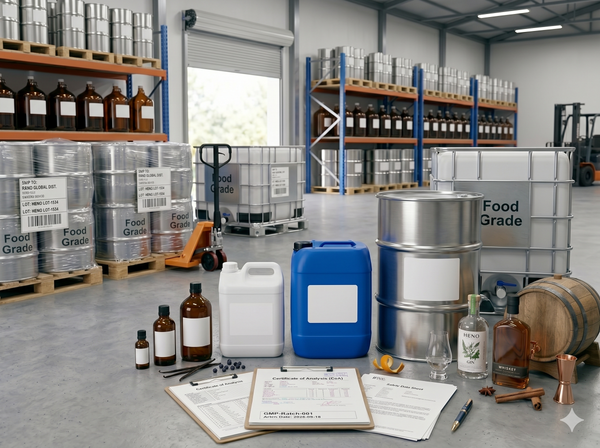
At HBNO, ISO certification sits alongside GMP, FDA registration, Kosher, USDA Organic, and FAIR FOR LIFE status, all applied to our 100,000 sq ft production facility in Chico, California, with GC/MS testing performed in house on every product and a Certificate of Analysis and Safety Data Sheet issued with every shipment. Materials like organic lavender essential oil, peppermint essential oil organic, and organic tea tree essential oil draw on the same underlying quality system regardless of which certification is most relevant to a given buyer's finished product, whether that is REACH compliance for an EU-bound shipment or FEMA/GRAS status for a food-grade application. Buyers building a private-label or wholesale program from our USDA Certified Organic Essential Oils collection can request the full certification packet, including ISO scope, before placing a first order, and our PhD staff and in-house quality control team stand behind 250,000 units per day of private label capacity with no minimum order quantity. Full manufacturer background is available on our About Us page.
Frequently Asked Questions
Why should ISO 9001 certification factor into essential oil supplier selection?
Because it evidences a documented, audited process for catching and correcting problems before material ships, which price and MOQ alone cannot tell a buyer. It reduces the risk that a manufacturer with no structural mechanism for self-correction ships an undetected deviation. REACH-facing exporters into the EU under ECHA frameworks face similar documentation expectations, which is part of why a documented QMS travels well across markets.
What risk does an uncertified essential oil manufacturer introduce to a supply chain?
Primarily the absence of a documented corrective-action trail. If a batch deviates from specification, an uncertified manufacturer may still catch and fix the problem, but it has no structural, auditable process guaranteeing that outcome, and no records for a buyer to review afterward to confirm what changed.
How does ISO 9001 affect batch-to-batch consistency in bulk essential oil orders?
Indirectly but materially. The standard requires documented procedures for raw material intake, instrument calibration, and non-conformance handling, all of which reduce the chance that an undetected process drift reaches a finished batch. Consistency still depends on the underlying agricultural and distillation variables, but the management system determines whether deviations get caught early.
Should ISO 9001 be weighted alongside USDA Organic and Kosher certification in a scorecard?
Yes, as a distinct criterion rather than a substitute for either. Organic and Kosher status describe the material's sourcing and handling attributes; ISO 9001 describes whether the organization maintaining those attributes has a documented system for doing so consistently. A scorecard that only tracks the first two is missing the variable most predictive of long-term reliability.
Which supplier documentation should back up an ISO 9001 claim during vendor onboarding?
The certificate itself with its scope and expiry date, confirmation of the certifying body's accreditation, and at minimum one example of a documented corrective action the manufacturer can walk through. Product-level documents, a Certificate of Analysis, Safety Data Sheet, and GC/MS data, should also be issued as standard practice rather than only on request.
Published by the HBNO editorial team. HBNO (IL Health & Beauty Natural Oils Co., Inc.) is a manufacturer and bulk supplier of essential oils and carrier oils based in Chico, California.
Building a supplier scorecard that actually predicts reliability? Contact HBNO for our full certification packet. ISO 9001 certification for an essential oil supplier will not be the only line on your scorecard, but it may be the one that tells you the most about what happens after the first order ships.