Most sourcing comparisons assume a natural material and its synthetic counterpart are chemically different. Wintergreen oil is the case where that assumption collapses. Our GC/MS data puts methyl salicylate at 99.7 percent typical in HBNO's steam-distilled wintergreen oil, against a specification range of 98.8 to 99.9 percent. Commercial synthetic methyl salicylate runs above 99.5 percent of the same molecule. For a procurement manager buying into the topical pain relief category, the decision is therefore not a chemistry question. It is a question about traceability, documentation, cost per kilo, label eligibility and regulatory burden, and those factors separate the two materials far more sharply than any chromatogram peak.
What Wintergreen Oil Actually Is, and Where Synthetic Methyl Salicylate Comes From
Natural wintergreen oil is not a complex botanical extract. It is one dominant ester plus a trace fraction, and that trace fraction carries all of the sourcing information.
The material is steam distilled from the leaves of Gaultheria procumbens. HBNO's conventional grade originates in China, the certified organic grade in Nepal. One production detail matters more than most buyers realise: free methyl salicylate does not exist in the intact leaf. The plant stores it as the glycoside gaultherin, and enzymatic hydrolysis during distillation is what liberates it. Published analysis of Nepalese and Chinese commercial material reports yields near 1.48 percent, the structural reason natural wintergreen carries the price it does. That work sits in the authentication literature indexed on PubMed.
Synthetic methyl salicylate takes a different route: Fischer esterification of salicylic acid with methanol, yielding a single-component material with essentially no congeners.
|
Attribute |
Natural wintergreen oil |
Synthetic methyl salicylate |
|---|---|---|
|
Source |
Gaultheria procumbens leaf, steam distilled |
Salicylic acid plus methanol, esterified |
|
Methyl salicylate |
98.8 to 99.9 percent (99.7 typical) |
Typically above 99.5 percent |
|
Trace congeners |
Ethyl salicylate, eugenol, origin markers |
Essentially none |
|
Natural or organic claim |
Eligible; USDA Organic grade available |
Not eligible |
Methyl salicylate rarely arrives on a purchase order by itself. Formulators in this category usually buy it alongside peppermint essential oil at 36 to 49 percent menthol and white camphor essential oil at 27 to 41 percent 1,8-cineole, the conventional co-actives in the format. Each carries its own restriction position and its own CoA, so treat them as three separate qualification exercises.

How to Authenticate Natural Wintergreen Oil on a CoA
The trace 0.3 percent, not the 99.7 percent, is what tells you whether you bought a plant or a reactor.
Because both materials are dominated by the same ester, a CoA reporting only methyl salicylate content proves nothing about origin. The discriminating data sits in the minor peaks. Our specification lists ethyl salicylate at 0.01 to 0.35 percent and eugenol at 0 to 0.05 percent. Published GC/MS work on seven commercial samples identified as many as 22 constituents in natural oil, and found elsholtzia ketone and beta-dehydroelsholtzia ketone in Chinese material but not Nepalese, giving buyers a geographic marker on top of a natural one. Synthetic material shows one peak, plus a residual salicylic acid and solvent profile.
Physical constants provide a second, cheaper check. Our conventional grade specifies specific gravity 1.11 to 1.20, refractive index 1.53 to 1.54, and optical rotation between minus 1.5 and plus 0.5 degrees. The Nepalese organic grade sits wider, at specific gravity 1.13 to 1.23. Buyers new to interpreting trace peaks should work through how to read a GC-MS analysis report first. Where the finished product carries a natural or organic positioning, commission third-party stable isotope ratio testing as well: it separates plant-derived from petrochemical carbon in a way GC/MS cannot. Specification-sheet identifiers are CAS 119-36-8 and INCI Gaultheria Procumbens (Wintergreen) Leaf Oil.
The Restrictions That Come With Every Kilo of Methyl Salicylate
Methyl salicylate is among the most heavily restricted dermal materials a formulator will buy, and the limits live in three separate rulebooks.
The first is fragrance regulation. Methyl salicylate is a restricted material under the IFRA Standards, with maximum use levels set per product category and revised each amendment. Our specification carries no fixed dilution figure for exactly that reason: it points buyers to the current IFRA document, because the limit depends on the finished format. Never carry a use level over from a previous amendment. Our guide to IFRA standards for formulators sets out how the category system works.
The second is packaging law. Under 16 CFR 1700.14, liquid preparations containing more than 5 percent methyl salicylate by weight, other than pressurised sprays, must be supplied in child-resistant packaging. This is enforced, not theoretical: retail wintergreen essential oil has been recalled in the United States for failing that requirement (Source: U.S. Consumer Product Safety Commission). Confirm the closure specification before tooling.
The third is product classification. Methyl salicylate is a listed active ingredient in the FDA over-the-counter monograph for topical analgesics, so a finished product built on it at monograph levels is regulated as a drug rather than a cosmetic. That brings a Drug Facts panel, NDC listing and manufacture under drug GMP. It is the point most often discovered late.
Handling is straightforward. Flash point is 85 degrees C, the material is not GHS-flammable, and shelf life is two years at 15 to 25 degrees C. Store in glass, PET, aluminium, or epoxy-lined stainless steel, away from strong oxidising agents. Because specific gravity exceeds 1.1, a 25 kg drum occupies less volume than buyers expect. Every consignment ships with an English-language SDS, and our buyer's guide reading an SDS explains what each section commits the supplier to.

Sourcing Bulk Wintergreen Oil From HBNO
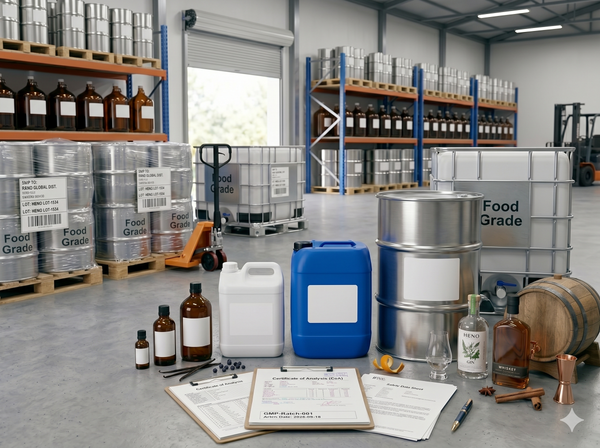
We manufacture from a 100,000 square foot facility in Chico, California, operating under ISO, GMP, FDA, Kosher, USDA Organic and FAIR FOR LIFE certification at company level. For wintergreen oil specifically, our QC team runs GC/MS in house on every batch, and the material is Kosher certified through EarthKosher and supplied at cosmetic grade. The Nepalese organic grade is USDA Organic certified through OneCert. CoA and SDS ship with every consignment, and batch-specific testing is available on request. Wintergreen sits within our broader natural essential oils range, which matters when one purchase order covers several materials. We hold no minimum order quantity, and our private label production capacity runs to 250,000 units per day for brands that would rather buy a finished tube than a raw material.
Frequently Asked Questions
What is the difference between wintergreen oil and synthetic methyl salicylate?
Chemically, very little. Natural wintergreen oil is 98.8 to 99.9 percent methyl salicylate and the synthetic ester is typically above 99.5 percent. The difference is the remaining fraction: natural oil carries ethyl salicylate, eugenol and other plant-derived congeners, while synthetic material carries process residues. Origin, cost, supply risk and eligibility for a natural claim all follow from that.
How can buyers verify that wintergreen oil is not synthetic methyl salicylate?
Ask for a full GC/MS chromatogram rather than a summary assay. Natural material shows a congener pattern that published analysis puts at up to 22 identifiable constituents, including ethyl salicylate in the 0.01 to 0.35 percent band. Physical constants give a supporting check. Where a natural claim is commercially important, commission stable isotope ratio analysis, which distinguishes plant-derived from petrochemical carbon.
Why does methyl salicylate trigger child-resistant packaging requirements?
16 CFR 1700.14 lists liquid preparations containing more than 5 percent methyl salicylate by weight, other than pressurised sprays, among the substances requiring special packaging. The obligation attaches to the finished consumer product, not the bulk raw material, so specifying a compliant closure is the brand owner's responsibility. Products have been recalled in the United States for missing it.
Is certified organic wintergreen oil available in bulk?
Yes. HBNO supplies a USDA Organic certified grade of wintergreen oil sourced from Nepal, certified through OneCert, alongside the conventional grade from China. The two carry different physical constant ranges, so a formulator switching between them should requalify against the current CoA rather than assume the specifications are interchangeable.
Should a product built on wintergreen oil be labelled as a cosmetic?
In the United States, generally not. Because methyl salicylate is a listed active ingredient in the FDA over-the-counter monograph for topical analgesics, a product formulated at monograph levels falls under the drug framework, with the labelling, registration and manufacturing obligations that carries. Confirm classification with regulatory counsel before artwork is finalised.
Sourcing wintergreen oil well is less about finding the material than about deciding which version of methyl salicylate your documentation, price point and label can support. Natural oil buys a congener fingerprint, an organic option and a botanical origin. Synthetic buys consistency and a lower cost per kilo. HBNO supplies the natural material with the GC/MS data, CoA and SDS to defend either choice.
Published by the HBNO editorial team. HBNO (IL Health & Beauty Natural Oils Co., Inc.) is a manufacturer and bulk supplier of essential oils and carrier oils based in Chico, California.
Request a specification sheet, a batch CoA or bulk pricing through the HBNO contact page.