A fragrance that reads bright on the smelling strip and disappears an hour later is one of the most common complaints formulators bring to their raw material suppliers. The top and heart notes did their job, but nothing was there to hold the composition down. Cedarwood essential oil is the ingredient that solves this problem more often than any other single material in the base-note category. Its sesquiterpene-heavy chemistry evaporates slowly enough to anchor a blend, which is exactly why perfumers reach for it when a promising formula falls flat on dry-down. For procurement teams and product developers sourcing this material at volume, the species chosen, the certificate of analysis behind it, and the supply consistency from batch to batch matter as much as the scent profile itself.
What Makes Cedarwood Essential Oil a Base Note in Perfumery
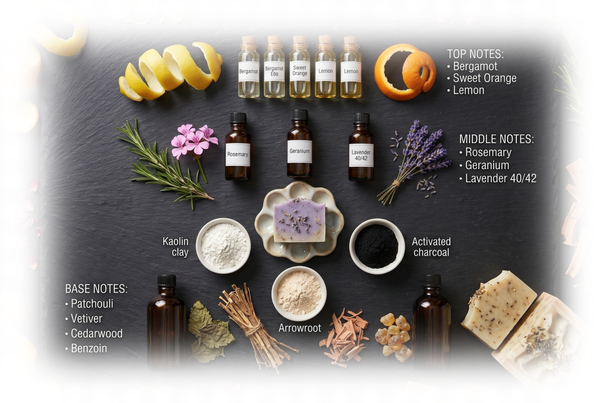
Cedarwood essential oil functions as a base note because its dominant molecules are heavy, slow-evaporating sesquiterpenes rather than the lighter compounds that drive top and heart notes. In HBNO's Cedarwood Virginia Essential Oil, GC/MS testing typically shows alpha-cedrene plus beta-funebrene at 27 percent (range 20 to 35 percent), cis-thujopsene at 20 percent (range 10 to 25 percent), and alpha-cedrol at 18 percent (range 16 to 25 percent). These are large, high-boiling-point molecules. On a smelling strip or in a finished formula, they release slowly over hours rather than minutes, which is the literal mechanism behind a fixative: the base note molecules physically slow the rate at which the more volatile top and heart notes leave the substrate. A blend that "falls flat" is usually missing this molecular weight class entirely, not missing a stronger scent. Formulators building fine fragrance, functional fragrance for candles and soap, or masking systems for household products all use cedarwood essential oil for this same load-bearing role, distinct from the character it also contributes: soft, woody, sweet, and balsamic with a sandalwood-adjacent quality that reads well under floral and citrus tops alike. Demand for natural fixatives has grown alongside the broader fragrance and flavor ingredients market, as formulators favor botanically sourced base materials with a documented chemical profile over single-note synthetic musks.

Virginia, Texas, and Atlas Cedarwood: How Species Chemistry Changes the Blend
The three cedarwood species HBNO supplies each carry a distinct sesquiterpene signature, and matching the right one to a formula is a chemistry decision, not a marketing one. Cedarwood Virginia Essential Oil, steam distilled from Juniperus virginiana wood chips grown in the USA, centers on cedrene, funebrene, and thujopsene alongside its 18 percent cedrol, giving a soft, sweet, sandalwood-like profile with a specific gravity of 0.94 to 0.96 and a flash point of 94°C. Texas Cedarwood Essential Oil, distilled from Juniperus mexicana wood and bark, shifts the same terpene family toward a higher thujopsene share (27 percent, range 25 to 35 percent) and a lower cedrol contribution, which reads as a woodier, smokier, more resinous character with a flash point of 83°C. Organic Cedarwood Atlas, sourced from Cedrus atlantica in Morocco, is chemically unrelated to the American species: its GC/MS profile is dominated by himachalenes (beta-himachalene at 46 percent, alpha-himachalene at 18 percent, gamma-himachalene at 10.7 percent) rather than cedrene or thujopsene, producing a stronger, sweeter balsamic note and a darker yellow-to-orange color. Cedarwood Himalaya (Cedrus deodara) is a fourth species formulators sometimes specify for its own cedrol-rich, sandalwood-adjacent reputation, though HBNO has not yet published GC/MS figures for that particular grade. Choosing between them is a formulation decision: Atlas for a sweeter, heavier base, Virginia for a cleaner sandalwood facet, Texas where a smokier woody note is the goal.
Sourcing Bulk Cedarwood Essential Oil: Batch Consistency and Procurement Considerations
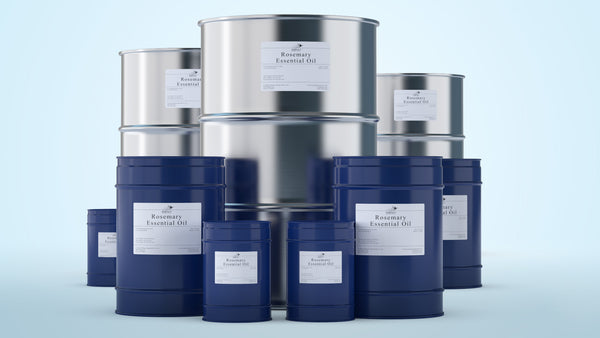
A cedarwood essential oil supplier is only as useful to a formulator as the batch-to-batch consistency behind the drum. Because cedarwood's fixative performance depends on its cedrol and thujopsene ratios sitting inside a known range, a buyer qualifying a new source should ask for the current lot's Certificate of Analysis showing GC/MS results against the typical range, not a static spec sheet from years earlier. See our guide to how we verify every batch by GC/MS for what that verification involves. Refractive index is a useful quick check alongside the full chromatogram: 1.49 to 1.51 for HBNO's Virginia and Texas grades, 1.47 to 1.48 for Atlas. At HBNO, every grade is GC/MS tested in house, ships with a batch-specific CoA and SDS, and carries Kosher certification, with Atlas additionally USDA Organic certified. There is no minimum order quantity, and private label and drop-shipping programs run alongside standard wholesale orders. Usage rate should always be checked against the current IFRA standard for the applicable fragrance category, since permitted levels shift by finished-product type; our breakdown of what IFRA actually covers for fragrance buyers is a useful starting point.

HBNO's Cedarwood Supply Capability
Formulators sourcing cedarwood essential oil for perfumery need a supplier that can document chemistry, not just sell scent. HBNO manufactures from a 100,000 square foot facility in Chico, California, holding ISO, GMP, FDA, Kosher, and FAIR FOR LIFE certifications, with PhD-level formulation staff and an in-house GC/MS lab behind every batch. We supply Cedarwood Virginia Essential Oil and Texas Cedarwood Essential Oil at wholesale volume with no minimum order quantity, private label production up to 250,000 units per day, drop-shipping, and global shipping. REACH, IFRA, and GRAS compliance are supported where applicable. Our full range of base-note materials sits within our fragrances collection and essential oils collection, and private label programs are outlined on our private label page.
Frequently Asked Questions
What makes cedarwood essential oil work as a fixative base note?
Its dominant sesquiterpenes, cedrene, thujopsene, and cedrol in the American species and himachalenes in Atlas, are heavy, high-boiling-point molecules that evaporate far more slowly than top and heart note materials. That slower evaporation physically extends how long the whole composition, not just the cedarwood itself, remains detectable on a substrate.
How is Virginia cedarwood essential oil different from Texas cedarwood essential oil?
Both come from American juniper species and share a cedrene-thujopsene backbone, but Virginia carries more cedrol and reads softer and closer to sandalwood, while Texas carries more thujopsene and less cedrol, producing a smokier, more resinous character. The GC/MS profile, not the geography alone, is what a formulator should confirm before substituting one for the other.
Is Atlas cedarwood essential oil chemically the same as Virginia cedarwood essential oil?
No. Atlas cedarwood comes from Cedrus atlantica and its chemistry is dominated by himachalenes, a different terpene family entirely from the cedrene and thujopsene that define the Virginia and Texas grades. The three are related by common name and general woody character, not by shared chemistry.
What usage rate should formulators use for cedarwood essential oil in a fragrance blend?
Usage rate depends on the finished-product category and the current IFRA standard applicable to that category, since permitted levels vary by product type and exposure. Formulators should confirm the applicable IFRA category limit for their specific application rather than applying a single rate across every finished good.
Can buyers request GC/MS data and a Certificate of Analysis for cedarwood essential oil?
Yes. Every cedarwood grade HBNO supplies, Virginia, Texas, and Atlas, is GC/MS tested in house, and a batch-specific Certificate of Analysis and Safety Data Sheet ship with every order so a buyer can verify the exact chemistry of the lot being purchased.
Cedarwood essential oil earns its place in the base-note category on chemistry, not tradition: the sesquiterpene load that slows evaporation is exactly what a formula reaching for staying power is missing. Buyers weighing Virginia against Texas against Atlas should let the GC/MS profile drive the decision, and a supplier that documents that profile batch by batch removes the guesswork from the substitution. For current CoA data, GC/MS reports, and volume pricing across HBNO's cedarwood range, reach out to our team.
Published by the HBNO editorial team. HBNO (IL Health & Beauty Natural Oils Co., Inc.) is a manufacturer and bulk supplier of essential oils and carrier oils based in Chico, California.