Room sprays look like the easiest entry point in home fragrance. No wax, no wick, no cure time, and a filling process any contract packer can run. Then the first production batch goes cloudy in the bottle, or separates into visible layers, or stains a customer's upholstery, and the category reveals what it actually is: a solubility problem wearing a marketing brief. Choosing bulk room spray oils well means understanding which aromatic materials will stay in solution in the base you have chosen, which will not at any solubiliser level, and where the compliance limits sit. Some oils belong in this format. Several widely used ones do not.
Why room sprays fail: the solubility problem
Aromatic oils are not water soluble, so a water-based room spray only works with a solubiliser, and the ratio is dictated by the oils you chose rather than by preference.
There are three viable base systems. A predominantly alcohol base dissolves most aromatic materials directly and dries fast, but it carries a flammability classification and a noticeable alcohol note. A water base with a solubiliser such as polysorbate 20 or PEG-40 hydrogenated castor oil is the most common commercial approach, and typical solubiliser to fragrance ratios run from 1:1 up to 3:1 depending on the aromatic profile. A hydrosol base sits between the two, contributing its own aromatic character.
The consequence buyers miss is that the solubiliser requirement is set by the oil, not by the formula. Heavier, higher molecular weight materials need substantially more solubiliser to stay clear, and solubiliser is not free. An aromatic that appears cheap per kilo can be the most expensive choice once you account for the solubiliser it forces you to buy. Run the cost per finished litre, not per kilo of fragrance.

The oils that work in bulk
Light, low molecular weight, terpene-rich materials perform best in a sprayable base because they stay in solution with the least solubiliser and leave no residue.
-
Lavender 40/42. A standardised material rather than a single-origin oil, which is precisely why it suits volume production. Consistent lot to lot, clean in solution, and widely recognised. Our standard lavender essential oil shows linalyl acetate at 27 to 37 percent and linalool at 28 to 35 percent, useful reference figures when comparing grades.
-
Lemongrass. Bright citral-forward profile that performs well in a spray. Our GC/MS records put geranial at 36 to 43 percent and neral at 28 to 34 percent, with a flash point of 79 degrees Celsius.
-
Citrus oils. Excellent in solution and inexpensive, with the caveat that they oxidise faster than most and can discolour over time. Tocopherol addition helps.
-
Eucalyptus and rosemary. Cineole-dominant profiles that stay clear and read as clean rather than sweet.
-
Hydrosols and floral waters. Not oils, but genuinely useful as part of the base, contributing aroma without any solubility burden at all. We supply organic lavender and lemongrass floral waters among others in the essential oils range.
The oils to skip
Heavy resinous materials, thick oleoresins and anything containing vanillin will cause clouding, separation or staining in a sprayable format, however well they perform in a candle.
Four categories to avoid, or to use only with clear-eyed testing:
-
Resins and absolutes. Benzoin, labdanum, oakmoss and similar materials are high viscosity and poorly soluble. They will cloud a water base and can clog a spray pump.
-
Vanillin-containing compounds. Vanillin discolours over time and the darkening is visible in a clear bottle. It also stains light fabric, which generates the worst kind of customer complaint.
-
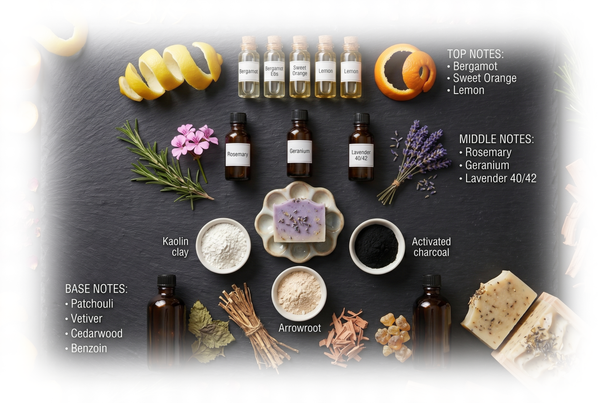
Oleoresins and heavy base notes. Excellent in a heated melt pool, wrong in a cold aqueous system. Patchouli and vetiver are workable only at low levels with generous solubiliser.
-
Unstabilised expressed citrus at high load. Fine at moderate levels, but at high load the oxidation and discolouration timeline is shorter than a retail cycle.
The honest general rule: if the material would sit at the base of a perfume pyramid, as set out in our guide to note profiles and dilution rates in commercial perfumery, treat it as a problem to be solved rather than an ingredient to be added. Our comparison of wax melt load rates and hot throw covers where those heavy materials genuinely belong.
Compliance: what a room spray must not claim
Room sprays attract regulatory attention because the obvious marketing angles are the prohibited ones, and the constraint sits on the finished product rather than on the raw material.
Any claim that a spray eliminates bacteria, disinfects a surface or sanitises the air moves the product into pesticide or antimicrobial territory, where EPA registration under FIFRA applies. That is true regardless of the aromatic materials used and regardless of dilution. We do not support antimicrobial claims for any oil we supply, and the registration pathway for a product making them sits entirely with the manufacturer.
Odour claims need care too. Describing a product as a fragrance, or as masking malodour, is materially different from claiming it removes or neutralises the source. Aromatic load in a room spray also sits under IFRA standards, which place air fresheners in a non-skin-contact category with its own limits, and EU or UK sale requires CLP classification consistent with the product's REACH status. Typical aromatic load for a room spray runs 1 to 5 percent.

Sourcing bulk room spray oils from HBNO
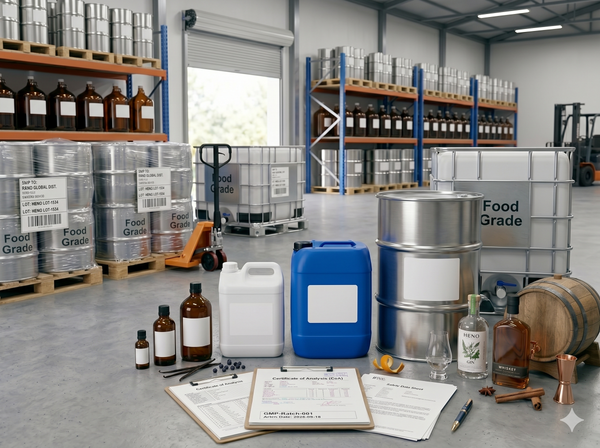
We manufacture from a 100,000 square foot facility in Chico, California, operating under ISO and GMP systems with FDA registration, with PhD staff and in-house quality control. Every lot is GC/MS tested in house and ships with a CoA and SDS, and flash point appears on the SDS, which matters here because it determines whether an alcohol-based spray can move by your preferred freight method.
For a spray programme specifically, three things help. We supply both engineered fragrances and single essential oils, so a formulator can trial a compounded material against a botanical one in the same base. There is no minimum order quantity, so six directions can be tested at sample scale. And our private label operation fills to 250,000 units per day if filling in house is not worth the capital.
Frequently asked questions about bulk room spray oils
How much solubiliser does a water-based room spray need?
Typically between one and three times the weight of the aromatic material, with the ratio set by how heavy the aromatic profile is. Lighter terpene-rich oils sit at the low end and resinous materials at the high end or beyond. Establish the figure by making the actual formula and observing it clear, rather than by calculation.
Should a room spray use a water or alcohol base?
Alcohol dissolves most aromatics directly, dries quickly and needs no solubiliser, but it carries a flammability classification affecting packaging and freight, plus an alcohol note. Water with a solubiliser avoids those issues at the cost of formulation complexity. Most commercial volume production uses the water and solubiliser route.
Why did our room spray go cloudy after two weeks?
Because part of the aromatic load has come out of solution, usually the heaviest fraction. It indicates insufficient solubiliser for the profile chosen, or a temperature excursion in storage. Either reduce the heavy fraction, raise the solubiliser ratio, or move to an alcohol base.
What aromatic load should a room spray carry?
Commonly 1 to 5 percent. The upper bound is set by what your base can hold in clear solution and by the current IFRA position for an air freshener category, not by desired intensity. Higher load without matching solubiliser produces clouding rather than more scent.
Can a room spray be marketed as air purifying?
No, not without moving into a regulated category. Claims about eliminating bacteria, disinfecting or sanitising trigger EPA registration requirements under FIFRA, and they are not claims we support for any material. Fragrance and malodour masking language is a different matter and should be reviewed with your own regulatory advisers.
Choosing bulk room spray oils that survive the bottle
Room sprays are a solubility format first and a fragrance format second. Choose light, terpene-rich materials that stay clear with modest solubiliser, keep resins and vanillin out unless you have tested them to destruction, price the cost per finished litre rather than per kilo of fragrance, and keep the claims on the fragrance side of the regulatory line. To compare options or request samples of bulk room spray oils, contact our team for a quote.
Published by the HBNO editorial team. HBNO (IL Health & Beauty Natural Oils Co., Inc.) is a manufacturer and bulk supplier of essential oils and carrier oils based in Chico, California.