A bottle labelled "lavender essential oil" tells a buyer almost nothing about what is actually inside it. GC-MS testing is how a manufacturer turns that label into a defensible specification: a constituent-by-constituent readout of what a batch of essential oil actually contains, measured against a reference standard rather than taken on trust. For procurement teams sourcing essential oils at volume, the practical question is not whether a supplier says a batch is pure. It is whether that claim was verified analytically, on that specific lot, before it shipped. At HBNO, every batch that leaves our Chico, California facility has already been through this instrument, and the resulting data is what the Certificate of Analysis in the shipment actually reports.
What GC-MS Actually Measures
Gas chromatography-mass spectrometry identifies and quantifies the individual chemical constituents in an essential oil by separating them in time and then confirming each one's molecular identity.
The gas chromatography half of the instrument vaporizes the oil sample and carries it through a long, narrow column. Different constituents move through that column at different speeds depending on their size and polarity, so they exit, or "elute," at different retention times. That alone tells an analyst how many distinct compounds are present and roughly how much of the total sample each one represents, expressed as a peak area percentage. The mass spectrometry half answers the harder question: what is each of those peaks actually made of. As each constituent elutes, it is fragmented and the resulting fragments are weighed by mass. That fragmentation pattern is compared against a reference spectral library and, for the compounds that matter most to a given oil's specification, against an authenticated reference standard run under the same conditions. Retention time narrows the candidates; mass spectral fragmentation confirms the identity. Together they turn a chromatogram into a named, quantified list of constituents rather than a guess.

How Every Batch at HBNO Moves Through GC-MS
At HBNO, GC-MS is not a spot check reserved for new suppliers. It runs on every product, on every batch, before a Certificate of Analysis is issued.
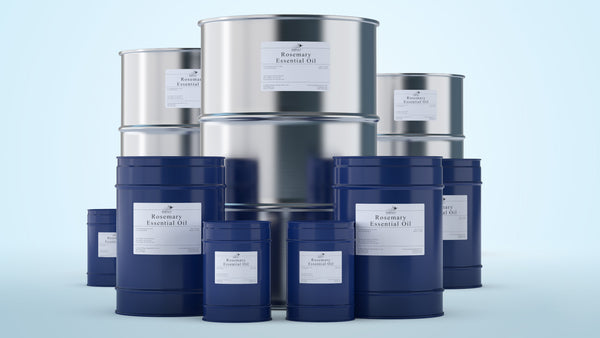
A raw material lot arrives at our facility with its own paperwork, but that paperwork is a starting point, not the final word. Our in-house quality control team draws a sample and runs it through GC-MS alongside the organoleptic evaluation (appearance, odor) and the physical constants, specific gravity, refractive index, and optical rotation, that round out a full profile. The constituent percentages our instrument reports are checked against the specification range we maintain for that material. A lavender essential oil lot, for example, should show linalyl acetate in the high twenties to high thirties percent and linalool in a comparable band; a lot that lands well outside that range gets flagged before it is released, not after a customer complains. Our staff includes PhD-level chemists, and batch-specific testing is available on request for buyers who want documentation beyond the standard CoA. That CoA, along with a Safety Data Sheet, ships with every order, which means a formulator receiving a drum of our essential oils is also receiving the analytical record behind it.
What GC-MS Catches That Organoleptic Testing Cannot
Smell and appearance can confirm that an oil is recognizably the right material. They cannot confirm the constituent ratios that determine whether it is the right material at the right concentration.
A skilled evaluator can often catch a grossly wrong oil by nose. What organoleptic testing cannot reliably catch is a subtler substitution: a small percentage of a cheaper oil blended in, a synthetic isolate added to boost a marker compound, or a batch that drifted outside spec without smelling obviously different. Our lemongrass essential oil GC-MS data illustrates why the numbers matter more than the nose here. Geranial typically runs 40 percent (a 36 to 43 percent range) and neral 32 percent (28 to 34 percent), so the combined citral fraction that defines the oil commercially sits close to 70 percent. Citral is also an IFRA-restricted fragrance allergen, so a buyer building a leave-on cosmetic needs that figure from the actual batch, not an average from memory. Our tea tree essential oil tells a similar story: terpinen-4-ol typically runs 41 percent against a 38 to 45 percent range, with gamma-terpinene around 23 percent, and that ratio is exactly the kind of detail a nose cannot quantify but a chromatogram does automatically. In both cases, GC-MS is what turns "smells right" into a number a formulator can actually specify against.

GC-MS as Part of a Larger Quality System
Gas chromatography-mass spectrometry is one instrument inside a broader compliance and quality structure, and buyers evaluating a supplier should expect to see both. HBNO's 100,000 square foot Chico, California facility operates under ISO 9001 quality management, GMP, FDA, Kosher, USDA organic seal, and FAIR FOR LIFE certifications, with in-house quality control backed by PhD staff. There is no minimum order quantity, private label production runs up to 250,000 units per day, and shipping reaches North America, Europe, Asia, and Oceania. GC-MS testing on every product, paired with a CoA and SDS on every shipment, is what makes those certifications and that supply capacity mean something at the batch level rather than only at the company level. According to industry guidance from the National Association for Holistic Aromatherapy, constituent testing is considered standard practice for verifying essential oil identity and quality, and the analytical method itself is well established in the peer-reviewed literature indexed on ScienceDirect. Compliance obligations under frameworks like REACH also depend on knowing exactly what constituents, and at what concentration, a material contains, which is precisely the data GC-MS generates.
Frequently Asked Questions
What does a GC-MS test actually measure in an essential oil?
It measures which chemical constituents are present and at what percentage of the total sample, using retention time to separate compounds and mass spectral fragmentation to confirm each compound's identity against a reference standard. The output is a quantified constituent list, not a pass or fail smell test.
How often does HBNO run GC-MS testing on a batch?
Every batch of every product is tested before a Certificate of Analysis is issued. This is standard practice at HBNO rather than a premium add-on, and batch-specific testing beyond the standard CoA is available on request.
Why isn't organoleptic testing enough to verify a batch?
Organoleptic evaluation checks appearance and odor, which can catch an obviously wrong material but cannot quantify constituent ratios. A batch can smell acceptable while sitting outside its specification range on a marker compound, which only instrumental analysis will show.
Can a GC-MS report catch adulteration that a supplier's paperwork misses?
Yes, within limits. GC-MS reliably identifies constituent profiles that fall outside an authentic oil's expected range, including dilution with a cheaper oil or an added synthetic isolate. Some sophisticated adulteration requires supplementary methods, but constituent-level testing catches the majority of real-world cases.
Is a GC-MS-tested oil the same as a "certified" oil?
No. GC-MS testing verifies chemical composition; certifications such as USDA Organic or Kosher verify separate agricultural or religious-dietary standards and apply at the product level, not automatically across an entire catalog. A buyer should confirm which certifications apply to the specific product being purchased.
Procurement teams that treat GC-MS testing as a baseline requirement, not an optional upgrade, end up with fewer surprises at the formulation bench. A constituent profile that is measured, documented, and compared against a known range on every batch is what separates a defensible specification from a label. At HBNO, that testing runs on everything we ship, and the resulting CoA is available before an order is placed, not only after a complaint. Buyers who want to review a batch's data ahead of a purchase decision, or set up a recurring supply program built around a documented specification, can get in touch with our team.
Published by the HBNO editorial team. HBNO (IL Health & Beauty Natural Oils Co., Inc.) is a manufacturer and bulk supplier of essential oils and carrier oils based in Chico, California.