Procurement teams sourcing essential oils and fragrance oils run into the term "IFRA compliant" on almost every supplier data sheet, yet the answer to what is IFRA rarely gets explained in plain terms before a purchase order is signed. The International Fragrance Association is the trade body that writes the Standards governing how much of a given fragrance material can go into a finished consumer product, and understanding what it does, and what it does not do, changes how a buyer reads a supplier's documentation. At HBNO, we field this question from formulators and brand owners often enough that it is worth answering directly, before the next batch of fragrance oil or citrus essential oil lands on a receiving dock.
What Does IFRA Actually Stand For?
IFRA is a self-regulatory trade association for the fragrance industry, not a government agency. Founded in 1973, the International Fragrance Association represents fragrance manufacturers and raw material suppliers worldwide, and it publishes the IFRA Standards: the reference document that sets maximum usage levels for specific fragrance materials in finished products. IFRA has no statutory enforcement power of its own. Its Standards work because member companies and the wider industry adopt them voluntarily, and because retailers, brand owners, and insurers increasingly require a supplier to show conformity before they will place an order.
That voluntary status is often misunderstood. It does not mean IFRA Standards are optional in practice. A brand that ignores them loses access to most contract manufacturers, most retail buyers, and most product liability cover, since none of those parties will take on the risk of a formulation that was never checked against the Standards. IFRA sits alongside GRAS and national cosmetic regulations rather than replacing any of them; a material can pass IFRA review and still need separate REACH registration or FDA compliance for a specific market.

What IFRA Standards Actually Restrict
IFRA Standards set a maximum concentration for a specific material in a specific finished product category, not a blanket ban on the material itself. The Standards classify materials as prohibited, restricted, or subject to specified requirements, and the restricted category is by far the largest. A restriction is expressed as a percentage ceiling in the finished product, and that ceiling changes depending on which of the eleven IFRA product categories applies. A body lotion, a fine fragrance, and a rinse-off soap each carry a different maximum for the same raw material, because dermal exposure and contact time differ by category. Demand for compliant fragrance materials keeps climbing alongside this framework: the global fragrance market was valued at roughly $58.9 billion in 2025 (Source: Grand View Research), which is a lot of formulations now running usage-level calculations against the same Standards.
Citral is a workable example. It is the marker compound behind the citrus top note in lemongrass essential oil, and IFRA classifies it as a skin sensitizer with category-specific limits that can run well under one percent in leave-on product types. Furocoumarins are another. These phototoxic compounds occur naturally in cold-pressed citrus peel oils, including bergamot essential oil, and the current IFRA Standard applies a cumulative limit across several related furocoumarin compounds rather than a single figure, which is why bergapten-reduced or furocoumarin-free grades exist as a sourcing option. Neither restriction means the material is banned. It means the finished product's formulator has to know the incoming batch's constituent level to calculate how much of the material the formulation can safely carry, which is also why getting the concentration tier wrong at the purchase-order stage is such an expensive mistake, a trap we cover in to buying perfume oils in bulk without wrecking your margin.
What an IFRA Certificate of Conformance Really Covers
A Certificate of Conformance applies to a finished fragrance mixture, not to a single raw material, which is the single most common misunderstanding buyers bring to a sourcing conversation. IFRA itself does not issue certificates. A fragrance compounder who blends multiple materials into a finished accord writes and signs the certificate, stating that the compound, used as directed, conforms to the applicable Standards. Because of this, there is typically no such thing as "an IFRA-certified essential oil" in the way the phrase gets used in casual marketing copy.
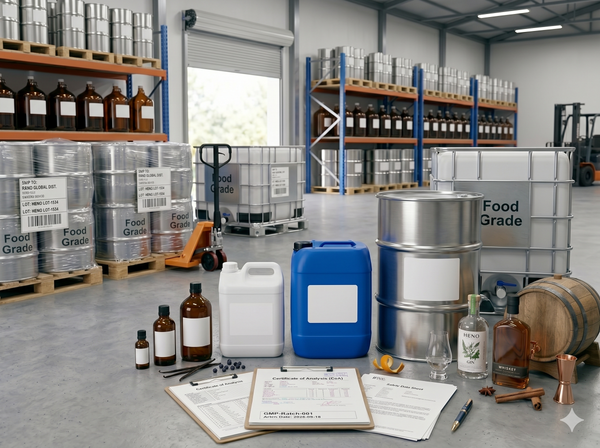
What a raw material supplier can and should provide is different, and arguably more useful to a buyer building a compliant formulation: a Certificate of Analysis identifying the constituents that IFRA Standards track for that material, batch by batch. For citral-bearing oils that means the geranial and neral figures; for citrus peel oils it means furocoumarin data where the Standard requires it. A buyer who receives this data can run their own conformity calculation for their specific finished product category, which is the actual compliance work IFRA Standards require.

How HBNO Supports IFRA Compliant Sourcing
At HBNO, every shipment of essential oil and fragrance oil ships with a batch-specific Certificate of Analysis and Safety Data Sheet, generated from GC/MS testing run in our own facility. That CoA carries the constituent data a formulator needs to check a material against the current IFRA Standard for their product category, rather than a blanket claim that does not hold up under review. Our Chico, California production facility operates under ISO, GMP, FDA, Kosher, and USDA Organic oversight, with PhD staff and in-house quality control reviewing incoming and outgoing lots. We supply with no minimum order quantity and ship globally, and our Fragrances collection covers the natural fragrance and essential oil materials most often built into IFRA-reviewed compounds. Buyers building a private label fragrance line can review our About Us page for the full certification and capacity picture before placing a first order.
Frequently Asked Questions
What is the difference between IFRA and REACH?
IFRA Standards are a voluntary industry framework governing fragrance material usage levels in finished products. REACH is European Union chemical regulation with legal force, administered by ECHA, covering registration and restriction of substances far beyond fragrance. A material can satisfy IFRA and still require separate REACH registration for EU sale.
How do I know if an essential oil is IFRA compliant?
Compliance is calculated per finished product, not stamped on the raw material. Ask the supplier for a Certificate of Analysis showing the constituent levels that the relevant IFRA Standard tracks for that material, then run the usage-level calculation against your own product category.
Is IFRA a government regulator?
No. The International Fragrance Association is a trade association founded in 1973. It has no statutory enforcement authority, though its Standards function as an industry-wide requirement because retailers, contract manufacturers, and insurers commonly require conformity before doing business.
Can a supplier sell an "IFRA certified" essential oil?
Not accurately. Certificates of Conformance apply to finished fragrance mixtures, issued by the compounder who blends them. A raw material supplier instead provides batch documentation, such as a CoA with constituent data, that a formulator uses to certify their own finished product.
Why do IFRA Standards change so often?
IFRA reviews fragrance materials on a rolling basis as new toxicology and Quantitative Risk Assessment data becomes available, then issues numbered amendments. The 51st Amendment, for example, revised limits on a range of materials including several used widely in essential oil-based fragrance compounds (Source: IFRA).
The Buyer's Takeaway on IFRA
Knowing what is IFRA changes what a procurement team actually asks a supplier for. The organization sets the Standards; it does not certify raw materials, and it does not replace REACH, GRAS, or FDA obligations that apply separately. What a buyer needs from an essential oil or fragrance oil supplier is batch-level constituent data against the current IFRA Standard, not a marketing claim. For a documentation checklist covering exactly what to request before the next purchase order, see our companion on sourcing IFRA compliant essential and fragrance oils. Formulators who want the restricted-material detail can also read our breakdown of IFRA Standards for formulators, or get in touch with our team directly about a specific material.
Published by the HBNO editorial team. HBNO (IL Health & Beauty Natural Oils Co., Inc.) is a manufacturer and bulk supplier of essential oils and carrier oils based in Chico, California.