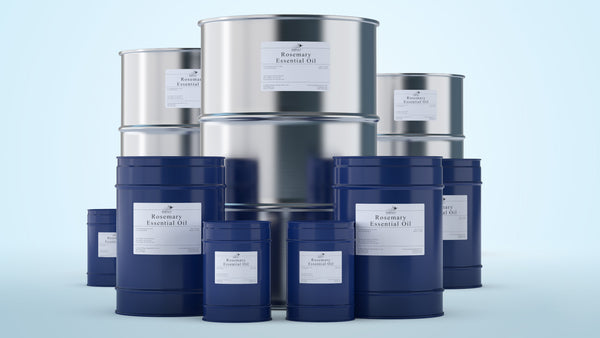
Argan is one of the few carrier oils that sells a finished product on its name alone, and it is priced accordingly. For a formulator building a hair oil, facial oil, or body serum, the question is not whether bulk argan oil belongs in the formula but what percentage earns its place. A 100 percent argan fill and a 20 percent argan blend in a high oleic base can feel remarkably similar on the back of the hand while landing several dollars apart per unit. At HBNO we supply Argania spinosa kernel oil in conventional, organic, and deodorized grades, and this is the calculation buyers ask us to run most often.
What you are actually paying for in bulk argan oil
The argan premium is driven by kernel yield, hand processing, and a geographically constrained supply base rather than by anything in the oil's fatty acid profile.
Argan grows in a defined region of southwest Morocco. Kernels are extracted from the fruit and pressed, historically by cooperatives, and yield per kilo of raw fruit is low against commodity oilseeds. That single supply geography is why argan pricing does not track the broader vegetable oil market and why lead times move with harvest rather than futures.
Three grade decisions change the price before you have discussed volume:
-
Cosmetic versus culinary. Culinary argan is pressed from lightly roasted kernels and carries a distinct nutty odour; cosmetic grade is unroasted. They are not interchangeable in a personal care formula.
-
Conventional versus certified organic. Our Organic Argan Carrier Oil is USDA Organic certified through OneCert and Kosher certified through EarthKosher. We also supply a conventional grade where the certification is not needed on artwork.
-
Standard versus deodorized. Deodorized organic argan removes most of the natural odour, which matters when a fragrance brief is tight. It costs more to produce.
Demand across the cosmetics and personal care category has kept upward pressure on argan through several harvest cycles, so a supply agreement usually beats a spot price win.

Blend or run it at 100 percent: how the numbers work
Argan's sensory contribution is close to linear at the top of the curve and steep at the bottom, which means most formulations capture the majority of the effect somewhere between 10 and 30 percent.
The reason sits in the chemistry. Our GC/MS profile on Organic Argan Carrier Oil types at 78 percent oleic acid, with a specification range of 75 to 90 percent, alongside 10 percent linoleic, 4.5 percent palmitic, and 2.6 percent stearic. Specific gravity runs 0.915 to 0.925 and refractive index 1.465 to 1.48. That is a high oleic profile, and high oleic behaviour is what a formulator feels: a slower, richer playout and a cushioned finish.
The practical consequence: argan sits in the same sensory family as several cheaper high oleic carriers, so blending it into a high oleic base retains most of the tactile character while the ingredient deck still leads with Argania Spinosa Kernel Oil.
|
Approach |
Where it makes sense |
|---|---|
|
100 percent argan |
Small pack facial oil and prestige positioning where fill cost is a minor share of retail |
|
20 to 30 percent argan |
Hair oils and body serums where the target is richness and the pack is larger |
|
5 to 10 percent argan |
Lotions, conditioners, and rinse off formats where argan is a claim ingredient, not the structure |
|
Argan with jojoba |
Where a drier finish is wanted alongside richness, since jojoba is a wax ester not a triglyceride |
In a rinse off format the case for a high percentage weakens quickly, the same reasoning behind carrier oil selection for a private label hair oil line.
The specifications that separate real argan from a cut lot
Because argan is expensive and sits in the same fatty acid neighbourhood as cheap high oleic oils, dilution is the main quality risk and GC/MS is what catches it.
A lot cut with high oleic sunflower or refined soybean passes a casual visual and odour check. It will not pass a full fatty acid panel read against the argan specification. Oleic below the 75 percent floor, linoleic above 17 percent, or palmitic outside 2 to 5 percent all indicate something else in the drum. Specific gravity and refractive index are quick secondary confirmations on receipt.
Ask for four things with the quotation rather than after it:
-
A GC/MS fatty acid profile on the actual lot. All of our carrier oils are GC/MS tested in house, and batch testing is available on request.
-
Peroxide value and free fatty acid figures. These tell you how much shelf life the lot has already used.
-
Certificate of Analysis and SDS tied to the lot number. We issue both with every shipment.
-
Certification documentation naming the product. Organic and Kosher status is confirmed per item, so verify the exact grade rather than assuming it applies across the range. The USDA National Organic Program is the scheme most North American buyers reference.

Sourcing bulk argan oil from HBNO
We hold conventional, organic, and deodorized organic argan grades and manufacture from a 100,000 square foot facility in Chico, California, so a brand can compare grades against one specification before committing to volume.
HBNO carries ISO, GMP, FDA registration , Kosher, USDA Organic, and FAIR FOR LIFE certifications at company level, with PhD staff and in house quality control. Our Organic Argan Carrier Oil is cosmetic grade, GC/MS tested in house, USDA Organic through OneCert, Kosher through EarthKosher, and supplied with CoA and SDS.
There is no minimum order quantity, which matters more on argan than on most carriers: a formulator can bench test 5 percent, 20 percent, and 100 percent versions before deciding where the money goes. Private label capacity runs to 250,000 units per day, drop shipping is available, and we ship across North America, Europe, Asia, and Oceania. Long term supply agreements are common on argan because harvest driven pricing rewards forward commitment. Brands often qualify it alongside other premium carriers, which is why the jojoba and castor comparison comes up in the same brief.
Frequently asked questions about bulk argan oil sourcing
Is deodorized argan oil worth the extra cost?
It depends on the fragrance brief. Standard cosmetic grade argan has a mild but real natural odour that can interfere with a delicate accord or a fragrance free positioning. Deodorized organic grade removes most of it at a higher price. If the formula carries a strong fragrance load, standard grade is usually the better value.
What oleic acid percentage should a bulk argan oil specification require?
Our organic argan types at 78 percent oleic acid with a specification range of 75 to 90 percent. Setting a floor at 75 percent on your purchase specification gives you a testable basis for rejecting a diluted lot. Pair it with a linoleic ceiling and a palmitic window, because a single value is easier to engineer around than a full panel.
Can argan oil be blended without losing the label claim?
Yes, provided the ingredient declaration reflects the actual composition and the position of Argania Spinosa Kernel Oil in the descending order list is accurate. Marketing copy is a separate question and is the brand's responsibility. What you cannot do is imply a concentration the formula does not contain.
Why does bulk argan oil pricing move independently of other carrier oils?
Argan comes from a single growing region with a fixed tree population and a labour intensive extraction step, so supply cannot scale in response to demand the way an annual oilseed crop can. Price therefore tracks harvest outcome and cooperative capacity rather than the broader vegetable oil complex.
How should bulk argan oil be stored to protect shelf life?
Keep it cool, dark, and with minimal headspace, and decant from a drum rather than opening and reclosing it repeatedly. Argan's high oleic profile makes it more stable than a polyunsaturated oil such as rosehip seed, but oxidation still advances with heat and air. Retain a reference sample and check colour and odour on each delivery.
Deciding where argan belongs in your formula
Bulk argan oil is worth the premium when the finished product is small, the positioning is prestige, and the fill cost is a minor share of retail. In larger packs and rinse off formats, a 10 to 30 percent inclusion in a high oleic base usually captures most of the sensory benefit at a fraction of the cost. Either way, decide on a bench comparison and a GC/MS panel rather than a supplier's description. Our team can quote all three argan grades, supply samples at each inclusion level, and confirm certification documentation.
Request a bulk argan oil quotation from HBNO.
Published by the HBNO editorial team. HBNO (IL Health & Beauty Natural Oils Co., Inc.) is a manufacturer and bulk supplier of essential oils and carrier oils based in Chico, California.