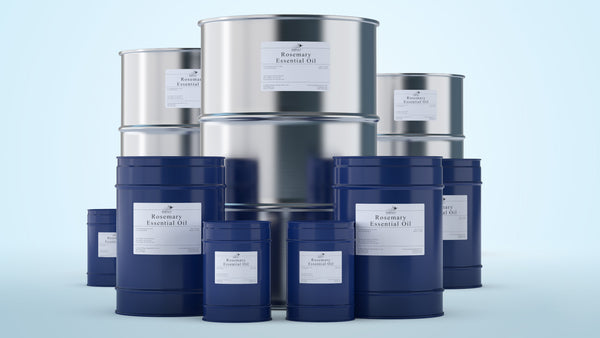
These two carriers account for a large share of the body oil, massage oil and facial serum volume shipped in North America, and procurement teams routinely treat them as interchangeable because the delivered price per kilo often lands within a few dollars. They are not interchangeable. Bulk grapeseed oil and bulk sweet almond oil sit at opposite ends of the fatty acid spectrum, which means they behave differently on shelf life, differently at the fill line, and very differently on allergen paperwork. If you are committing to drum volume rather than pail quantities, those differences compound across the whole order cycle. Here is the comparison a buyer actually needs.
The fatty acid split behind every other difference
Grapeseed is a predominantly polyunsaturated oil and sweet almond is a predominantly monounsaturated one, and nearly every practical difference between them follows from that single fact.
Grapeseed typically runs at the linoleic end of the spectrum, usually reported in the region of 65 to 75 percent linoleic acid, with oleic acid making up most of the balance. Sweet almond inverts that: oleic acid usually dominates at roughly 60 to 70 percent with linoleic in the twenties. Confirm the batch figures on the CoA rather than working from a textbook, because growing region and season both move the numbers.
Why it matters: each additional double bond in a fatty acid chain is another site available for oxidation. A polyunsaturated carrier has more of them, so it degrades faster under the same storage conditions. That is not a quality defect in grapeseed, it is chemistry, and it is entirely manageable if the purchase cycle accounts for it. What causes losses is buying grapeseed on the same twelve month cycle a plant uses for a monounsaturated oil.

Shelf life: the number that decides drum or pail
Sweet almond will generally tolerate drum volume and a longer holding period, while grapeseed usually rewards smaller, more frequent orders even when the drum price looks better.
The practical test is not the printed best-before date, it is peroxide value at delivery plus your actual turnover rate. A drum opened repeatedly over eight months has headspace oxygen cycling through it every time, and a polyunsaturated oil will register that. Two things reduce the exposure meaningfully: nitrogen blanketing on receipt, and tocopherol addition at the blending stage rather than at the point of complaint.
Our QC team runs GC/MS on every lot before release, and a CoA and SDS ship with every order, so the baseline peroxide and free fatty acid figures are documented from day one. That baseline is what lets a formulation team distinguish a supply problem from a storage problem six months later. Without it, every sensory complaint becomes an argument. The same logic applies across the carrier oils range, and our comparison of high-oleic and linoleic safflower grades shows how far the same botanical can move on stability.
Skin feel, viscosity and where each one belongs
Grapeseed gives a lighter, lower-residue finish and sweet almond gives more slip and a longer working time, which is why they suit different product categories rather than competing for the same one.
For massage and spa products, slip is the specification. A therapist needs the blend to stay workable across a treatment, and sweet almond delivers that at a lower cost per unit than most premium alternatives. For facial serums and lightweight day oils, grapeseed's lower viscosity and thinner spread are the reason formulators specify it, and the trade-off is the shorter usable life discussed above.
Viscosity also matters mechanically. Switching between these two mid-programme changes flow rate through a filling head and can change fill weight if the line is volumetric rather than gravimetric. Formulators sometimes reference published comedogenicity scales when choosing between carriers. Those scales are useful shorthand internally, but they are not regulatory classifications and should not drive label copy. Our guide to sweet almond oil in cosmetic and massage formulation covers the usage rates in more detail.
Cost, allergen paperwork and the real procurement math
Sweet almond is a tree nut and carries an allergen declaration obligation that grapeseed does not, and for some buyers that single fact outweighs everything else in this comparison.
If you manufacture for retailers with strict allergen policies, or you fill on shared equipment that also runs nut-free lines, the cleaning validation and documentation burden attached to sweet almond is real cost. Grapeseed avoids it entirely. Conversely, if you are selling into a market where almond has recognition value on an ingredient list, that recognition has commercial worth. Consumer demand for naturally derived personal care ingredients continues to grow (Source: Grand View Research), and ingredient familiarity is part of why.
On landed cost, compare four figures rather than one: price per kilo, expected usable life in your storage conditions, write-off rate on the last twelve months of that material, and the freight class. Cosmetic labelling obligations for allergens follow FDA guidance in the United States, and ingredient safety documentation generally follows Personal Care Products Council conventions. Both are worth confirming before a drum commitment rather than after.

Sourcing bulk grapeseed and sweet almond oil from HBNO
We manufacture and supply from a 100,000 square foot facility in Chico, California, operating under ISO and GMP systems with FDA registration. We stock refined grapeseed, and sweet almond in three grades: California refined, virgin unrefined, and unrefined organic. The grade decision changes odour and colour materially, so it belongs in the specification rather than in a phone call.
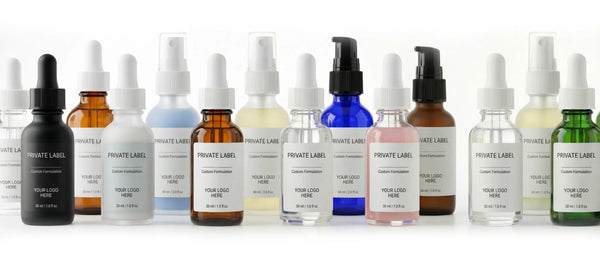
There is no minimum order quantity, which means a formulation team can bench both carriers at small volume before committing to drums. Batch testing against a retained reference is available on request. Certifications including Kosher, USDA Organic and FAIR FOR LIFE are held at company level, with product level certification confirmed per SKU. If you would rather buy the finished product, our private label operation fills to 250,000 units per day, and the full product list covers the rest of the base oil range.
Frequently asked questions about grapeseed and sweet almond oil in bulk
Is bulk grapeseed oil available unrefined?
Commercial grapeseed is overwhelmingly refined, because the extraction and winterisation steps that make it usable also strip most of the colour and odour. Treat an unrefined grapeseed offer with some scepticism and ask for a full fatty acid profile plus refractive index before ordering.
Can grapeseed substitute for sweet almond one-for-one in a massage blend?
Not without reformulating. The blend will feel thinner, the working time will shorten, and the shelf life will drop. If the substitution is driven by allergen policy rather than cost, high-oleic sunflower is usually a closer functional match to sweet almond than grapeseed is.
How should a drum of grapeseed be stored?
Cool, dark, sealed, and ideally nitrogen blanketed after first opening. Decant into smaller working containers rather than opening the drum repeatedly, since each opening cycles fresh oxygen through the headspace. Record the delivered peroxide value so later readings mean something.
Does the organic grade change formulation behaviour?
Organic certification governs cultivation and handling, not fatty acid composition, so the functional behaviour is broadly the same as the conventional equivalent of the same refinement grade. What it changes is the certificate chain, which has to be traceable to the specific lot for a finished-product organic claim to hold.
Which carrier is the better first order for a new brand?
Sweet almond, in most cases, because the wider tolerance on storage and turnover forgives the inventory mistakes a new brand inevitably makes. Move to grapeseed once your reorder cadence is predictable enough to keep a drum moving inside its usable window.
Choosing between bulk grapeseed oil and sweet almond by the drum
The right answer depends on three things: what the product category needs from skin feel, how fast the material will actually turn over in your plant, and whether a tree nut allergen declaration is acceptable in your supply chain. Grapeseed is the lighter and shorter-lived option, sweet almond the more forgiving and more recognisable one. Neither is a substitute for the other on the same specification sheet. To compare current pricing and specifications, or to request samples of either bulk grapeseed oil or sweet almond grade, contact our team for a quote.
Published by the HBNO editorial team. HBNO (IL Health & Beauty Natural Oils Co., Inc.) is a manufacturer and bulk supplier of essential oils and carrier oils based in Chico, California.