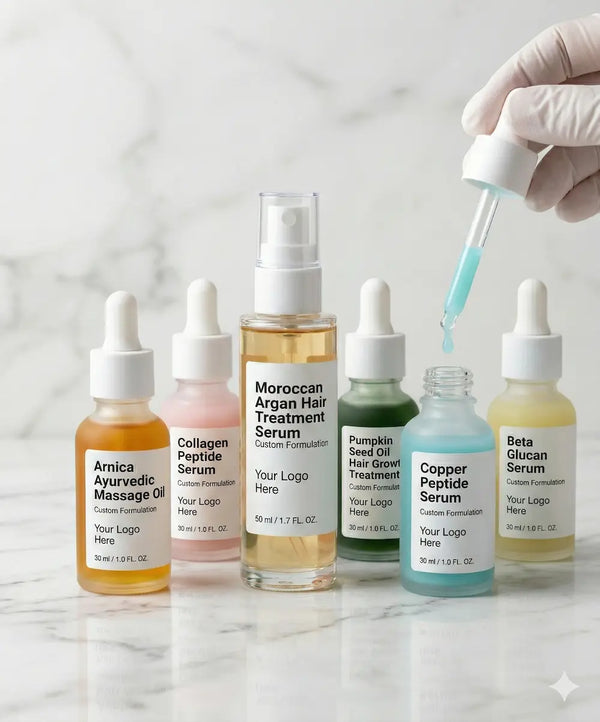
A private label hair serum has one of the shortest bills of materials in personal care, which is exactly why it's so easy to get wrong. The category was worth around USD 1.43 billion in 2026 and is on track for 5.23 per cent compound growth toward USD 1.85 billion by 2031, according to hair serum market analysis. With just three to six ingredients in the bottle, the oil phase isn't just a line on the formula; it's the product. At HBNO we supply that oil phase to contract manufacturers and private label brands, so this guide walks through which bulk oils actually earn their place, what to specify, and where the claims line sits.
What a Private Label Hair Serum Bill of Materials Actually Looks Like
Strip a leave-in hair serum down and you'll find an oil or oil-plus-ester phase, an optional silicone, a fragrance, and an antioxidant, so the oil selection is really what decides the sensory result. Formulators tend to work with two families. Fast-spreading light materials give slip and a dry finish, which fine hair or daily-use positioning needs. Heavier triglycerides deposit more weight and more visible shine, which suits coarse or textured hair better. Silicone-free positioning, a common brief these days, removes the ingredient doing most of the slip and gloss work and pushes that load onto the natural oil phase, so the selection has to change rather than just lose a line. That's where a light, fully saturated material earns its place, the same base oil stability logic that governs solid perfume. Our sugarcane-derived squalane assays at 92 to 95 per cent squalane come out clear and odourless and carry a specific gravity of 0.800 to 0.820 against a refractive index of 1.440 to 1.460. It's about the closest natural analogue to the dry finish a silicone would have given.

Argan, Jojoba, Castor and Squalane: What Each One Contributes to the Bottle
These four materials cover almost every private label hair serum brief, and they are not interchangeable; their fatty acid profiles produce genuinely different textures.
-
Argan. Our organic argan carrier oil is cold-pressed Argania spinosa from Morocco, running oleic acid at 75 to 90 per cent, linoleic at 2.1 to 17 per cent, and palmitic at 2 to 5 percent, with a specific gravity of 0.915 to 0.925. That high-oleic profile is why argan oil for hair reads richer and delivers more visible gloss. Its odour is rich, nutty, and slightly sweet, so a tight fragrance brief calls for a deodorised grade.
-
Jojoba. Our organic golden jojoba carrier oil isn't actually a triglyceride; it's a liquid wax ester, running gondoic acid at 44 to 67 per cent and 11-eicosenol at 4 to 14 per cent, with a specific gravity of 0.860 to 0.875. It sits lighter than argan and is oxidatively stable, which matters when the product sits in a clear bottle.
-
Castor. Our organic castor carrier oil runs ricinoleic acid at 78 to 85 percent, and that hydroxylated fatty acid is what drives a specific gravity of 0.952 to 0.970. It's the viscosity and gloss lever, used at a low percentage since it turns tacky at high inclusion.
-
Squalane. Fully saturated, no double bonds, no odour, and the fastest-spreading of the four.
The Claims Line Is Where Private Label Hair Serums Get Into Trouble
In the United States, a product's intended use decides whether it's regulated as a cosmetic or as a drug, and hair claims are the fastest way to cross that line without meaning to. Statements about altering the structure or function of the body move a product out of cosmetic status, and hair care attracts that kind of language more than most categories. Cosmetic products and ingredients aren't preapproved before marketing, so substantiation sits entirely with the brand. HBNO supplies raw materials with documented specifications: what the material is, its verified constituent ranges, its grade, and its certifications. We don't supply claim language, and no CoA supports a performance claim about hair. Keep finished-product copy on appearance and sensory attributes, like shine, smoothness, and ease of combing. The fragrance carries its own constraint too: usage limits apply by product category, and a leave-on hair product sits in a different category from a rinse-off one.

The Specs to Lock Down Before a Private Label Hair Serum Run
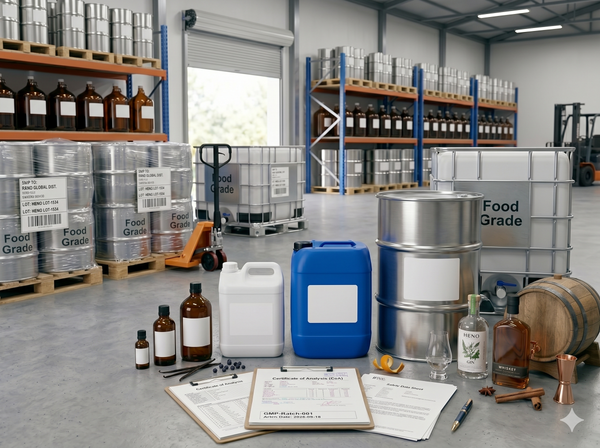
A private label run tends to fail on the specification sheet more often than on the formula itself, because a substituted grade changes the sensory result without changing the ingredient name. Ask for a batch-specific Certificate of Analysis tied to the lot shipped, plus the trace behind it, and check specific gravity and refractive index against the CoA when it arrives. Confirm the odour profile and whether a deodorised grade is needed. All four carry a two-year shelf life and a 15 to 25 degree Celsius storage window. Flash points differ enough to matter for freight paperwork: argan at 100 degrees Celsius, castor at 229, squalane at 218, and jojoba at 295, none classified as flammable under GHS. All four are documented as cosmetic grade and external use only; none is food grade. Certification is issued per product code, not per catalogue: our organic argan, golden jojoba, and castor are USDA Organic through OneCert and Kosher through EarthKosher, while the squalane carries neither. Our wholesale buyer's guide to USDA Organic certification explains why that matters on a finished-goods label.
Why Private Label Hair Serum Brands Source Bulk Oils Through HBNO
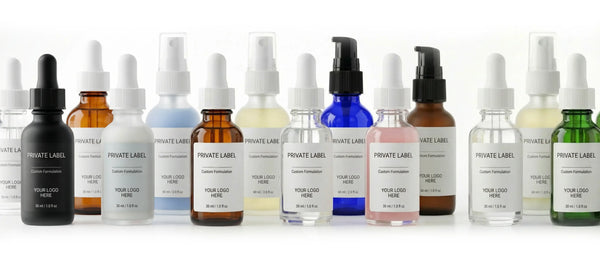
HBNO supplies the oil phase and, where a brand wants it, the finished bottle too. We operate a 100,000-square-foot production facility in Chico, California, with PhD staff and in-house quality control. Testing runs on all products, and a CoA and SDS ship with every order, so a brand can panel the sensory before committing to a season. Our private label programme runs at 250,000 units per day, with drop-shipping available for brands that would rather buy the filled bottle than the components. HBNO holds Kosher and USDA Organic certifications at company level. Buyers qualifying for Argan should also read our reality check on what gets sold as Moroccan argan oil.
Frequently Asked Questions
What oils go into a silicone-free private label hair serum?
Most silicone-free briefs build the phase around a fast-spreading light material for slip, with a heavier triglyceride for gloss and weight. Squalane and jojoba cover the light end, argan supplies the richer character, and castor is a low-percentage viscosity lever. It's really a sensory decision, panelled on the target hair type.
How do argan and jojoba differ in a hair serum base?
They're different classes of material altogether. Argan is a high-oleic triglyceride, with 75 to 90 per cent oleic acid in our organic grade, which reads richer and heavier. Jojoba is a liquid wax ester, sits lighter, and is more oxidatively stable. Argan also carries a nutty odour that jojoba's refined grades do not.
Why is castor oil used at low inclusion in a hair serum?
It comes down to ricinoleic acid, which runs 78 to 85 per cent in our organic grade and gives castor a specific gravity of 0.952 to 0.970, far above the other carriers. That viscosity is exactly what a formulator wants in small amounts for gloss and film cling, and it's also what makes the serum tacky if the inclusion rate goes too high.
Which certifications transfer from the bulk oil to the finished private label hair serum?
None automatically. Organic and Kosher certification is issued against a specific product code, and a finished product carries its own certification scope, certifying body, and labelling rules. A brand planning an organic claim on the bottle needs to confirm the certification path for the finished good, not assume it carries over from the raw material.
What documentation should a brand request before a private label hair serum run?
The batch-specific Certificate of Analysis tied to the shipped lot, the trace behind it, the Safety Data Sheet, the specific gravity and refractive index ranges, the allergen declaration, and a grade statement, and the certification scope per product code. For the fragrance, ask for the compliance certificate covering the finished product category.
The Bottom Line on Building a Private Label Hair Serum
A private label hair serum is, at its core, an oil phase with a label on it, so the oil specification is the product specification. Choose materials based on fatty acid profile and sensory outcome rather than reputation, confirm every grade against a batch CoA and its trace, and keep finished-product copy focused on appearance and feel rather than performance. HBNO supplies argan, jojoba, castor, and squalane in bulk with full batch documentation and private label filling.
Published by the HBNO editorial team. HBNO (IL Health & Beauty Natural Oils Co., Inc.) is a manufacturer and bulk supplier of essential oils and carrier oils based in Chico, California.Contact our team for a quote on your hair serum oil phase or a private label run.