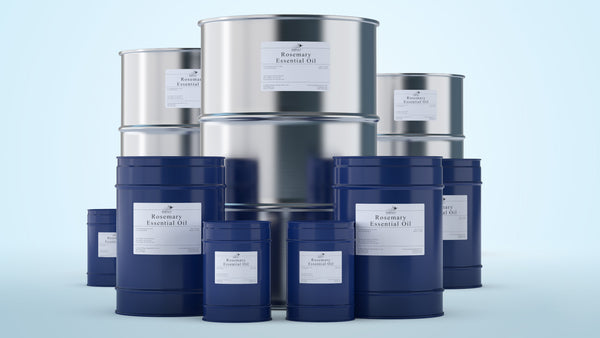
Brands and formulators sourcing essential oils by the drum face a narrower version of a familiar problem: separating a genuinely GMP certified bulk essential oil supplier from a reseller who simply repeats the phrase in a product listing. GMP status is not self-declared. It is issued to a named facility after an outside audit of its process controls, and a buyer who skips that verification is trusting the paperwork of a supplier they have not actually checked. At HBNO, procurement teams building a first RFQ ask us versions of the same question: what should we actually request before committing volume to a new supplier? This guide walks through that checklist, from certificate verification to the documentation a bulk order should come with by default.
Verifying a GMP Certified Bulk Essential Oil Supplier's Certificate Before You Order
A GMP certificate is only useful to a buyer once its facility address, certifying body, and status date have been checked against the order in front of them. A certificate copied from a supplier's marketing page proves nothing on its own. Buyers should ask for a current copy naming the actual production facility, confirm the certifying body behind it (a third-party audit from a body such as NSF International carries more weight than an internal self-assessment), and check that the certification has not lapsed. The address on the certificate should match the address on the Certificate of Analysis and Safety Data Sheet that ship with the order, since a broker or co-packing arrangement can put real distance between the facility that earned the certification and the facility that actually filled the drum. A supplier unwilling to produce this paperwork before a first order is not a GMP certified bulk essential oil supplier worth qualifying further, regardless of price.

The Documentation a GMP Certified Bulk Essential Oil Supplier Should Provide Without Being Asked Twice
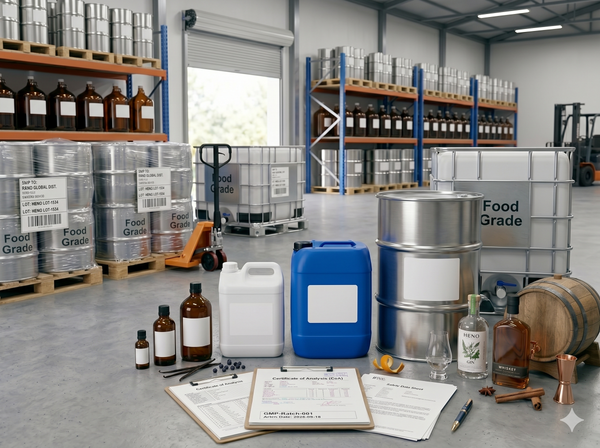
A supplier should hand over a Certificate of Analysis, a Safety Data Sheet, and a batch-specific GC/MS report for every shipment, not just the first one. The GC/MS report is the piece buyers skip most often and need most: it confirms the constituent profile of the specific lot shipping, not a generic spec sheet reused across batches, and a supplier who cannot produce a current one is signaling a documentation gap that GMP status alone does not cover. The botanical's Latin name, genus and species, should appear on the paperwork exactly as it does on the purchase order, since a mislabeled species is a sourcing error a GMP audit does not catch. Buyers formulating a fragrance-facing product should also ask whether the batch has been checked against current IFRA restriction limits, since that sits alongside GC/MS data as a standard request rather than an extra one. For a first order, a sample large enough to run an independent check before committing to drum volume is a reasonable request, and a supplier that resists sampling while pushing for a large minimum order is a signal worth taking seriously.
Why a GMP Certified Bulk Essential Oil Supplier Still Needs a Full Certification Check
GMP certification confirms how a facility manufactures; it does not confirm that a specific product is organic, kosher, or food grade, and a buyer should not read one certification as covering the others. Our Peppermint Essential Oil carries FEMA/GRAS food-grade status and kosher certification through EarthKosher, while our Eucalyptus Globulus Essential Oil is kosher certified but not food grade and is labeled for external use only. Both come off the same GMP-certified production line, but their certification profiles are not interchangeable. A buyer building a supplement, food-flavor, or organic-labeled product needs the product-level certificate confirmed for that specific SKU, not assumed from the facility's overall standing. Our guide on what certification actually covers at the facility level goes deeper on that facility-versus-product distinction, and our breakdown of registration for essential oil manufacturers covers the adjacent registration question buyers often bundle in with GMP status.
MOQ, Lead Time, and Global Shipping: The Bulk-Order Questions GMP Doesn't Answer
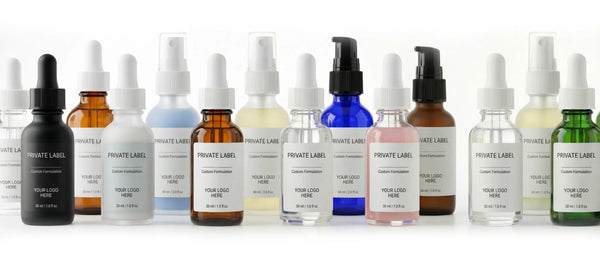
GMP certification says nothing about minimum order quantity, lead time, or whether a supplier can actually ship at the volume a growing brand needs, so those questions belong in the same qualification call. A flexible minimum order quantity matters most at the qualifying stage, when a brand wants to test quality and consistency before committing to a full drum program rather than being forced into volume on day one. Private label or contract manufacturing capacity is worth asking about even when the current order is just bulk oil, since a brand that scales into finished formats later benefits from staying with a supplier that already has that capacity built out. Buyers shipping into multiple regions should confirm the supplier can serve those markets from the same GMP-controlled batch rather than qualifying a second facility for every new territory. Our wholesale buyer's guide to USDA organic certification walks through a similar document-verification process for buyers layering an organic requirement on top of GMP.

How HBNO Supports GMP Certified Bulk Essential Oil Supplier Programs
HBNO's 100,000 square foot facility in Chico, California holds GMP certification alongside ISO, FDA registration, Kosher, USDA Organic, and FAIR FOR LIFE credentials, with every product GC/MS tested in house and a Certificate of Analysis and Safety Data Sheet issued with every shipment, no separate request required.
We carry no minimum order quantity, which lets a buyer sample and verify before scaling into a full program, and our private label capacity runs to 250,000 units per day for brands planning to move beyond raw material. Our PhD staff and in-house quality control team support batch documentation on request, and global shipping across North America, Europe, and Asia means one qualified facility can serve a multi-region buying program.
Frequently Asked Questions About Choosing a GMP Certified Bulk Essential Oil Supplier
What should a GMP certified bulk essential oil supplier provide before a first order?
At minimum, a current copy of the GMP certificate naming the production facility, a Certificate of Analysis and Safety Data Sheet for the specific lot shipping, and a batch-specific GC/MS report. A supplier that treats these as standard rather than special requests is generally the more reliable long-term partner.
How can I confirm a supplier's GMP certificate actually applies to the facility shipping my order?
Check that the address on the certificate matches the address on the Certificate of Analysis and Safety Data Sheet for the shipment. A broker relationship or a co-packing arrangement can put distance between the facility that earned the certification and the facility that actually filled the order, so the address match is the fastest way to close that gap.
Is every product from a GMP certified supplier automatically organic or food grade?
No. GMP certification applies to the manufacturing facility and process, not to a specific product's organic, kosher, or food-grade status. Those certifications are confirmed product by product, so a buyer should request the specific certificate for the SKU being ordered rather than assuming it from the supplier's overall standing.
Should I request samples before placing a bulk order with a new supplier?
Yes. A sample large enough for an independent quality check is a reasonable request before committing to drum volume, and it lets a buyer confirm the batch matches the specification on paper. A supplier that resists sampling while pushing for a large minimum order is worth treating with caution.
What questions beyond certification should a buyer ask before committing to a bulk order?
Minimum order quantity, typical lead time, private label or contract manufacturing capacity, and whether the supplier ships to every region the buyer needs. GMP status confirms manufacturing discipline, but none of it addresses whether the supplier can actually deliver at the volume and timeline a growing brand requires.
Choosing a GMP certified bulk essential oil supplier comes down to verification, not vocabulary: check the certificate against the shipping facility, confirm the documentation that should ship with every order, and treat product-level certifications as a separate question from the facility's GMP status. A supplier that answers those questions without hesitation, and offers a sample before asking for volume, is usually the one worth building a bulk program with.
Published by the HBNO editorial team. HBNO (IL Health & Beauty Natural Oils Co., Inc.) is a manufacturer and bulk supplier of essential oils and carrier oils based in Chico, California.
Get in touch with our team to start a GMP certified bulk essential oil supplier qualification for your next program.