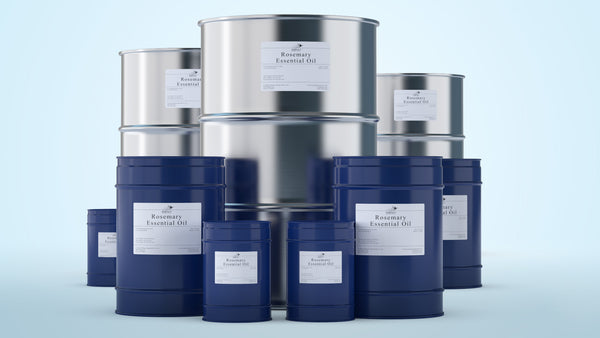
Sourcing USDA organic essential oils at wholesale volume is procurement work, not a label check. A purchase order that simply states "must be USDA organic" leaves too much room for a supplier to hand over paperwork that looks right and is not. For a formulator or private label brand building toward an organic finished product, or a distributor stocking organic SKUs for downstream customers, the real work is verifying that a specific certificate covers a specific product, that a transaction certificate ties that certification to the actual lot shipping, and that the supplier's minimum order quantity and lead time match production reality rather than a marketing page. This guide walks through what a wholesale buyer should check, in order, before an organic essential oil purchase order goes out.
Verify the Supplier's USDA Organic Certificate First
Start with the supplier's current organic certificate, not their website copy. A legitimate certificate names the certifying body (OneCert and Quality Assurance International are two of the larger USDA-accredited certifiers working with essential oil producers), lists an expiration date, and includes a scope statement or attached product list naming the exact products covered. Cross-check the supplier and product against USDA's Organic Integrity Database, which lists every certified operation, its certifying agent, and the specific products and activities each one is certified for. A supplier who cannot produce a certificate with a current date and a named certifying body inside a business day, or who does not appear in the database at all, is a sourcing red flag, not a paperwork delay. The same discipline applies to a manufacturer's other credentials: our guide on vetting an ISO 9001 certified essential oil manufacturer walks through the same verification habit for a company-level certification, rather than a product-specific one. The broader supplier-selection question, not tied to any single certification, is covered in our guide to choosing a GMP certified bulk essential oil supplier.

Get the Organic Transaction Certificate for the Actual Lot
A general organic certificate proves the supplier is certified for a product category; a transaction certificate proves this specific shipment is that product. The transaction certificate, sometimes called a TC or an organic certificate of shipment, is issued per shipment or per lot under the requirements of the USDA National Organic Program, references the umbrella certificate, and carries the batch or lot number that should match the drum labeling and the CoA. Buyers who only file the general certificate and skip the transaction certificate have a documentation gap that shows up during their own organic audit, when a certifying body asks for lot-level traceability back to the supplier. Request the transaction certificate as a standard line item on every organic purchase order, the same way a CoA is requested by default.
Match MOQ and Lead Time to How Wholesale Organic Supply Moves
Organic essential oil supply chains carry tighter volume constraints than conventional ones, because certified acreage is smaller and harvest timing is less flexible. A buyer moving from a conventional to an organic SKU should expect a supplier's minimum order quantity, or lack of one, and lead time to be stated clearly rather than assumed to match the conventional product. At HBNO there is no minimum order quantity on organic stock, but batch availability still follows harvest and distillation cycles for the underlying crop, so confirming current lot availability before setting a production date avoids a schedule built on paperwork that predates the actual inventory. Building in a buffer for reorder lead time matters more on organic SKUs than conventional ones, precisely because supply is thinner.

How HBNO Documents a Wholesale USDA Organic Order
Every organic essential oil quote from HBNO includes the current OneCert certificate, a transaction certificate issued against the shipping lot, and a batch-specific CoA and SDS, without a buyer needing to request each document separately. Organic Frankincense Oil (Serrata), Organic Golden Jojoba Carrier Oil, and Organic Argan Carrier Oil are three examples currently in our certified range, each GC/MS tested in-house before release. We operate a 100,000 square foot facility in Chico, California with PhD-led quality control, no minimum order quantity, drop-shipping, and global shipping across North America, Europe, Asia, and Oceania, alongside company-wide ISO, GMP, FDA, Kosher, and FAIR FOR LIFE certification. Buyers layering ingredient-level requirements on top of organic sourcing, such as kosher food certification for essential oil ingredients, can confirm both scopes together, since HBNO holds kosher status company-wide alongside its USDA organic certification. For background on what the certification itself does and does not establish before you build it into a purchase order, see what the USDA organic seal actually means on essential oils and what USDA organic certification covers and does not cover. For a private label program building toward an organic finished product, our private label team can advise on which certified raw materials are currently in stock at the volumes you need.
Frequently Asked Questions
What documents should a wholesale buyer request for a USDA organic essential oil order?
Request the supplier's current organic certificate naming the certifying body and the specific certified products, a transaction certificate for the actual shipping lot, and a batch-specific Certificate of Analysis. All three together establish that the product is certified, that this shipment is covered, and what the batch actually contains.
Is there a minimum order quantity for USDA organic essential oils?
It varies by supplier. HBNO does not set a minimum order quantity on its organic-certified range, though actual lot availability still depends on harvest and distillation cycles for the underlying crop, so confirming current stock before setting a production date is worth the extra step.
Can a distributor resell USDA organic essential oil without holding its own certification?
A distributor that only stores, labels, and ships sealed containers without further processing may fall under a certification exemption in some cases, but any relabeling, blending, or repackaging typically requires the distributor to hold its own organic handler certification. This determination should be confirmed with a certifying body directly, not assumed.
How do I know a supplier's organic certificate actually covers the product I am ordering?
Check the scope statement or attached product list on the certificate itself, or search the supplier and product directly in USDA's Organic Integrity Database. Certification is issued per certified product, not per company, so a certificate that only shows a certifying body's name and an expiration date without naming your specific product does not confirm coverage.
Is organic essential oil more expensive than conventional oil at bulk volume?
Organic-certified raw material typically carries a premium tied to certified acreage, the three-year land transition requirement, and the added documentation and audit costs across the supply chain. The size of that premium varies by botanical and by current crop conditions, and a supplier can provide current pricing against a specific volume tier.
Wholesale organic essential oil purchase orders are only as strong as the paperwork behind them: the supplier's certificate, the transaction certificate for the specific lot, and the CoA that confirms what the batch actually contains. Buyers who verify all three before committing to a production schedule avoid the two most common failure points: a certificate that does not name their product, and a transaction gap that surfaces during their own organic audit.
Published by the HBNO editorial team. HBNO (IL Health & Beauty Natural Oils Co., Inc.) is a manufacturer and bulk supplier of essential oils and carrier oils based in Chico, California.
For current certificate sets, lot availability, and volume pricing on USDA organic essential oils, reach out to HBNO's team directly.